

Maddy summarySRES 445 is a Senate resolution recognizing the U.S.-Israel economic relationship and affirming that trade under the U.S.-Israel Free Trade Agreement (signed in 1985) can support Israel's economy during the Hamas conflict. It highlights that bilateral trade has grown significantly since 1985, with the U.S. being Israel’s largest trading partner in 2022 ($14.2 billion in U.S. exports to Israel). The resolution states the agreement has fostered robust trade, investment (e.g., $10.6 billion in Israeli U.S. investments in 2022), and job creation, and urges maintaining this economic partnership amid the conflict. It does not create new policy but formally endorses existing trade mechanisms as a support tool.
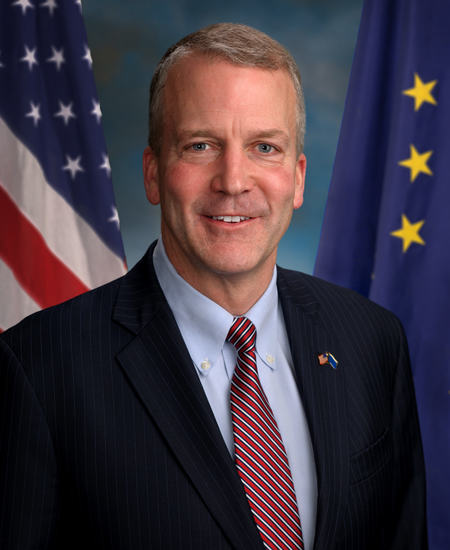
Sen. Dan Sullivan
Sponsored bills
Maddy summaryThe SAFER Banking Act provides legal protections for banks and financial institutions that serve state-legal marijuana businesses and related service providers. It creates a "safe harbor" preventing federal banking regulators from penalizing institutions for offering services to these businesses, even though marijuana remains illegal under federal law. The bill also allows income from state-legal marijuana businesses to be considered "legal income" for mortgage qualification purposes and establishes guidance for suspicious activity reporting related to these businesses. Similar protections are extended to hemp-related businesses and service providers, without requiring banks to serve these businesses.
Maddy summaryThis resolution (SRES 485) is a ceremonial Senate expression of support for the 190th anniversary of U.S.-Thailand diplomatic relations, marked by the 1833 Treaty of Amity and Commerce. It commemorates the historic alliance without creating new laws or affecting any individuals or entities. The resolution reaffirms the U.S. commitment to Thailand as a strategic partner based on shared values, highlights longstanding cooperation in security (like the Cobra Gold military exercises), trade ($74 billion annually), and regional initiatives, and looks forward to strengthening future ties. As a symbolic gesture, it has no direct policy impact.
Maddy summaryThis resolution (SRES 483) formally commends the officers of the Commissioned Corps of the U.S. Public Health Service for their 225 years of service protecting public health. It recognizes their work in disease prevention, emergency response (including pandemics like COVID-19), and care for underserved communities. The Senate passed this symbolic resolution to mark the Corps' anniversary, with no policy changes or funding impacts. It is a ceremonial gesture, not a legislative action affecting laws or programs.
Maddy summaryThis bill requires commercial fishing vessel operators and crew to receive safety training addressing behavioral and physical health risks, including substance use disorder and fatigue. It increases annual funding for these programs from $3 million to $6 million for fiscal years 2024 and 2025. The bill also allows the Department of Transportation to transfer funds to the Department of Health and Human Services to administer the training grant programs. These changes directly affect commercial fishing crews and vessel operators by mandating new wellness-focused safety training and providing dedicated funding for implementation.
Maddy summarySRES 482 is a U.S. Senate resolution commemorating World AIDS Day (December 1) and supporting global efforts to end the HIV/AIDS epidemic by 2030. It commends existing U.S. programs like the Ryan White HIV/AIDS Program and the President’s Emergency Plan for AIDS Relief (PEPFAR), which provide treatment, prevention, and care services to millions affected by HIV. The resolution urges continued funding for HIV prevention, treatment, and research, while emphasizing the need to address disparities in communities disproportionately impacted by HIV, such as people of color and men who have sex with men. It does not create new laws or change funding but serves as a symbolic statement of support for ongoing domestic and global HIV/AIDS initiatives.
Maddy summaryS 3368, the Mongolia Third Neighbor Trade Act, would grant U.S. duty-free treatment for certain Mongolian products entering the U.S., primarily focusing on apparel and textiles containing at least 23% cashmere by weight or 51% cashmere value. It directly affects Mongolian exporters of cashmere products (which account for a significant portion of Mongolia's economy) and U.S. importers of these goods, requiring Mongolia to meet specific eligibility criteria like environmental compliance and adherence to labor standards. Key provisions include strict origin requirements (e.g., yarn/fabric must be wholly produced in Mongolia) and annual verification to prevent transshipment of goods. The bill expires on December 31, 2029, and mandates annual U.S. presidential briefings to Congress on implementation and Mongolia's trade compliance.
Maddy summaryThe DETERRENT Act requires colleges and universities to disclose foreign gifts and contracts worth $50,000 or more, including details about the foreign source, purpose, and value, with a public database for transparency. It establishes a waiver process for institutions seeking to contract with "foreign countries of concern" or "foreign entities of concern" while imposing fines up to 100-200% of investment value for non-compliance. The law primarily affects institutions receiving federal funds, particularly those with significant research funding, and mandates policies for faculty and staff regarding foreign gifts. It also requires interagency sharing of information with intelligence and law enforcement agencies to address potential national security concerns.
Maddy summaryThis bill authorizes $50 million annually (2023-2027) for the VA to award grants to states to improve outreach and assistance for veterans and their families (including spouses, children, and parents) regarding veterans' benefits. States must use funds to hire more veterans service officers, expand outreach programs, or provide training, with priority for areas lacking officers, high veteran suicide rates, or frequent crisis line referrals. Grantees must submit detailed plans ensuring equitable distribution across urban/rural areas and addressing needs of underserved veterans (e.g., Native American, elderly, women veterans), while tracking benefit application timelines and outcomes. The VA will monitor performance, require remediation plans for underperforming states, and report annually to Congress.
Maddy summaryS 3331 creates a pilot program to provide federal grants to licensed spaceport operators for improving transportation infrastructure near launch/reentry sites. Operators receive grants based on past launch activity ($250,000 per licensed launch, $100,000 per permit), with a $2.5 million annual limit per operator. Supplemental grants (up to 50% of the primary grant) are available if states or private entities match funding. The program, funded up to $20 million annually, expires on October 1, 2028, and applies only to infrastructure directly supporting transportation safety for launches.