

Patient Advocate Tracker Act This act requires the Office of Patient Advocacy within the Veterans Health Administration to establish an information technology system that allows veterans or their representatives to electronically file a complaint with a patient advocate and review the status of a filed complaint.
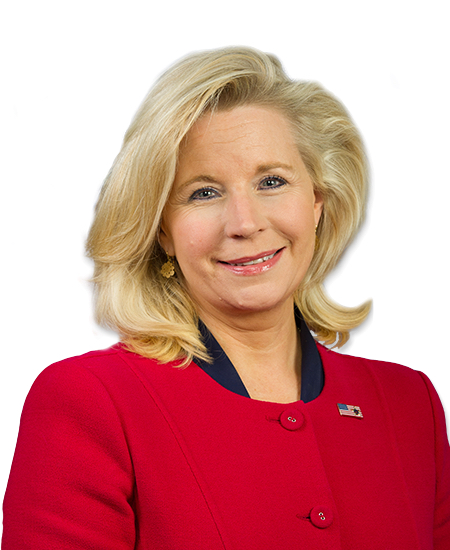
Rep. Liz Cheney
Sponsored bills
Ensuring Seniors' Access to Quality Care Act This bill repeals certain restrictions under Medicare and Medicaid that prohibit the approval of nurse-aide training and competency evaluation programs in skilled nursing facilities that have been subject to specified regulatory actions (e.g., civil penalties) for substandard quality of care. The Centers for Medicare & Medicaid Services (CMS) must still disapprove such programs for up to two years; however, the CMS must rescind the disapproval upon completion of corrective action and may require additional oversight of the program for purposes of rescission. The bill also allows Medicaid and Medicare providers (e.g., skilled nursing facilities) to access, through the National Practitioner Data Bank, disciplinary information for affiliated physicians and other health care practitioners, as reported by state licensing authorities.
Madeleine K. Albright Democracy in the 21st Century Act This bill establishes programs to promote democracy abroad, authorizes Department of State and U.S. Agency for International Development (USAID) democracy programs from FY2023 through FY2027, and addresses related issues. The State Department must establish programs (1) to defend democracy globally, including by enhancing the ability of the State Department and USAID to respond quickly and flexibly to democratic openings and backsliding; (2) to support efforts to enhance government transparency and other activities related to reducing corruption; and (3) for democracy research and development, such as activities to drive innovation in State Department, USAID, and National Endowment for Democracy (NED) responses to complex challenges to democracy. The bill establishes the Democracy in the 21st Century Fund, to be administered by the State Department, to support the programs established by this bill and other related activities. U.S. government assistance for democracy programs shall not be subject to the prior approval of any foreign government. The bill also protects the identities of implementing partners of certain State Department, USAID, and NED assistance programs in countries that are undemocratic or have engaged in gross violations of civil and political rights, including by exempting the names of partners for democracy programs in such countries from Freedom of Information Act requests. The President must report to Congress a comprehensive strategy to promote democracy abroad.
Harriet Tubman Bicentennial Commemorative Coin Act This bill directs the Department of the Treasury to mint and issue 50,000 $5 gold coins, 400,000 $1 silver coins, and 750,000 half-dollar clad coins emblematic of the legacy of Harriet Tubman as an abolitionist. The Secretary may issue coins under this bill only during the period of January 1, 2024, through December 31, 2024. All surcharges received by Treasury from the sale of such coins must be paid equally to the National Underground Railroad Freedom Center in Cincinnati, Ohio, and The Harriet Tubman Home, Inc. in Auburn, New York, for the purpose of accomplishing and advancing their missions.
National World War II Memorial Commemorative Coin Act This bill directs the Department of the Treasury to mint and issue up to 50,000 $5 coins, 400,000 $1 silver coins, and 750,000 half-dollar clad coins in commemoration of the National World War II Memorial in the District of Columbia. The design of the coins shall be emblematic of the memorial and the service and sacrifice of American soldiers and civilians during World War II. All surcharges received from the sale of such coins shall be paid to the Friends of the National World War II Memorial to support the National Park Service in maintaining and repairing the memorial, and for educational and commemorative programs.
Advancing Telehealth Beyond COVID-19 Act of 2022 This bill modifies the extension of certain Medicare telehealth flexibilities after the end of the COVID-19 public health emergency. Specifically, the bill provides that certain flexibilities continue to apply until December 31, 2024, if the emergency period ends before that date. The bill allows beneficiaries to continue to receive telehealth services at any site, regardless of type or location (e.g., the beneficiary's home); occupational therapists, physical therapists, speech-language pathologists, and audiologists to continue to furnish telehealth services; federally qualified health centers and rural health clinics to continue to serve as the distant site (i.e., the location of the health care practitioner); evaluation and management and behavioral health services to continue to be provided via audio-only technology; and hospice physicians and nurse practitioners to continue to complete certain requirements relating to patient recertifications via telehealth. The bill also delays implementation of certain in-person evaluation requirements for mental health telehealth services until January 1, 2025, or the first day after the end of the emergency period, whichever is later.
This resolution expresses support for the designation of Journeyman Lineworkers Recognition Day. (A journeyman lineworker is a person who builds and maintains electrical power systems.)
Mining Schools Act of 2022 This bill establishes a grant program for mining schools to recruit and educate mining engineers and other qualified professionals.
Maddy summaryThis bill amends the Endangered Species Act to require the Secretary of the Interior to issue protective regulations for endangered species, changing the current "may" to "shall" for this action. It clarifies that such regulations can prohibit activities listed in Section 9 (like harming species or their habitats) but only apply in states that haven't adopted equivalent rules through cooperative agreements. The bill also updates Section 9 to reference these new regulations. This change directly affects how federal protections are implemented for species listed as endangered, ensuring consistent conservation measures nationwide unless states adopt their own rules.
Butcher Block Act This bill authorizes the Department of Agriculture (USDA) to make (or guarantee) loans and award grants for establishing, expanding, and otherwise supporting livestock and poultry processing and related activities. In awarding grants and making or guaranteeing loans, USDA shall prioritize applicants that have experience in livestock and poultry processing and can quickly scale-up to increase overall processing capacity in the region involved.