

SFC Heath Robinson Burn Pit Transparency Act This bill implements reporting requirements and policies related to the treatment and documentation of veterans who have been exposed to open burn pits. A burn pit is an area used for burning solid waste in open air without equipment. First, the bill requires the Department of Veterans Affairs (VA) to submit quarterly reports on veterans' burn pit exposure The bill also requires the VA to collaborate with the Department of Defense to submit an annual report detailing specified information about veterans who have been exposed to open burn pits, such as the number of claims for disability compensation approved and denied (including the rationale for denials). The bill authorizes the survivor of a deceased veteran to report a veteran's exposure to toxic substances from an open burn pit in the Airborne Hazards and Open Burn Pit Registry, even if the veteran was not included prior to their death. VA medical professionals must inform veterans of the registry if they present at a medical facility for treatment related to exposure to toxic chemicals by open burn pits. Finally, the Government Accountability Office must report on the effectiveness of any memorandum of understanding entered into by the VA with respect to the processing of reported cases of burn pit exposure and the coordination of care and provision of health care related to such cases at VA and non-VA facilities.
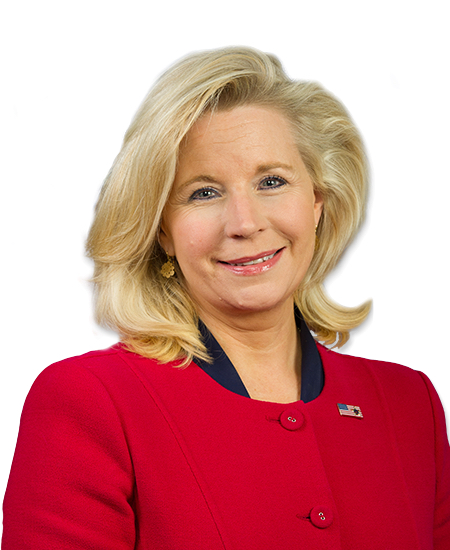
Rep. Liz Cheney
Sponsored bills
This resolution recognizes and expresses support for the efforts of democracy and human rights activists in Cuba.
This resolution recognizes and expresses support for the efforts of democracy and human rights activists in Cuba.
This resolution expresses support for the designation of Journeyman Lineworkers Recognition Day. (A journeyman lineworker is a person who builds and maintains electrical power systems.)
Broadband for Rural America Act This bill modifies and consolidates Department of Agriculture (USDA) programs for expanding broadband internet in rural areas. Specifically, the bill modifies a program that provides grants, loans, and loan guarantees to support broadband expansion in rural areas. Modifications include revising the criteria used to prioritize applications and projects and changing the name of the program to the ReConnect Rural Broadband Program. Additionally, the bill terminates on June 30, 2022, a Department of Agriculture (USDA) COVID-19 response program that supports broadband expansion in rural areas for distance learning and telemedicine. Any remaining program funds available after the termination date shall be used for the ReConnect Rural Broadband Program. The bill also expands coordination requirements that apply to the Department of Commerce, USDA, the Federal Communications Commission (FCC), and the National Telecommunications and Information Administration. This includes requiring the use of specified FCC maps when assessing a community's access to broadband.
Tribal Family Fairness Act This bill revises two programs to provide tribes with additional resources for child and family services. First, the bill revises the MaryLee Allen Promoting Safe and Stable Families program by establishing a minimum grant award for tribes, increasing funds reserved for state court improvement grants, increasing the set-aside for tribes or tribal consortia, exempting certain plans from reporting requirements, allowing funds to be used for tribal customary adoptions, authorizing in-kind contributions to meet tribal matching requirements, and allowing tribal organizations to use the federal negotiated indirect cost rate in lieu of the administrative costs cap. In addition, the bill revises the Stephanie Tubbs Jones Child Welfare Services program by modifying reporting requirements, authorizing in-kind contributions to meet tribal matching requirements, and allowing tribal organizations to use the federal negotiated indirect cost rate in lieu of the administrative costs cap.
NEPA State Assignment Expansion Act This bill allows certain states to enter into agreements with federal agencies to assume federal responsibilities regarding the environmental review of proposed major federal actions under the National Environmental Policy Act of 1969.
NEPA Accountability and Enforcement Act This bills establishes (1) deadlines for federal agencies to complete reviews of the environmental effects of proposed major federal actions, and (2) penalties for agencies that do not comply with these deadlines.
Energy Poverty Prevention and Accountability Act This bill addresses energy poverty (i.e., insufficient access to affordable energy) in at-risk communities. An at-risk community is a community that is low-income, minority, rural, elderly, or Native American. The Department of the Interior must report on (1) barriers to the ability of at-risk communities that live on or near federal land or tribal land to access reliable and affordable energy, including how the presence of adequate energy transmission infrastructure affects such access; and (2) actions that it and the Forest Service may take to reduce such barriers. In addition, certain executive actions may not be carried out until Interior conducts energy poverty studies for such actions. The Congressional Budget Office must report on how a bill or resolution will affect the cost of energy for at-risk communities. The Government Accountability Office must (1) analyze federal energy and environmental laws and regulations, and state renewable portfolio standards, to determine how such laws, regulations, and standards affected electricity prices, home heating prices, gasoline prices, motor vehicle prices, natural gas prices, and household appliance prices in at-risk communities; and (2) develop criteria to determine whether an at-risk community is experiencing energy poverty. The Office of Management and Budget must review and publish each applicable energy regulation to determine if any regulation imposes, relative to the general population, disproportionate costs on at-risk communities.
This resolution supports the designation of a National Warrior Call Day to encourage Americans to talk with members of the Armed Forces and veterans to connect them with support.