This bill provides statutory authority for the rule published on December 16, 2020, by the U.S. Fish and Wildlife Service and the National Marine Fisheries Service entitled Endangered and Threatened Wildlife and Plants; Regulations for Listing Endangered and Threatened Species and Designating Critical Habitat . The rule defined habitat under the Endangered Species Act of 1973 and it responded to Supreme Court case law regarding the designation of critical habitat under the act.
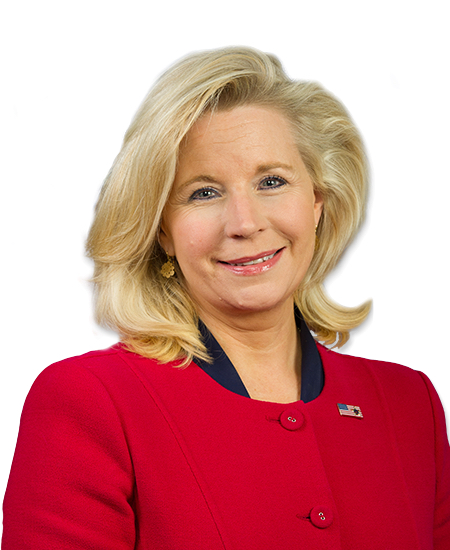
Rep. Liz Cheney
Sponsored bills
Marginal Well Protection Act This bill prohibits the Environmental Protection Agency from imposing fees for methane emissions from wells that produce less than 15 barrels of oil per day and less than 90 Mcf (90,000 cubic feet) of natural gas per day.
This resolution recognizes and appreciates the dedication and devotion demonstrated by the men and women of law enforcement. It also condemns calls to defund, disband, dismantle, or abolish the police.
Lower Costs, More Cures Act of 2021 This bill establishes and modifies several programs and requirements to address prescription drug prices. The bill modifies provisions under Medicare and Medicaid relating to prescription drug coverage and price transparency. Among other changes, the bill requires the Centers for Medicare & Medicaid Services to publish certain information, as reported by pharmacy benefit managers (PBMs), relating to generic dispensing rates, drug discounts and rebates, and payments between PBMs, health plans, and pharmacies; caps annual out-of-pocket spending under the Medicare prescription drug benefit; allows prescription drug plan sponsors under the Medicare prescription drug benefit to offer additional plans in a region; requires pass-through pricing models, and prohibits spread-pricing, for payment arrangements with PBMs under Medicaid; and allows states to include in the Medicaid Drug Rebate Program covered outpatient drugs that are provided as part of physician or outpatient hospital services. The bill also generally modifies other provisions relating to the regulation and costs of generic and brand-name drugs. Among other changes, the bill prohibits the manufacturer of a brand-name, generic, or biosimilar drug from entering into certain agreements to resolve or settle a patent infringement claim in connection with the sale of a drug or biological product; permanently allows high deductible health plans to waive deductibles for insulin and associated products; and establishes the position of Chief Pharmaceutical Negotiator in the Office of the U.S. Trade Representative.

Maximum Pressure Act This bill expands sanctions and economic penalties on Iran. It also restricts the President from unilaterally lifting or waiving the sanctions or penalties and increases congressional oversight of them. Specifically, the bill requires the President to impose visa- and asset-blocking sanctions. Additionally, it modifies existing sanctions, including by (1) providing statutory authority for executive orders imposing sanctions; (2) applying sanctions to additional sectors of Iran's economy; and (3) broadening sanctionable conduct to cover, for example, assisting Iran with the acquisition of ballistic missiles and the complicity of Iranian officials in human rights violations in specified countries. The bill also requires reporting on licenses that authorize activities subject to sanctions. The bill prohibits U.S. representatives at the International Monetary Fund from voting to allow Iran's access to special drawing rights (a currency support tool) and places restrictions on financial transactions with Iran. The restrictions include requiring domestic financial institutions to implement special measures with respect to foreign financial institutions that conduct significant transactions connected to the Instrument in Support of Trade Exchanges (a European mechanism that bypasses U.S. sanctions when carrying out trade with Iran). The Department of State must maintain the Islamic Revolutionary Guard Corps' designation as a terrorist organization and must designate Ansharallah (or Houthis), which operates in Syria, as a foreign terrorist organization. The bill also requires reports on U.S. sanctions concerning Iran, the status of Iran's nuclear weapons program, and other matters.
Restoring Environments, Soils, Trees, and Operations to develop the Rural Economy Act of 2021 or the RESTORE Act of 2021 This bill requires the Department of Agriculture (USDA), at the request of a governor of a state, to select a forest landscape in the state on which to conduct a forest landscape project. For a project, USDA must carry out one or more specified management activities, including installing fuel breaks, conducting controlled burns, and removing dead trees.
Prohibiting IRS Financial Surveillance Act This bill prohibits the Department of the Treasury from requiring a financial institution to report the transfers into and out of a financial account. This prohibition does not apply to laws or regulations in effect on October 1, 2021.
No Clearance for Terrorists Act This bill requires processes for vetting an individual for a security clearance to take into consideration whether that individual has been involved in terrorism. The Special Security Directorate of the National Counterintelligence and Security Center must ensure that the guidelines for adjudicating security clearances, when determining what conditions could raise a security concern or disqualify an applicant, include whether the applicant has been involved in or advocated domestic or international terrorism. The directorate must also ensure that guidelines and instructions to federal agencies relating to security clearances include screening an individual for possible involvement with domestic terrorism. The directorate and the Office of Personnel Management must ensure that certain forms related to public trust and national security positions include questions regarding whether the individual submitting the form has been involved in domestic terrorism.
Expanding Markets for State-Inspected Meat Processors Act of 202 1 This bill allows meat and meat food products inspected by State Meat and Poultry Inspection programs to be sold in interstate commerce. Under the inspection program, the Department of Agriculture Food Safety and Inspection Service allows states that meet certain requirements to inspect meat and meat food products. The state-inspected products are currently limited to intrastate commerce, unless a state opts into a separate Cooperative Interstate Shipment Program.
Israel Relations Normalization Act of 2021 This bill requires the Department of State to take certain actions promoting the normalization of relations between Israel, Arab states, and other relevant countries and regions. Specifically, the State Department must develop a strategy on expanding and strengthening the Abraham Accords (the term used to refer collectively to agreements between Israel and the United Arab Emirates and between Israel and Bahrain marking the public normalization of relations between the two Arab countries and Israel). The strategy must include a description of how the U.S. government will encourage further normalization of relations with Israel. In addition, the State Department must report on options for U.S. international efforts to promote the strengthening of ties between Israel, Arab states, and other relevant countries and regions. The State Department must also report on the status of the normalization of relations with Israel, including information on (1) laws that punish individuals for people-to-people relations with Israelis (i.e., anti-normalization laws), and (2) evidence of steps taken by Arab governments toward permitting or encouraging normalized relations between their citizens or residents and Israeli citizens.