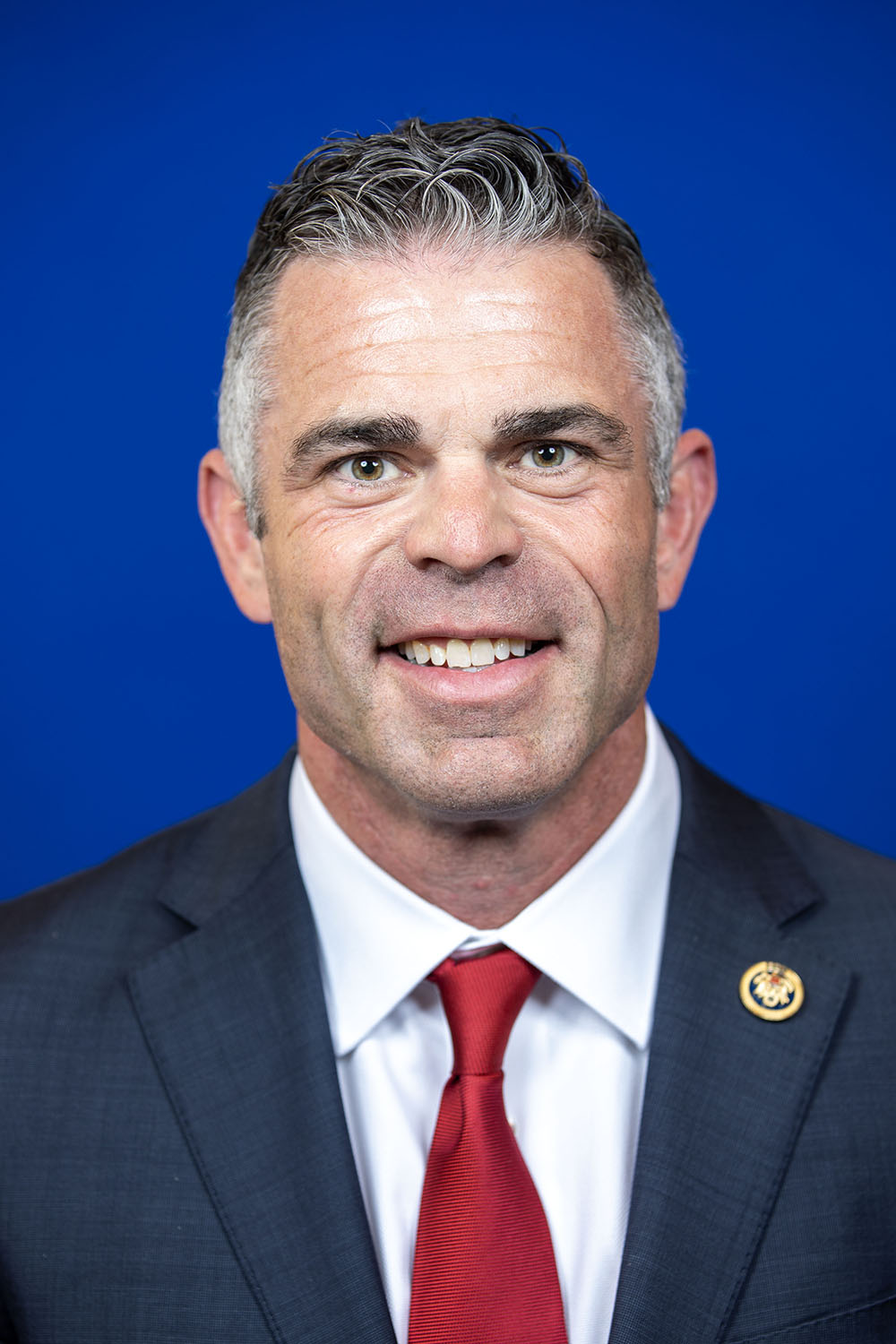
Photo of Tony Wied
R United States House · District 8 · Wisconsin On the 2026 ballot

Rep. Tony Wied

Compare
Total votes
730
all sessions
Attendance
99%
10 missed
Near the chamber average
With party
95%
of cast votes
Near the chamber average
Bipartisan score
2%
crosses aisle rarely
Near the chamber average
Sponsored
265
bills & resolutions
Near the chamber average
Committees
12
assignments
265 bills and resolutions

Sponsored bills

Total
265
Primary
21
Co-sponsor
244
This page
265
matching current filters
Primary HR 7719
In committee · United States House · Lead sponsor
SOS Act of 2026

Maddy summaryThis bill, titled the Securing Our Streets Act of 2026, directs the Attorney General to distribute federal grants to states that implement specific criminal justice policies aimed at reducing repeat offenses. To qualify for funding, states must adopt laws requiring repeat offenders to serve at least 85 percent of their sentences, mandate pretrial detention for violent offenders posing a clear threat to public safety, and impose life imprisonment for individuals convicted of three distinct violent crimes. The grants, totaling up to $10 billion over five years, can only be used to build secure correctional facilities, expand incarceration capacity for violent offenders, and train correctional staff.

In committee Feb 25, 2026 0 co-sponsors
Co-sponsor HR 7527
In committee · United States House · Co-sponsor
Pay Less at the Pump Act of 2026

Maddy summaryThe Pay Less at the Pump Act of 2026 ends a fee on certain chemicals that funded the Superfund program for hazardous waste cleanup after December 31, 2025. Starting January 1, 2026, companies subject to this fee will no longer be required to pay it. The bill also changes repayment rules for Superfund advances, requiring quarterly payments from unobligated funds until advances are fully repaid. This directly affects businesses that paid the Superfund fee, which applied to manufacturers and handlers of specific chemicals.

In committee Feb 12, 2026 1 co-sponsor
Co-sponsor HR 5497
In committee · United States House · Co-sponsor
Apostle Islands National Park and Preserve Act

Maddy summaryThis bill renames "Apostle Islands National Lakeshore" as "Apostle Islands National Park and Preserve," creating two distinct areas within the same unit. The Park (with stricter rules) prohibits hunting/trapping except under tribal agreements, while the Preserve maintains existing hunting, fishing, and trapping rules from before the bill. Boundaries are defined by a specific map, and the National Park Service must add interpretive signage about regional history and tribal connections at visitor centers. Tribal treaty rights to hunt, fish, and gather remain fully protected under this law.

In committee Feb 11, 2026 1 co-sponsor
Co-sponsor HR 34
In committee · United States House · Co-sponsor
LASSO Act

Maddy summaryThe LASSO Act requires 10% of annual revenue generated from public lands managed by the Interior Department and Agriculture Department (including national forests and Outer Continental Shelf areas) to be deposited into the Social Security Trust Fund. This directly affects the Social Security Trust Fund by increasing its funding, while ensuring no fee hikes for public land activities or reductions in funds for states, tribes, or local governments. The bill mandates this transfer annually without altering existing revenue-sharing agreements or pricing structures. It aims to bolster Social Security finances through a specific, measurable mechanism tied to federal land management.

In committee Feb 10, 2026 1 co-sponsor
Co-sponsor HR 3699
In committee · United States House · Co-sponsor
Energy Choice Act

Maddy summaryThis bill prevents state or local governments from banning or restricting energy connections (like installation, modification, or access) based on the type or source of energy, such as electricity, natural gas, or renewable fuels. It directly affects consumers choosing energy providers and energy companies seeking to offer services. The key provision prohibits local laws, regulations, or policies that limit energy services sold in interstate commerce, covering all energy types listed in the bill’s definitions. It does not create new programs but limits regulatory authority at the state or local level. The law aims to ensure open access to diverse energy sources without source-based restrictions.

In committee Feb 4, 2026 1 co-sponsor
Co-sponsor HR 7300
In committee · United States House · Co-sponsor
Make Elections Great Again Act

Maddy summaryThe Make Elections Great Again Act (HR 7300) would require voters to present photo identification to cast ballots in person or by mail for federal elections, with limited exceptions for religious objections or military voters. It would establish new requirements for proving U.S. citizenship during voter registration, including documentary proof of citizenship and proof of state residency. The bill would change mail-in ballot procedures by requiring voters to request mail-in ballots (rather than universal mail-in voting), implementing barcode tracking for mail-in ballots, and setting strict deadlines for ballot receipt. These provisions would apply to all states for federal elections held in 2027 or later, affecting how voters register, vote in person, and submit mail-in ballots for federal office elections.

In committee Feb 2, 2026 1 co-sponsor
Co-sponsor HR 6464
In committee · United States House · Co-sponsor
Affordable Clean Water Infrastructure Act

Maddy summaryThis bill amends federal water pollution control funding rules to make wastewater services more affordable for low-income communities. It requires states to dedicate at least 20% of their annual federal capitalization grants toward additional subsidies for wastewater infrastructure, with an additional 10% specifically reserved for rural, small, and tribal publicly owned treatment works. States must use these funds to help ratepayers afford wastewater (including stormwater) services, excluding loans with 0% interest rates from counting toward subsidy calculations. The policy directly affects communities served by publicly owned treatment works, particularly in underserved rural and tribal areas, by mandating minimum subsidy levels from state water funds.

In committee Feb 2, 2026 1 co-sponsor
Co-sponsor HR 7296
In committee · United States House · Co-sponsor
SAVE America Act

Safeguard American Voter Eligibility Act or the SAVE America Act This bill requires individuals to provide documentary proof of U.S. citizenship when registering to vote, and requires photo identification to vote, in federal elections. Specifically, the bill prohibits states from accepting and processing an application to register to vote in a federal election unless the applicant presents documentary proof of U.S. citizenship. The bill specifies what documents are considered acceptable proof of U.S. citizenship, such as identification that complies with the REAL ID Act of 2005 that indicates U.S. citizenship. Further, the bill (1) prohibits states from registering an individual to vote in a federal election unless, at the time the individual applies to register to vote, the individual provides documentary proof of U.S. citizenship; and (2) requires states to establish an alternative process to demonstrate U.S. citizenship. Each state must take affirmative steps on an ongoing basis to ensure that only U.S. citizens are registered to vote, which shall include establishing a program to identify individuals who are not U.S. citizens using information supplied by certain sources. Additionally, states must remove noncitizens from their official lists of eligible voters. The bill (1) provides for a private right of action for certain violations, and (2) establishes criminal penalties for certain offenses. Individuals voting in federal elections must present an eligible photo identification document. An individual who votes by absentee ballot must submit a copy of their identification document with both the request for, and the submission of, the absentee ballot.


In committee Jan 30, 2026 1 co-sponsor
Co-sponsor HR 7304
In committee · United States House · Co-sponsor
OMAR Act

Maddy summaryHR 7304, the OMAR Act, amends campaign finance rules to prevent using campaign funds for spouses' or close relatives' services. It prohibits candidates' committees from compensating a candidate's spouse or immediate family member (defined as children, parents, siblings, or grandchildren) for work related to the campaign, and requires committees to disclose any such payments in regular campaign reports. The bill also adds penalties for candidates who knowingly allowed violations, including preventing committees from reimbursing candidates for fines paid due to these violations. These changes apply to campaign payments made after the bill's enactment.

In committee Jan 30, 2026 1 co-sponsor
Co-sponsor HR 7115
In committee · United States House · Co-sponsor
Jumpstart Savings Act

Maddy summaryThe Jumpstart Savings Act creates a new tax-advantaged savings program for state-run accounts that help individuals save for career-specific training and expenses. It directly affects workers, apprentices, and students pursuing certified trades or occupations by allowing tax-free contributions to accounts covering costs like community college tuition, apprenticeship fees, certification exams, trade tools, and business startup expenses. The bill enables rollovers from existing 529 college savings plans into these accounts and requires states to administer the programs with reporting rules similar to current 529 plans. The program will apply to taxable years beginning after December 31, 2025, and is designed to support career advancement in regulated fields.

In committee Jan 15, 2026 1 co-sponsor
Showing 61 to 70 of 265 bills
Previous 1 … 6 7 8 … 27 Next