

This bill restricts various presidential and federal authorities related to the acquisition of supplies to combat COVID-19. Specifically, the bill prohibits the President from exercising certain authorities under the Defense Production Act of 1950 to prioritize the performance of federal contracts or orders for COVID-19 supplies over the performance of state or territorial contracts or orders. In addition, states or territories may use federal COVID-19 relief funds for COVID-19 supplies that they had been unable to purchase because of prioritized performance of federal contracts or orders. (The Defense Production Act of 1950 confers upon the President a broad set of authorities to influence domestic industry in order to provide essential materials and goods needed for the national defense.) Additionally, the Food and Drug Administration may not ration, limit, restrict access to, or otherwise control the quantity of a medical product authorized for use during an emergency, including by requiring products to be distributed through a state- or territorial-based system.
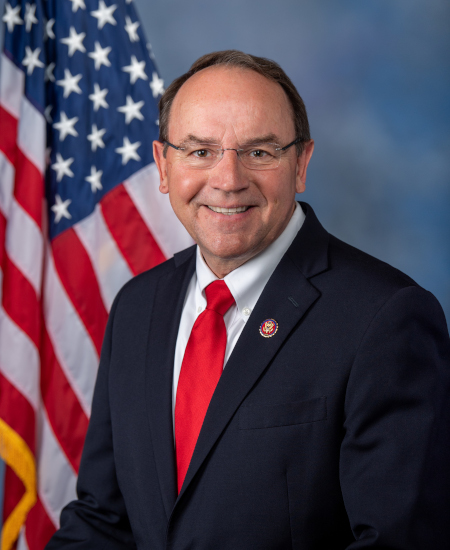
Rep. Thomas P. Tiffany
Sponsored bills
This resolution supports the designation of a National FFA Week. It also (1) recognizes the important role of the National FFA Organization (Future Farmers of America) in developing the next generation of leaders who will change the world, and (2) celebrates 70 years of the National FFA Organization's membership magazine.
Promoting Ties with Taiwan Act This bill requires the Department of State to submit to Congress a strategy to (1) work with allies and partners to support the expansion of Taiwan's relations and engagement with countries around the world, (2) promote the establishment of Taiwan's presence in countries and partners where Taiwan does not have a permanent presence, and (3) strengthen economic relations and supply chain resilience among Taiwan and like-minded partners to counter threats and malign influences from authoritarian regimes. Within one year of submitting the strategy, the State Department must report to Congress on actions taken to carry out the strategy.
Upholding the 1995 Jerusalem Embassy Law Act of 2021 This bill prohibits using federal funds to establish any diplomatic facility in Jerusalem other than the U.S. Embassy to Israel.
This resolution supports reopening the U.S. Capitol Building and House Office Buildings to visitors under the public visitation policies that were in place before the COVID-19 pandemic.
This resolution addresses the need for improvements to broadband infrastructure, particularly in rural areas, and the role of specified federal agencies in making such improvements.
Halting the Use of Narcotics Through Effective Recovery Act of 2022 or the HUNTER Act of 2022 This bill prohibits the use of federal funds to purchase (or support the purchase of) pipes, syringes, or other paraphernalia that can be used to smoke, inject, or otherwise introduce into the body any controlled substance unlawfully. This includes funds made available through the American Rescue Plan Act of 2021 for overdose prevention, syringe services, and other harm reduction programs.
Maddy summaryHR 6642 would repeal the existing corporate average fuel economy (CAFE) standards for vehicles. These standards, currently set by federal law, require automakers to meet specific average fuel efficiency targets for their new car and truck fleets. The bill would remove these requirements from U.S. Code, directly affecting car manufacturers by eliminating a key federal regulation governing vehicle fuel efficiency. This is a procedural repeal with no additional provisions or mechanisms described in the provided text.
Maddy summaryHR 6644 repeals two key tax credits for renewable energy producers under the Internal Revenue Code: the production tax credit (Section 45) and the investment tax credit (Section 48). This bill directly affects companies generating electricity from wind, solar, and other renewable sources that previously relied on these tax breaks. The repeal takes effect for electricity produced and sold after December 31, 2021, ending these specific tax incentives for renewable energy projects. The change removes these credits from the tax code without creating new provisions.
Close Biden's Open Border Act This bill provides $15 billion for the Department of Homeland Security to construct a border wall along the southern border of the United States. It also imposes a two-year moratorium on funding for U.S. contributions to the United Nations (U.N.). During the two-year period, funds may not be authorized or otherwise made available for contributions to the U.N.