

Maddy summaryHR 5411 blocks the Department of Energy from finalizing, implementing, or enforcing a proposed energy efficiency rule for residential clothes washers. The bill specifically targets the "Energy Conservation Program: Energy Conservation Standards for Residential Clothes Washers" rule (proposed in March 2023). This legislation prevents the rule from moving forward, meaning manufacturers would not be required to meet the new efficiency standards for clothes washers under this specific regulation. The bill directly affects the Department of Energy's regulatory process for appliance energy standards.
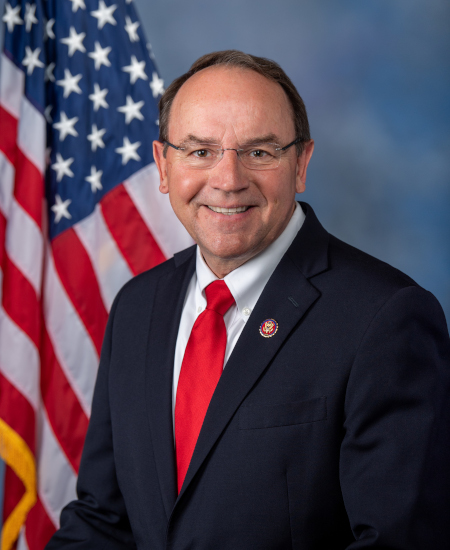
Rep. Thomas P. Tiffany
Sponsored bills
Maddy summaryThe Freedom to Breathe Act (HR 5368) prohibits the use of federal funds to enforce mask mandates for passengers traveling on air carriers, public transit, or in elementary, secondary, and higher education institutions from enactment until December 31, 2024. It bans federal agencies from requiring masks in these settings and prevents transportation providers or schools from denying service to individuals who refuse to wear masks. The law also overrides conflicting state or local rules during the applicable period. This applies specifically to settings receiving federal funding, such as public schools and federally supported transit systems.
Maddy summaryThis bill requires parties in civil lawsuits to disclose any foreign entities funding their case - including names, addresses, and countries of origin - within 30 days of filing or signing funding agreements. It specifically prohibits foreign governments and sovereign wealth funds from funding litigation where payment depends on the case outcome, banning such agreements entirely. Parties must also certify if foreign money is used and submit annual reports to Congress detailing foreign funders, judicial districts involved, and case types. The law applies to all civil cases filed after enactment, aiming to increase transparency about foreign influence in U.S. courts.
Maddy summaryHR 1567, the ACRES Act, requires the U.S. Departments of Agriculture and Interior to improve reporting on wildfire risk reduction work on public lands. Starting in 2025, agencies must annually report the exact number of acres treated, including details like wildfire risk levels, cost per acre, location in the wildland-urban interface, and effectiveness of treatments. The bill mandates standardized data tracking methods to ensure accuracy and requires these reports to be publicly posted online. A GAO study will later assess the Act's implementation, focusing on reporting and data tracking challenges.
Maddy summaryHR 5448, the Countering CCP Fentanyl Trafficking Act, requires the President to identify and sanction Chinese government officials who knowingly assist Mexican drug cartels with fentanyl production or trafficking. The bill mandates the President to submit a public list of these officials within 60 days of enactment, updating it annually for 10 years. Sanctions include blocking U.S. assets of listed individuals and denying them visas or entry into the United States. The law includes limited exemptions for UN-related activities and national security operations, and expires after 10 years.
Maddy summaryHR 5447, the No Alipay Act of 2023, bans all financial transactions involving Alipay (China) Internet Technology Company Limited between Alipay and "United States persons." This directly affects U.S. citizens, permanent residents, U.S.-organized businesses, and anyone physically present in the U.S. who uses Alipay for payments. The bill prohibits any financial activity, including app usage or payment processing, that involves Alipay and a U.S. person. It defines "financial transaction" broadly to cover any movement of funds or use of financial services affecting interstate or foreign commerce. The law would require U.S. persons to cease using Alipay for any transaction.
Maddy summaryHR 3152, the "Fight CRIME Act," aims to maintain international restrictions on Iran's missile-related activities by requiring diplomatic efforts to extend these restrictions before they expire in October 2023. The bill mandates annual reports detailing U.S. diplomatic strategies, potential impacts of expiration, and measures to deter missile technology transfers to Iran. It establishes sanctions against foreign individuals or entities that knowingly support Iran's missile or drone programs, including asset freezes and visa restrictions. These sanctions apply regardless of whether UN restrictions remain in effect after their expiration, directly affecting foreign entities involved in these activities.
Oversight for Members And Relatives Act or the OMAR Act This bill prohibits the use of campaign funds to compensate the spouse of a candidate or an individual holding federal office. It also requires disclosure of payments made to spouses or immediate family members. Specifically, the bill prohibits an authorized committee of a candidate or any other political committee that is established, maintained, or controlled by a candidate or an individual holding federal office from directly or indirectly compensating the spouse of the candidate or individual for services provided to or on behalf of the committee. The prohibition does not apply to a political committee of a political party. Next, the bill requires a political committee to report on disbursements to the spouse or an immediate family member of the candidate or the individual holding federal office. Finally, the bill requires any penalty for a violation of the bill to be imposed on the candidate or the individual holding federal office if the candidate or individual involved knew of the violation. Further, it prohibits the committee involved from reimbursing the candidate or individual for the penalty.
Defending Students' Civil Rights Act of 2023 This bill prohibits federally funded programs or activities from being premised on certain principles relating to race or sex. Specifically, the bill prohibits the use of federal funds for programs or activities that are premised on principles such as that (1) one race or sex is inherently superior to another, (2) the United States is fundamentally racist or sexist, and (3) an individual bears responsibility for the past actions of others of the same race or sex. The bill includes the use of these principles as a violation of Title VI of the Civil Rights Act of 1964, which prohibits discrimination based on race, color, or national origin in federally funded programs or activities.
Maddy summaryHR 5326, the Empowering Local Curriculum Act, prohibits federally funded schools from being required to teach or promote specific concepts related to race and gender. It explicitly blocks the mandatory teaching of ideas such as the U.S. being "fundamentally racist," individuals being inherently racist based on race, or meritocracy being racist. The bill applies to institutions receiving federal funds under the Higher Education Act (for colleges) and the Elementary and Secondary Education Act (for K-12 schools). It does not ban these topics but prevents federal requirements from mandating their inclusion in curricula.