

Maddy summaryThis resolution (HRES 1407) commemorates the 12th anniversary of the August 5, 2012, shooting at the Oak Creek Sikh Gurdwara in Wisconsin, which killed seven people. It specifically honors the victims - Paramjit Kaur, Suveg Singh Khattra, Satwant Singh Kaleka, Ranjit Singh, Sita Singh, Prakash Singh, and Baba Punjab Singh - and expresses condolences to their families. The resolution condemns the hate crime, recognizes the Sikh community’s resilience ("chardi kala"), and applauds first responders like Lieutenant Brian Murphy who saved lives. As a symbolic gesture, it does not create new laws or policies but formally acknowledges the tragedy and calls for continued efforts against religious discrimination.
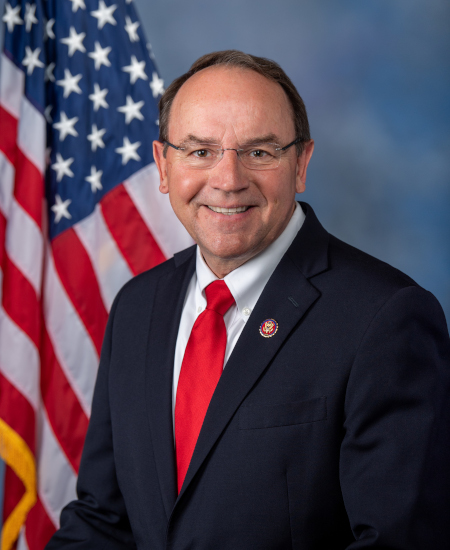
Rep. Thomas P. Tiffany
Sponsored bills
Maddy summaryThis bill reauthorizes the Debbie Smith DNA Backlog Grant Program, which provides federal funding to state and local law enforcement agencies to reduce backlogs in processing DNA evidence from crime scenes. It extends the program's funding period from fiscal years 2024 through 2029 (previously ending in 2024). The bill also updates audit requirements to ensure grant funds are used properly through 2029. This directly affects law enforcement agencies that receive these grants to accelerate DNA analysis for criminal investigations.
Maddy summaryThis bill imposes sanctions on individuals and entities within the Palestinian Authority (PA) and Palestine Liberation Organization (PLO) that administer or support a system paying terrorists and their families. It targets PA/PLO officials, specific entities like the Commission of Prisoners, and financial institutions processing these payments, requiring property blocking, visa bans, and restrictions on U.S. financial transactions. The sanctions apply if the PA/PLO continues payments described in the Taylor Force Act (2018), which previously mandated ending such payments. The bill terminates if the Secretary of State certifies the PA/PLO has ceased these payments.
Ensuring State Attorney General Accountability Act This bill prohibits a tax-exempt charitable organization from providing direct funding to state attorneys general for the purpose of a lawsuit, investigation, or remuneration of personnel.
Maddy summaryHJRES 165 is a congressional resolution seeking to block a Department of Education rule issued in April 2024 that updated protections against sex discrimination in schools receiving federal funding. The resolution aims to disapprove this specific rule (published as 89 Fed. Reg. 33474), which would have required schools to address sex-based discrimination in educational programs. If passed, the rule would no longer be in effect, meaning schools would not need to comply with its requirements. This resolution directly affects all schools and educational programs receiving federal financial assistance, as it targets the implementation of the new nondiscrimination standard.
Maddy summaryHRES 1378 is a symbolic resolution passed by the U.S. House of Representatives expressing the chamber's stance on the July 13, 2024, attempted assassination of former President Donald Trump. It condemns the attack as an "abhorrent act of cowardice" that must be universally rejected and asserts that political disputes should only be resolved through elections, not violence. The resolution does not create new laws or affect any specific group; it is a non-binding statement intended to promote civility in political discourse. It was introduced by Republican members of Congress and passed without amendment.
Maddy summaryHRES 1377 is a procedural resolution requiring the Secretary of Homeland Security to provide the House of Representatives with all relevant documents, records, and communications about the July 13, 2024, attempted assassination of Donald J. Trump within 7 days of the resolution's adoption. It specifically mandates the transfer of Secret Service protection records, DHS-SS communications, and audio/video recordings related to Trump's Butler, Pennsylvania, campaign rally on that date. The resolution does not change policy but demands transparency by directing the executive branch to disclose existing materials. It directly affects the Department of Homeland Security and its Secretary, who must comply with the 7-day deadline.
Maddy summaryHR 9111 redesignates Apostle Islands National Lakeshore as "Apostle Islands National Park and Preserve," creating two distinct areas: Apostle Islands National Park (where hunting and trapping are prohibited) and Sand Island National Preserve (which maintains existing hunting and fishing rules from the previous lakeshore designation). The bill updates all federal references to the area to reflect the new name, clarifies that the Ashland Harbor Breakwater Light is not included in park boundaries, and requires the National Park Service to add interpretive features about regional history at visitor centers. It does not create new regulations but formalizes the existing administrative structure under the National Park System. The change affects park management, visitors' activities, and federal documents referencing the area.
Maddy summaryThe SAVE Act (HR 8281) requires U.S. citizens to provide documentary proof of citizenship when registering to vote in federal elections. It defines acceptable proof as documents like passports, REAL ID-compliant IDs, military IDs, or birth certificates, and mandates that states verify citizenship using information from government agencies like DHS and Social Security. States must establish processes for voters without required documentation to provide an attestation under penalty of perjury. The law also requires states to remove noncitizens from voter rolls when verified evidence shows they're not citizens. This bill directly affects all applicants registering to vote in federal elections and state election officials who must implement these requirements.
Maddy summaryThis bill amends federal kidnapping and sexual abuse laws to strengthen protections for minors under 16. It adds a new provision making it unlawful to intentionally touch a minor's genitalia (not through clothing) for sexual purposes in federal prisons or facilities under federal contract. Crucially, it removes consent as a defense for offenders when the victim is under 16, requiring offenders to prove they reasonably believed the minor was 16. These changes apply retroactively to conduct occurring before, during, or after the law's enactment.