Protection of Women and Girls in Sports Act of 2021 This bill makes it a violation of federal law for a recipient of federal funds who operates, sponsors, or facilitates athletic programs or activities to permit a person whose sex is male to participate in an athletic program or activity that is designated for women or girls. The bill specifies that sex shall be recognized based solely on a person's reproductive biology and genetics at birth.
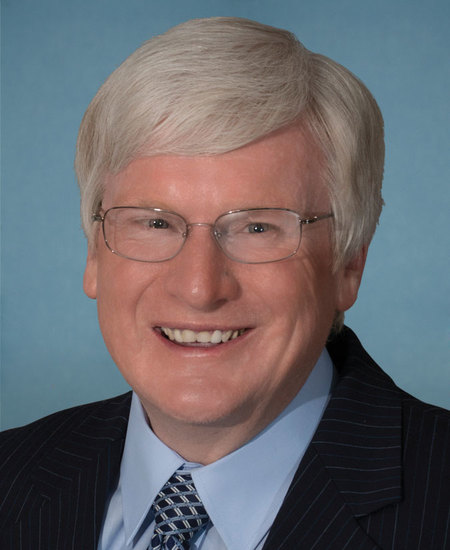
Rep. Glenn Grothman
Sponsored bills
Freedom of Association in Higher Education Act of 2022 This bill addresses freedom of association protections for college students in single-sex social organizations. Specifically, the bill gives students (or groups of students) enrolled at institutions of higher education (IHEs) the right to form or join social organizations, including single-sex social organizations. Additionally, the bill prohibits IHEs that participate in federal student-aid programs from taking adverse actions against single-sex social organizations or students who are members or prospective members of such organizations based solely on the practice of limiting membership to only individuals of one sex; taking actions that require or coerce members or prospective members of such organizations to waive protections provided under the bill, including as a condition of enrolling in the IHE; or imposing a recruitment restriction on a single-sex social organization that is not imposed upon other student organizations, unless the organization and IHE have entered into a written agreement allowing the restriction.
Competency-Based Education Act of 2022 or the CBE Act of 2022 This bill creates a framework under which students participating in competency-based education programs may receive federal student aid. Competency-based education refers to education that measures academic progress and attainment (1) by direct assessment of the student's mastery of competencies, (2) by expressing the student's mastery of competencies in terms of equivalent credit or clock hours, or (3) through a combination of both methods in addition to credit or clock hours. The bill also prohibits the Department of Education from enforcing certain regulations related to the definition of credit hour.
Postal Service Reform Act of 202 2 This bill addresses the finances and operations of the U.S. Postal Service (USPS). The bill requires the Office of Personnel Management (OPM) to establish the Postal Service Health Benefits Program within the Federal Employees Health Benefits Program under which OPM may contract with carriers to offer health benefits plans for USPS employees and retirees. The bill provides for coordinated enrollment of retirees under this program and Medicare. The bill repeals the requirement that the USPS annually prepay future retirement health benefits. Additionally, the USPS may establish a program to enter into agreements with an agency of any state government, local government, or tribal government, and with other government agencies, to provide certain nonpostal products and services that reasonably contribute to the costs of the USPS and meet other specified criteria. The USPS must develop and maintain a publicly available dashboard to track service performance and must report regularly on its operations and financial condition. The Postal Regulatory Commission must annually submit to the USPS a budget of its expenses. It must also conduct a study to identify the causes and effects of postal inefficiencies relating to flats (e.g., large envelopes). The USPS Office of Inspector General shall perform oversight of the Postal Regulatory Commission.

Maddy summaryHRES 1028 is a symbolic House resolution supporting the current legal standard for securities disclosure, which requires companies to share only information investors deem "material" (important to their investment decisions). It opposes new disclosure rules - particularly those focused on environmental, social, and governance (ESG) issues - that would expand beyond the SEC’s core mission of investor protection and market fairness. The resolution argues such changes would burden businesses with costly compliance, create information overload for investors, and distract the SEC from its primary role. It specifically references the decades-old materiality standard established by the 1933 Securities Act and reinforced by the 1976 Supreme Court case *TSC Industries v. Northway*. As a resolution, it does not change law but expresses congressional preference against expanding disclosure requirements.
Ensuring Lasting Smiles Act This bill requires private health insurance plans to cover diagnosis and treatment of congenital anomalies and birth defects, such as reconstructive services and items. Coverage must include services and items that functionally improve, repair, or restore any body part that is medically necessary for normal bodily functions or appearance, as determined by the treating physician. Coverage limits and cost-sharing requirements for such services and items may not be more restrictive than those applicable to all medical and surgical benefits under the plan.
This resolution calls on the Biden administration and its officials to maintain the sanctions on the repressive regimes in Venezuela and Iran. The resolution also expresses the sense of the House of Representatives that American energy independence should be achieved again for the sake of U.S. national security and the security of U.S. allies; and President Biden should immediately rescind his Executive Orders that prohibit the approval of new leases on federal lands and waters, and should immediately take actions to reestablish American energy independence.
Supply Chain Disruptions Relief Act This bill modifies the treatment of liquidations of new motor vehicle inventory as qualified LIFO (last in first out accounting method) inventory. It allows new motor vehicle dealers to elect to wait until the end of 2025 to replace their inventory for purposes of determining income attributable to the sale of such inventory during 2020 and 2021.
Keeping Israel Safe from Iranian Proxies Act This bill prohibits the Department of Defense from making federal funds available to specified entities that are backed by Iran.
Reversing Every Vaccine Emergency Requirement and Stopping Employee OSHA Mandates Act or the REVERSE OSHA Mandates Act This bill limits the authority of the Occupational Safety and Health Administration (OSHA) to regulate workplace safety and health matters. Specifically, the bill repeals OSHA's authority to issue emergency temporary standards related to workplace safety and health. The bill further specifies that OSHA may not, under its authority to regulate workplace safety and health, require the administration of any drug, vaccine, or other biological product to an employee.