

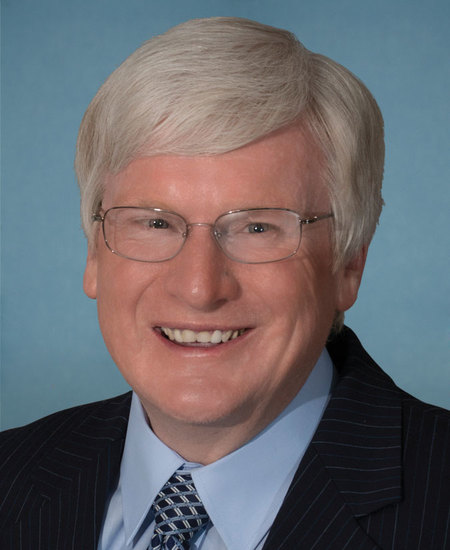
Photo of Glenn Grothman
R United States House · District 6 · Wisconsin On the 2026 ballot

Rep. Glenn Grothman

Compare
Total votes
2,837
all sessions
Attendance
99%
41 missed
Near the chamber average
With party
92%
of cast votes
Near the chamber average
Bipartisan score
4%
crosses aisle rarely
Near the chamber average
Sponsored
1,193
bills & resolutions
Near the chamber average
Committees
9
assignments
1,193 bills and resolutions

Sponsored bills

Total
1,193
Primary
104
Co-sponsor
1,089
This page
1,193
matching current filters
Co-sponsor HR 8364
In committee · United States House · Co-sponsor
Firearms Interstate Commerce Reform Act

Maddy summaryThis bill amends federal law to simplify interstate firearm transfers. It replaces "rifle or shotgun" with "firearm" in transfer rules, allowing all firearms to be treated uniformly. The key change permits licensed dealers to sell firearms to other licensed dealers anywhere in the U.S., and lets licensed sellers transfer firearms to unlicensed buyers at temporary locations (like gun shows) in any state. It also updates residency definitions for military members and federal employees stationed across state lines, clarifying which state they're considered residents of for firearm purposes. The bill directly affects licensed firearm dealers, military personnel, and federal employees who travel between states.

In committee May 10, 2024 1 co-sponsor
Co-sponsor HJRES 98
Vetoed · United States House · Co-sponsor
Providing for congressional disapproval under chapter 8 of title 5, United States Code, of the rule submitted by the National Labor Relations Board relating to "Standard for Determining Joint Employer Status".

Maddy summaryHJRES 98 is a congressional resolution seeking to block a National Labor Relations Board (NLRB) rule that defined how businesses are considered "joint employers" for labor law purposes. The bill targets the NLRB's October 2023 rule (88 Fed. Reg. 73946), which would have changed how companies like franchisors or staffing agencies are held responsible for workers' rights. If passed, this resolution would cancel the rule, directly affecting businesses managing multiple employer relationships and labor organizations enforcing workplace standards. The measure uses a standard process under federal law to disapprove an agency rule, not creating new policy but reversing an existing regulation.

Vetoed May 7, 2024 1 co-sponsor
Co-sponsor HJRES 131
In committee · United States House · Co-sponsor
Providing for congressional disapproval under chapter 8 of title 5, United States Code, of the rule submitted by the Environmental Protection Agency relating to "Multi-Pollutant Emissions Standards for Model Years 2027 and Later Light-Duty and Medium-Duty Vehicles".

Maddy summaryHJRES 131 seeks congressional disapproval of an EPA rule establishing emissions standards for light- and medium-duty vehicles model years 2027 and later. If passed, this resolution would block the EPA's rule from taking effect, preventing automakers from having to comply with those specific pollution requirements. The bill targets the EPA's April 18, 2024, rule published in the Federal Register (89 Fed. Reg. 27842). This is a procedural disapproval resolution under the Congressional Review Act, not a new policy.

In committee May 3, 2024 1 co-sponsor
Co-sponsor HR 6285
Passed · United States House · Co-sponsor
Alaska’s Right to Produce Act of 2023

Maddy summaryHR 6285, the Alaska’s Right to Produce Act of 2023, requires the federal government to reissue canceled oil and gas leases on six specific tracts (16, 17, 24, 26, 27, and 30) in Alaska’s Coastal Plain. It mandates the Secretary of the Interior to accept the highest valid bids from January 2021 within 30 days and issue leases by December 2024, while blocking new environmental reviews for the program. The bill also nullifies federal actions that paused leasing, including a 2023 BLM rule and a 2021 Secretarial Order, and restricts judicial review of related approvals. This directly affects oil companies that bid on the canceled leases and the Bureau of Land Management, requiring them to proceed under the 2020 Record of Decision.

Passed May 2, 2024 1 co-sponsor
Co-sponsor HR 8208
In committee · United States House · Co-sponsor
Stop the BIS Rule Act

Maddy summaryHR 8208, the Stop the BIS Rule Act, blocks federal funding for the Bureau of Industry and Security (BIS) to finalize, implement, or enforce a proposed rule on firearms export controls. The rule, issued April 26, 2024 (89 Fed. Reg. 34680), aimed to enhance controls for firearms and related items. By prohibiting funds for this specific rule, the bill prevents the government from moving forward with the proposed regulations, which would have affected firearms exporters. The bill directly targets the BIS's ability to act on the rule, not the rule's content.

In committee May 1, 2024 1 co-sponsor
Co-sponsor HR 764
Passed · United States House · Co-sponsor
Trust the Science Act

Maddy summaryHR 764, the "Trust the Science Act," requires the Secretary of the Interior to reissue a specific 2020 rule removing gray wolves from the endangered species list within 60 days of the bill's enactment. This directly affects gray wolf populations by changing their federal conservation status. The bill's key provision mandates that this reissuance cannot be challenged in court, eliminating judicial review of the decision. The bill focuses solely on procedural implementation of a prior rule, not broader scientific policy.

Passed May 1, 2024 1 co-sponsor
Co-sponsor HR 615
Passed · United States House · Co-sponsor
Protecting Access for Hunters and Anglers Act of 2023

Maddy summaryHR 615, the Protecting Access for Hunters and Anglers Act of 2023, prevents federal agencies from banning lead ammunition or tackle on public lands and waters managed for hunting or fishing, except in specific cases. The bill allows exceptions only if a state wildlife department confirms lead use is harming local wildlife, and the federal action aligns with state law or state agency approval. It directly affects hunters and anglers using federal lands and waters, ensuring they can continue using lead products unless a state verifies a local wildlife issue requiring a ban. The law requires federal agencies to justify any exception with state data and policy compliance in official notices.

Passed May 1, 2024 1 co-sponsor
Co-sponsor HR 8147
In committee · United States House · Co-sponsor
Repealing Big Brother Overreach Act

Maddy summaryHR 8147 repeals the Corporate Transparency Act, which required certain businesses (typically those with more than 20 employees) to report beneficial ownership details to the Treasury Department. This bill eliminates the requirement for companies to disclose who ultimately owns or controls them, directly affecting business owners and financial institutions that previously submitted this information. The bill also makes minor technical changes to Title 31 of the U.S. Code to remove references to the repealed provisions. The repeal would end the existing financial transparency reporting obligation for covered entities.

In committee Apr 29, 2024 1 co-sponsor
Co-sponsor HR 1803
In committee · United States House · Co-sponsor
CURD Act

Maddy summaryHR 1803, the CURD Act, defines "natural cheese" in federal law to clarify labeling standards for consumers. It specifies that natural cheese must be made by curdling milk (or milk derivatives) through traditional methods without certain processed additives, while explicitly excluding pasteurized process cheeses, cheese spreads, and similar products. The bill requires that products labeled as "natural cheese" meet this new definition, updating FDA labeling rules under the Federal Food, Drug, and Cosmetic Act. This directly affects cheese manufacturers (who must comply with the definition) and consumers (who gain clearer product distinctions on labels). The change replaces vague industry terms with a consistent, science-based standard to improve transparency.

In committee Apr 29, 2024 1 co-sponsor
Co-sponsor HR 8083
In committee · United States House · Co-sponsor
Defund NPR Act

Maddy summaryThe Defund NPR Act would prohibit all federal funding for National Public Radio (NPR) and any successor organization. This means public broadcast stations receiving federal funds could no longer use those funds to pay for NPR programming or dues. The bill would take effect upon enactment, eliminating federal financial support for NPR through any channel. It directly affects NPR and public broadcasters that rely on federal funds for programming partnerships.

In committee Apr 26, 2024 1 co-sponsor
Showing 451 to 460 of 1,193 bills
Previous 1 … 45 46 47 … 120 Next