

Maddy summaryThis bill requires Congress to approve major federal regulations before they take effect. It would mandate that agencies submit detailed reports including cost-benefit analyses, economic impact assessments, and other information to Congress before implementing significant regulations. Major rules - defined as those with at least $100 million annual economic impact or significant effects on costs, competition, or employment - would need a joint resolution of approval from Congress within 70 session days. Nonmajor rules would follow a less stringent disapproval process. The bill aims to increase legislative oversight of the regulatory process, requiring Congress to formally review and approve rules that significantly impact the economy or public regulations.
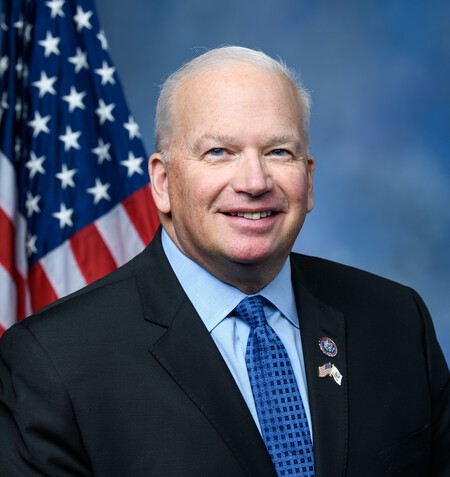
Rep. Scott Fitzgerald
Sponsored bills
Maddy summaryThis bill requires federal financial regulators to coordinate with state insurance regulators before collecting data from insurance companies, ensuring they first check if the data is already available through state agencies or public sources. It strengthens confidentiality protections by preventing the sharing of nonpublic data with federal regulators from waiving existing privacy rights under federal or state law. Insurance companies and state regulators are directly affected, as the law governs how data is shared between federal financial regulators and state agencies. The bill modifies existing rules to streamline data collection while maintaining privacy safeguards.
Maddy summaryHR 3556, the "Increasing Financial Regulatory Accountability and Transparency Act," requires major financial regulatory agencies (FDIC, Federal Reserve, Comptroller of the Currency, and National Credit Union Administration) to provide more detailed transparency about their regulatory activities. The bill mandates semi-annual reports to Congress containing specific data about financial institutions' conditions, supervisory actions, and enforcement measures, with additional confidential reports identifying institutions with less than satisfactory ratings. It also requires agencies to notify Congress before making certain regulatory decisions and establishes new experience requirements for the Federal Reserve's Vice Chairman for Supervision. The bill aims to enhance congressional oversight of financial regulation through increased transparency and more detailed reporting requirements.
Maddy summaryHR 3269, the Law Enforcement Innovate to De-Escalate Act, exempts specific less-than-lethal projectile devices from federal firearm taxes and National Firearms Act restrictions. The bill defines these devices as those firing projectiles at under 500 feet per second and designed not to cause death or serious injury. This directly affects law enforcement agencies using such devices and manufacturers producing them, by removing tax burdens and registration requirements. The key change is creating a clear legal exemption for these devices under federal law, streamlining their use for de-escalation purposes.
Maddy summaryThe FOCA Act of 2023 requires federal agencies to stop mandating or banning contractor agreements with labor organizations (like union contracts) in construction project bids and contracts. It directly affects federal contractors, subcontractors, and agencies managing construction projects funded by the government. The bill prohibits favoring or penalizing contractors based on their labor affiliation status, aiming to promote fair competition and reduce costs. It also mandates updates to federal contracting rules within 60 days of enactment to implement these changes.
Maddy summaryThis bill requires canned agricultural products imported to the U.S. to display their country of origin on the front label or stamped/embossed on the top of the can. It applies specifically to agricultural products defined under the Agricultural Marketing Act of 1946. The labeling requirement would take effect 18 months after the bill is enacted. This directly affects importers of canned agricultural goods entering the U.S. market.
Maddy summaryThe Maximum Pressure Act (HR 6114) is a legislative proposal that would maintain and expand U.S. sanctions against Iran. The bill would codify existing sanctions, require Iran to meet 12 specific conditions before sanctions could be lifted (including ending support for terrorism, releasing hostages, and ending nuclear enrichment), and expand sanctions on Iran's Revolutionary Guard Corps and missile programs. It also establishes new reporting requirements for the U.S. government to monitor Iran's activities and the impact of sanctions. The legislation would require congressional review before any sanctions could be lifted or modified, preventing the executive branch from unilaterally easing restrictions.
Maddy summaryThis bill, HR 5796, prohibits the Department of Health and Human Services from implementing a proposed rule requiring minimum staffing levels in nursing homes. It creates an advisory panel of 15 members - including rural nursing home staff and experts - to study workforce shortages and report on access barriers for seniors, especially in rural areas. The panel must submit an initial report within 60 days, analyzing staffing challenges and recommending solutions to strengthen the nursing home workforce. These provisions directly aim to prevent nursing home closures (like the 129 that occurred in 2022) that threaten rural seniors’ access to care.
Maddy summaryHR 3858, the "No Free TRIPS Act," requires the U.S. President and federal officials to obtain explicit Congressional approval *before* negotiating any changes to the global TRIPS Agreement on intellectual property rights. This bill directly affects U.S. trade negotiators and the President by blocking any withdrawal, suspension, waiver, or modification of the TRIPS Agreement without prior congressional authorization. The key mechanism mandates that Congress must give specific permission before negotiations begin, preventing unilateral executive action on international intellectual property rules. The bill focuses solely on the procedural requirement for negotiations, not on the substance of intellectual property policy or its potential impacts.
Maddy summaryHR 3423, the SAVE Act, defines "common name" for agricultural products (like "Cheddar" for cheese or "Merlot" for wine) as a term routinely used on packaging, consistent with international standards. It requires the Agriculture Secretary and U.S. Trade Representative to negotiate agreements with foreign countries to protect U.S. producers' right to use these common names in international markets. The bill directly affects U.S. agricultural exporters, processors, and producers who rely on familiar product names. It mandates biennial reports to Congress on these trade efforts, focusing on preserving market access for U.S. goods using common names.