

Maddy summaryHR 1064, the "Stopping Overdoses of Fentanyl Analogues Act," adds all fentanyl-related substances to the federal Schedule I list of controlled substances without requiring separate listing. It defines these substances broadly as any chemical structure similar to fentanyl - such as modifications to its phenyl, piperidine, or aniline rings - to automatically cover new synthetic fentanyl analogues created by drug manufacturers. This change treats these substances as illegal fentanyl analogues under existing penalties, meaning law enforcement can prosecute them without proving they meet the current legal definition of a "controlled substance analogue." The bill directly affects drug manufacturers, distributors, and law enforcement by streamlining the regulation of new fentanyl-like compounds designed to evade current laws.
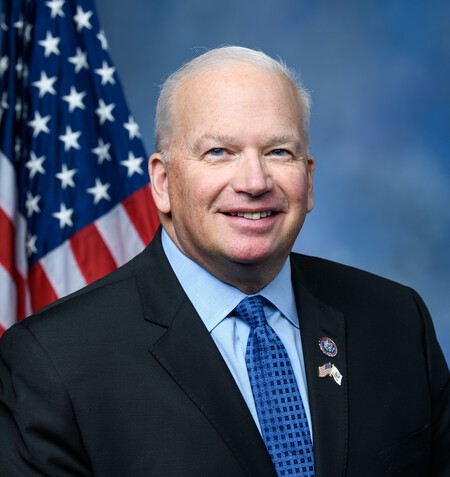
Rep. Scott Fitzgerald
Sponsored bills
Fair Access to Banking Act This bill places restrictions on certain banks, credit unions, and payment card networks if they refuse to do business with a person who complies with the law. Restrictions include prohibiting the use of electronic funds transfer systems and lending programs, termination of an institution's depository insurance, and specified civil penalties. Banks and other specified financial institutions are allowed to deny financial services to a person only if the denial is justified by a documented failure of that person to meet quantitative, impartial, risk-based standards established in advance by the institution. This justification may not be based upon reputational risks to the institution. The bill establishes the right for a person to bring a civil action for a violation of this bill.
Maddy summaryHR 914, the American CANS Act, requires importers of canned agricultural products to clearly mark the country of origin on the front label or top of the can. This applies specifically to agricultural products packaged in cans, as defined by existing law, and affects businesses importing these items into the U.S. The bill amends the Tariff Act of 1930 to mandate this labeling, effective 18 months after the bill's enactment. It does not change product content or pricing, only the required origin disclosure on packaging.
Maddy summaryHR 925, the "Dismantle DEI Act of 2025," would eliminate diversity, equity, and inclusion (DEI) programs across federal government operations. The bill requires federal agencies to close DEI offices, rescind related executive orders, and prohibit the use of federal funds for DEI training, offices, or initiatives. It defines "prohibited diversity, equity, or inclusion practice" as any activity that discriminates based on race, ethnicity, religion, biological sex, or national origin, or requires employees to complete training asserting that certain groups are inherently superior or inferior. The legislation also prohibits requiring employees to sign statements about race, ethnicity, or gender, and establishes private lawsuits for violations with potential damages of $1,000 per violation per day. This bill would directly affect federal agencies, contractors, grantees, and advisory committees receiving federal funding.
Maddy summaryHCONRES 4 is a symbolic resolution expressing Congress's support for tax-exempt fraternal benefit societies (like mutual aid organizations). It recognizes these groups, which have over 7 million members nationwide, as historically and currently providing critical community benefits - including life/health insurance, charitable work, and volunteer services - valued at over $3.8 billion annually. The resolution affirms that their tax-exempt status under Section 501(c)(8) of the Internal Revenue Code remains beneficial and should continue to be promoted. This is a non-binding expression of congressional sentiment, not a policy change.
Life at Conception Act This bill declares that the right to life guaranteed by the Constitution is vested in each human being at all stages of life, including the moment of fertilization, cloning, or other moment at which an individual comes into being. Nothing in this bill shall be construed to authorize the prosecution of any woman for the death of her unborn child.
Maddy summaryHR 21, the Born-Alive Abortion Survivors Protection Act, requires medical staff at abortion facilities to provide the same immediate care and hospital admission to any infant born alive during an abortion as they would for any newborn. It mandates reporting failures to provide this care to law enforcement and imposes penalties of up to 5 years in prison for violations, with harsher penalties for intentional killing. The bill also allows women who undergo abortions to sue for civil damages, including triple the abortion cost, and provides for attorney fees. It defines "abortion" to exclude procedures performed after viability to preserve a live birth. This law directly affects healthcare providers at abortion facilities and creates new federal legal obligations for them.
Maddy summaryHRES 63 is a symbolic resolution designating the week of January 26-February 1, 2025, as "National School Choice Week." It expresses the House's support for raising public awareness about educational options - including public schools, charter schools, private schools, online academies, and homeschooling - and encourages parents to explore these choices. The resolution also urges the public to host events during this week to celebrate parental choice in education. As a non-binding resolution, it does not create new policies or alter existing laws.
Maddy summaryThis bill renames the Consumer Financial Protection Bureau (CFPB) as the "Consumer Financial Empowerment Agency" across all federal laws and documents, affecting over 25 statutes including the Dodd-Frank Act and Truth in Lending Act. It makes no substantive policy changes but updates references to the agency's name in legal texts, regulations, and government records. The change applies to all existing provisions, titles, and definitions within federal law without altering the agency's structure or authority. This is a purely procedural renaming bill with no new funding or regulatory impact.
Maddy summaryHR 685, the SAVE Moms and Babies Act of 2025, prohibits the FDA from approving new abortion drugs or allowing investigational use of existing ones. It restricts existing abortion drugs to in-person administration by certified healthcare providers in clinics or hospitals (not pharmacies), limits use to pregnancies under 70 days gestation, and requires providers to certify they can handle complications like severe bleeding or ectopic pregnancies. The bill mandates reporting of adverse events (such as hospitalizations or infections) to the FDA without patient identifiers and defines "abortion drug" broadly as any drug intended to terminate pregnancy, excluding specific medical exceptions. This directly affects FDA approval processes, healthcare providers prescribing these drugs, and drug manufacturers.