

Maddy summaryThe FOCA Act of 2025 prohibits federal agencies from requiring or banning contractors from using union agreements in construction project bids or contracts. It directly affects federal agencies, contractors, and subcontractors working on federally funded or assisted construction projects (like buildings or infrastructure). The law requires bid documents to not favor or penalize contractors based on whether they have union agreements, aiming to promote open competition and prevent discrimination. This changes how agencies structure bids but does not affect union agreements themselves. The bill applies to all new contracts and subcontracts after enactment, with limited exemptions only for public health/safety emergencies or national security.
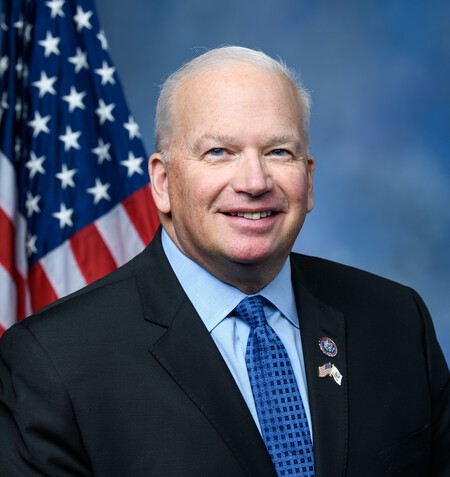
Rep. Scott Fitzgerald
Sponsored bills
Maddy summaryThis bill increases federal funding for projects improving safety for pedestrians and cyclists. It allows states and local governments to use highway funds for connecting existing bike/pedestrian infrastructure (clause xxix) or reducing safety risks to vulnerable road users (clause xxx), with federal funding covering up to 100% of costs for these projects. The bill also creates flexible financing options, letting local safety plans (like Complete Streets or Vision Zero plans) count toward required local funding shares. It directly affects state transportation agencies and local governments administering federal highway safety programs. The key change is making 100% federal funding available for qualifying pedestrian and cyclist safety projects.
Maddy summaryH.J.Res. 74 disapproves a rule by the Bureau of Consumer Financial Protection (BCFP) that would have prohibited creditors and consumer reporting agencies from using medical information - such as unpaid medical bills - in credit reports and credit scoring. The rule, published in the Federal Register on January 14, 2025, aimed to prevent medical debt from affecting credit scores. If enacted, this resolution would block the rule from taking effect, maintaining the current practice where medical debt can influence credit decisions. This disapproval follows standard Congressional Review Act procedures for overturning agency rules.
Maddy summaryThis resolution formally censures Representative Al Green (D-TX) for disrupting President Trump's address during a joint session of Congress on March 4, 2025. It requires him to appear in the House chamber for the public reading of the censure resolution, which states his actions violated decorum rules and brought disrepute to Congress. As a procedural resolution, it does not enact policy changes but serves as a formal reprimand for conduct during a congressional session.
Maddy summaryThis bill adds a new tax provision (Section 139J) to the Internal Revenue Code, excluding interest income from certain rural and agricultural loans from taxable income for qualifying lenders. It directly affects banks, insurance companies, and farm credit entities that provide loans secured by rural or agricultural property (including qualifying single-family homes in rural areas), while excluding loans to foreign adversary entities (like those linked to China, Russia, or Iran). The law requires lenders to report on how this tax exclusion impacts loan interest rates, with a Treasury report due to Congress within five years. The policy change aims to reduce lenders' tax burden on these specific loans, potentially lowering costs for borrowers in rural communities.
Maddy summaryHRES 166 is a non-binding House resolution expressing U.S. support for the Iranian people's desire for a democratic, secular, and nonnuclear republic. It condemns the Iranian regime's terrorism, regional proxy wars, internal suppression of ethnic and religious minorities, and human rights abuses - including executions and repression of women-led protests. The resolution calls for holding the regime accountable through sanctions, supports the Ten-Point Plan for Iran’s democratic transition, and urges protection for Iranian political refugees in Albania. It does not create new laws but affirms U.S. policy alignment with Iranian protesters' demands.
Maddy summaryThis bill awards a Congressional Gold Medal to the 761st Tank Battalion (known as the "Black Panthers"), the first predominantly Black armored unit in World War II's European Theater. It recognizes their combat service from 1944-1946, including key roles in the Battle of the Bulge and breaking the Siegfried Line, despite facing racial prejudice during and after the war. The medal will be displayed at the National Museum of African American History and Culture, with bronze duplicates available for sale to cover costs. The bill commemorates the battalion's 130,000 enemy casualties inflicted, 50% casualty rate, and their 1978 Presidential Unit Citation. It does not create new laws or affect current policies.
Maddy summaryHR 1606 requires the Consumer Financial Protection Bureau (CFPB) to assess how proposed rules affect small businesses during rulemaking. It amends the Dodd-Frank Act to mandate that the CFPB analyze the impact of proposed rules on small entities, following existing requirements under Title 5 of the U.S. Code. The bill also adds new requirements for the CFPB to justify why it did not consider small business impacts or adopt alternatives that minimize costs for small businesses, including detailed written explanations supported by facts and legal reasoning. This directly affects the CFPB’s rulemaking process and the small businesses regulated by its policies.
Maddy summaryHR 1631, the Safe Access to Cash Act of 2025, amends federal robbery law to clarify that all network-connected ATMs and cash in transit (being loaded/unloaded) are considered under the care of banks, credit unions, or savings associations. This directly affects financial institutions by expanding their legal responsibility for ATM security, regardless of whether the ATM is on their premises or owned/operated by another entity. The bill defines "ATM" broadly to include any terminal used for withdrawals, deposits, or balance inquiries via a bank-issued card. Key provisions ensure these locations and cash are treated as part of the institution's protected property under robbery statutes. This creates a clear legal standard for holding financial institutions accountable for ATM security.
Maddy summaryHR 1551, the Protect and Serve Act of 2025, creates a new federal criminal offense for intentionally harming law enforcement officers under specific circumstances. It imposes harsher penalties, including up to 10 years in prison for serious injury or life imprisonment if death occurs, kidnapping is involved, or a firearm is used. The law applies when the crime crosses state lines, involves interstate weapons, occurs on federal property, or targets federal officers. Prosecutions require the Attorney General’s written certification, considering factors like prior state convictions and public safety impact. The bill directly affects law enforcement officers and federal prosecutors by expanding federal jurisdiction for certain violent crimes against them.