

Maddy summaryThis resolution proposes creating a Permanent Select Committee on Aging in the U.S. House of Representatives. The committee would study issues affecting older Americans - such as income security, healthcare, housing, and long-term care - without having the power to pass laws. It would review existing government and private programs, develop coordination strategies for aging-related services, and assess recommendations from the President or the White House Conference on Aging. The committee’s work would inform future policy discussions but would not directly change legislation.
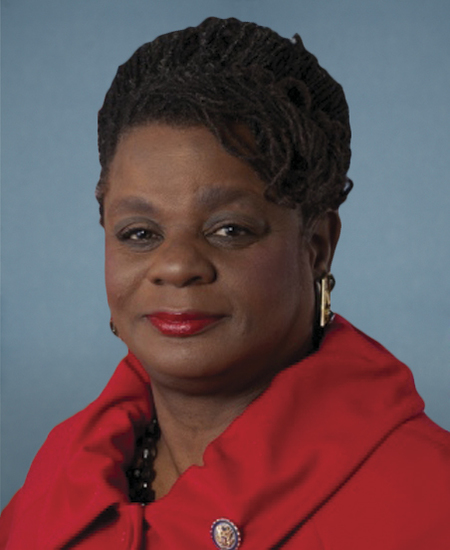
Rep. Gwen Moore
Sponsored bills
Maddy summaryThis symbolic resolution (HRES 1026) recognizes Black History Month and honors the 94 African-American recipients of the Congressional Medal of Honor for their military bravery, heroism, and valor. It does not create new laws or policies but formally acknowledges their contributions, referencing historical context like Sergeant William Harvey Carney’s 1863 actions and the 1993 study revealing racial discrimination in Medal of Honor awards during WWII. The resolution specifically calls for the House to recognize Black History Month and honor these 94 service members. It is a non-binding expression of support with no concrete policy changes.
Maddy summaryThis bill establishes an Interagency Task Force on Black Women and Girls, requiring the Attorney General and Health Secretary to create a group within 180 days of enactment. The Task Force will examine systemic issues affecting Black women and girls - including school discipline, economic opportunities, healthcare access, justice system involvement, and housing - and make policy recommendations across these areas. It mandates the U.S. Commission on Civil Rights to annually study specific disparities like maternal mortality rates, the school-to-prison pipeline, and housing barriers, then report findings to Congress. The bill directly targets policies impacting Black women and girls as defined in the legislation, with recommendations due within two years.
Maddy summaryHR 7396, the AVERT Future Violence Act of 2024, requires the federal government to study the connection between animal cruelty and future violence against humans. It mandates a National Institute of Justice study analyzing whether animal cruelty predicts future violence (like domestic abuse) and developing early intervention strategies. The bill also creates a $2 million annual grant program (2025-2029) for eligible entities - such as states, courts, animal shelters, and domestic violence organizations - to fund training, data systems, and prevention programs targeting both animal cruelty and related human violence. These grants specifically support efforts to identify animal cruelty cases earlier and provide rehabilitation for offenders to prevent future harm to people or animals.
Maddy summaryHR 7378, the Frederick Douglass Congressional Gold Medal Act, authorizes Congress to posthumously award a gold medal to honor Frederick Douglass's legacy as a pivotal abolitionist, writer, and advocate for civil rights. The medal, designed by the Treasury Secretary, will be presented to the National Museum of African American History and Culture for display, with bronze duplicates available for sale to cover costs. This ceremonial bill does not create new laws or affect current policies - it solely commemorates Douglass's historical contributions to ending slavery and advancing equality.
Maddy summaryHRES 1013 is a symbolic resolution designating February 2024 as "National Teen Dating Violence Awareness and Prevention Month." It expresses congressional support for this designation to promote community awareness and prevention efforts around teen dating violence, which affects youth across the U.S. The resolution does not create new laws or funding but encourages schools, families, and communities to observe the month with educational activities. It references statistics on teen dating violence (like 28.1% of teens experiencing digital dating abuse) to highlight the issue's significance.
Maddy summaryHR 2426, the Find and Protect Foster Youth Act, requires the federal government to evaluate state and tribal child welfare systems' protocols for identifying and responding to children missing from foster care. It mandates the Secretary to identify obstacles in these systems, share best practices, and provide technical assistance to states and tribes on tracking missing youth and improving services. The bill also specifically requires improved screening for sex trafficking risk when children return to foster care after running away, including new tools for caseworkers to assess trafficking risk and document appropriate services. These changes directly affect foster youth, particularly those missing or at risk of exploitation, and the states and tribes managing foster care systems. The law authorizes funding through fiscal year 2027 to support these efforts.
Maddy summaryThe MRRRI Act establishes a federal initiative to restore the ecological health of the Mississippi River, focusing on water quality, flood resilience, wildlife habitat, and invasive species management across the 10 Mississippi River States. It creates a Mississippi River National Program Office within the EPA to coordinate restoration efforts, develop actionable goals and an action plan, and establish research centers to guide science-based restoration. The Act requires specific funding set-asides for projects addressing disproportionate impacts on rural, economically disadvantaged, and communities of color, while prioritizing projects that restore natural river functions like wetland rehabilitation and pollution reduction. It authorizes funding for projects that improve drinking water quality, reduce flood risks, and protect habitats supporting the river's $500 billion economy and 780+ species of fish and wildlife.
Maddy summaryHR 7257, the GLRI Act of 2024, reauthorizes federal funding for the Great Lakes Restoration Initiative. It specifically adds $500 million annually for fiscal years 2027 through 2031 to the existing program under the Federal Water Pollution Control Act. This funding directly supports ongoing environmental restoration projects in the Great Lakes region, including pollution cleanup, habitat restoration, and invasive species management. The bill extends current funding levels for the next five years without altering program requirements or eligibility.
Medicaid Coverage for Addiction Recovery Expansion Act This bill allows state Medicaid programs to cover residential addiction treatment facility services for adults between the ages of 22 and 64 if such services are offered as part of a full continuum of evidence-based treatment services. Residential addiction treatment facility services are medically necessary inpatient services provided in an accredited, size-limited facility for the purpose of treating a substance-use disorder within a specified time period. In addition, the bill establishes a grant program for states to expand infrastructure and treatment capabilities of existing youth addiction treatment facilities that (1) provide addiction treatment services to youths under Medicaid or the Children's Health Insurance Program (CHIP), and (2) are located in communities with high numbers of medically underserved populations of at-risk youths. At least 15% of grant funds awarded to a state must be used for making payments to rural facilities.