

Maddy summaryThis resolution condemns Uganda's Anti-Homosexuality Act, which criminalizes consensual same-sex relationships with penalties including life imprisonment and the death penalty for certain acts. It directly affects LGBTQI+ Ugandans, who face increased violence, evictions, job loss, and barriers to healthcare due to the law's enforcement. The resolution calls on Uganda to repeal the law and supports maintaining U.S. sanctions like visa restrictions for officials involved in human rights abuses and reduced aid. It reflects U.S. government opposition to the law, which has been linked to severe human rights violations against marginalized communities.
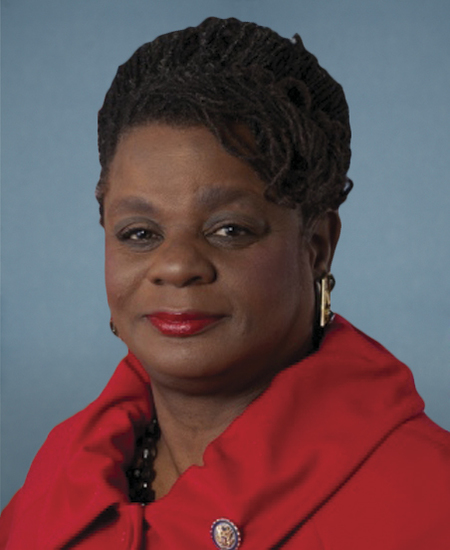
Rep. Gwen Moore
Sponsored bills
Maddy summaryThe SAFES Act creates a federal tax credit for individuals who purchase gun safes, allowing them to deduct 90% of the cost, up to $500 per person or $1,000 for joint returns. For purchases made before 2030, any qualifying gun safe qualifies; after 2029, only safes meeting standards set by the Secretary of Health and Human Services (HHS) will be eligible, based on an HHS report required within five years of enactment. The bill prohibits requiring taxpayers to disclose firearm ownership details to claim the credit. This policy directly affects individual firearm owners seeking to reduce tax liability through safe storage purchases.
Maddy summaryThis bill, HR 6180, officially recognizes the Poarch Band of Creek Indians as a federally recognized tribe under the Indian Reorganization Act. It reaffirms all lands previously taken into trust for the tribe by the U.S. government as valid trust lands, ratifying the Secretary of the Interior's actions. The law applies retroactively to June 18, 1934, covering all existing and future legal challenges regarding the tribe's land titles or the validity of trust acquisitions. This directly affects the Poarch Band of Creek Indians' land holdings and legal standing on federal trust lands.
Maddy summaryThis bill creates a federal framework for "extreme risk protection orders" (ERPOs) that temporarily remove firearms from individuals who pose a risk of harming themselves or others. Family members or law enforcement officers can petition a federal court for a temporary order (up to 14 days) based on probable cause, followed by a hearing within 72 hours to determine if a longer-term order (up to 180 days) is warranted. The bill requires clear and convincing evidence of risk at the hearing and mandates respondents to surrender firearms to law enforcement within 48 hours. It also includes provisions for reporting, training law enforcement on ERPOs, and a federal grant program to support state ERPO implementation, without preempting state laws.
Maddy summaryThis bill (HR 1208) amends the 1934 Indian Reorganization Act to clarify that the Secretary of the Interior can take land into trust for any federally recognized tribe, updating outdated language. It specifically revises Section 19 to replace "any recognized Indian tribe now under Federal jurisdiction" with "any federally recognized Indian Tribe." The bill also ratifies and confirms all past land trust decisions made for federally recognized tribes, protecting those actions from legal challenges based on historical recognition status. This change directly affects federally recognized tribes by ensuring their land trust authority remains valid under current law.
Maddy summaryThis resolution, introduced around World Refugee Day, expresses congressional support for U.S. efforts to protect refugees and displaced persons globally and within the United States. It highlights that over 117 million people are displaced worldwide, references the U.S. resettling 60,000 refugees in fiscal year 2024, and calls on federal agencies to maintain the Refugee Admissions Program, uphold asylum protections, and support host countries. The resolution does not create new laws but reaffirms existing commitments to refugee resettlement, safety, and integration through current programs.
Maddy summaryThe Pell Grant Preservation and Expansion Act of 2024 would double Federal Pell Grants, increasing the maximum award to $10,000 for the 2025-2026 academic year with annual inflation adjustments, and make Pell Grants a fully mandatory program rather than requiring annual appropriations. It would expand eligibility for students with negative student aid indexes (those with the lowest expected family contributions), provide Pell Grant eligibility for "Dreamer" students protected under DACA, and restore eligibility for students who previously lost it due to academic progress issues. The bill would also increase the total semesters of Pell Grant eligibility from 12 to 18. These changes would directly affect millions of undergraduate students, particularly students of color who currently rely on Pell Grants, with 3 in 5 African American students and half of Latino students depending on these grants. The bill would take effect for the 2025-2026 academic year.
Maddy summaryThis resolution recognizes June 19, 2024, as Juneteenth Independence Day, acknowledging its historical significance as the anniversary of the end of slavery in the U.S. (specifically referencing Union soldiers' announcement in Galveston, Texas, on June 19, 1865). It does not create new policy but formally encourages all Americans to observe the day through ceremonies and educational activities. The resolution emphasizes Juneteenth's role in honoring African American freedom and its importance to U.S. history and cultural heritage. It follows the 2022 law that established Juneteenth as a federal holiday, focusing solely on symbolic recognition and annual observance.
Maddy summaryThis resolution (HRES 1309) calls for federal recognition and support of freedmen's settlements - historical Black communities established by formerly enslaved people after emancipation - by preserving their history and investing in their revitalization. It specifically targets communities like Sand Branch, Texas (facing water contamination and poverty) and Africatown, Alabama (struggling with industrial pollution), which have endured systemic disinvestment and environmental hazards. Key provisions include urging federal agencies (like the EPA and HUD) to coordinate funding for historic preservation, economic justice initiatives, and infrastructure improvements, while prioritizing community-led efforts to protect against gentrification and pollution. The resolution does not create new laws but sets a framework for collaboration to address long-standing inequities in these historically marginalized communities.
Maddy summaryHR 8732, the Domestic Workers Bill of Rights Act, would establish new labor protections for domestic workers including nannies, housekeepers, and caregivers who work in private homes. The bill requires written agreements between employers and domestic employees, provides earned sick days, ensures fair scheduling practices, and prohibits unfair wage deductions for cash shortages or communications. It also creates a Domestic Employee Standards Board to recommend workplace standards and establishes a National Domestic Employee Hotline for assistance. The bill specifically targets domestic workers who have historically been excluded from labor protections under the Fair Labor Standards Act and Civil Rights Act, benefiting an estimated 2.2 million domestic workers in the U.S. who are disproportionately women of color and immigrants.