

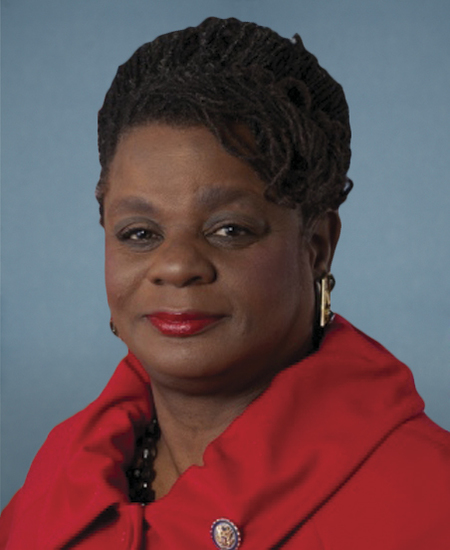
Maddy summaryThis bill creates federal grants to fund 3-year demonstration projects that train low-income individuals (under 138% of the federal poverty level) to become doulas or midwives. It requires states to already recognize and permit these professionals to practice, and applicants must partner with entities like workforce boards, hospitals, or community organizations. The $10 million appropriation for fiscal year 2026 will support programs focused on accessible career pathways with high training standards, fair wages, and health benefits. Projects must include rigorous evaluations to identify effective models for building this workforce, particularly for underserved communities.
Rep. Gwen Moore
Sponsored bills
Maddy summaryThe Pathways to Health Careers Act creates federal grants to help low-income individuals (with family income up to 200% of the Federal poverty level) enter health profession careers. It funds training programs that include adult basic education, career coaching, child care, transportation, and legal assistance for people with arrest or conviction records. The bill specifically supports two demonstration projects: one helping individuals with criminal records enter health careers, and another focused on training doulas and midwives for pregnancy, birth, and postpartum care. Programs must provide structured career pathways to recognized health profession credentials and include support services like case management. The bill requires evaluations to assess effectiveness in addressing workforce shortages and improving participant outcomes.
Maddy summaryThe FAMILY Act would establish a national paid family and medical leave insurance program that provides wage replacement benefits for workers needing time off for caregiving or medical reasons. It defines "qualified caregiving" to include caring for a family member with a serious health condition, personal medical needs, or recovery from violence (including domestic violence, sexual assault, or stalking). Benefits would be calculated based on earnings, with a minimum monthly benefit of $580 and maximum of $4,000, administered by a new Office of Paid Family and Medical Leave within the Social Security Administration. Eligible individuals would need to have worked for at least 8 quarters in the previous year and file an application with required documentation, while existing state paid leave programs would continue to operate alongside this federal program.
Saving the Civil Service Act This bill generally prohibits changes to the classification of positions in the competitive service and excepted service unless certain conditions are met. (Competitive service positions are subject to competitive examination while excepted service positions are appointed under one of five schedules. Competitive service positions have notice and appeal requirements for adverse actions that are not applicable to most excepted positions, including those of a confidential, policy-determining, policy-making, or policy-advocating character under Schedule C.) On October 21, 2020, President Donald Trump issued an executive order that placed executive agency positions that are of a confidential, policy-determining, policy-making, or policy-advocating character, and that are not normally subject to change as a result of a presidential transition, under a new Schedule F in the excepted service. The order was subsequently revoked by President Joe Biden. The bill prohibits executive agency positions in the competitive service from being placed in the excepted service, unless such positions are placed in a schedule in the excepted service as in effect on September 30, 2020. The bill also prohibits positions in the excepted service from being placed in any schedule other than the aforementioned schedules. Additionally, agencies may not (1) transfer occupied positions from the competitive or excepted service into Schedule C without the consent of the Office of Personnel Management, or (2) transfer employees in the excepted service to another schedule or transfer employees in the competitive service to the excepted service without employee consent.
Federal Adjustment of Income Rates Act or the FAIR Act This bill modifies pay rates for federal employees in 2026. Specifically, the bill increases rates under the statutory pay systems and for prevailing rate employees by 3.3% and increases locality pay by 1%.
Maddy summaryThe George Floyd Justice in Policing Act of 2025 would establish a National Police Misconduct Registry to track officer complaints, disciplinary actions, and misconduct records across all law enforcement agencies. It would require law enforcement agencies to implement body-worn camera programs with specific recording and retention policies, ban chokeholds and no-knock warrants in drug cases, and reform qualified immunity to make it easier to hold officers accountable for misconduct. The bill mandates comprehensive data collection on use of force incidents, requiring agencies to report detailed information about stops, searches, and force used, disaggregated by race, ethnicity, gender, and other demographics. These provisions would directly affect all Federal, State, and local law enforcement agencies that receive federal grant funding, with requirements for policy changes, training, and data reporting.
Maddy summaryHRES 701 is a House resolution requesting the President to provide documents about the Department of Government Efficiency's (DOGE) access to Social Security Administration data. It specifically seeks records related to a cloud system hosting the Social Security Numerical Identification System (NUMIDENT), including security plans, the purpose of the cloud copy (e.g., audits, benefits decisions, AI training), and access by named individuals. The resolution requires the President to submit these materials within 14 days of adoption. This is an inquiry, not a policy change, focused solely on transparency about government data access.
Maddy summaryThis bill establishes advance funding for key tribal programs starting in fiscal year 2026. It requires the Department of the Interior and Indian Health Service to include in each year's budget request sufficient funding for the *next* fiscal year's operations, specifically for accounts like "Operation of Indian Programs," "Contract Support Costs," and "Indian Health Services." The bill mandates annual reports by July 31 each year, assessing resource sufficiency and including workload estimates for the following fiscal year. These changes directly affect tribal programs administered by the Bureau of Indian Affairs, Bureau of Indian Education, and Indian Health Service, ensuring funding for future needs is planned and requested in advance.
Maddy summaryHR 5309, the Congressional Tribute to Constance Baker Motley Act of 2025, authorizes a posthumous Congressional gold medal for Constance Baker Motley, a pioneering civil rights attorney and judge. The bill directs the Treasury Secretary to strike the medal with her image and name, to be presented to her son, Joel W. Motley III, and her niece, Constance Royster. It also permits the sale of bronze duplicates at cost to cover expenses, with proceeds going to the U.S. Mint fund. This is a commemorative measure with no substantive policy changes, honoring Motley’s legacy as the first African-American woman appointed to a federal judgeship.
Maddy summaryHRES 697 is a symbolic House resolution recognizing suicide as a preventable public health issue and supporting the designation of September as "National Suicide Prevention Month" and September 10, 2025, as "World Suicide Prevention Day." It does not create new laws or allocate funds but formally expresses congressional support for these designations to raise awareness. The resolution cites statistics showing suicide as a leading cause of death across age groups, including among veterans and adolescents, and emphasizes mental health as equally important as physical health. It acknowledges the need for diverse prevention strategies without specifying new policies or programs. This resolution is purely declarative, aiming to bolster public awareness rather than enact concrete changes.