

This resolution encourages people around the world to work to achieve the goal of zero new HIV transmissions, zero discrimination, and zero AIDS-related deaths, in order to end the HIV epidemic in the United States and around the world by 2030. The resolution supports continued funding for prevention, care and treatment services, and research programs for communities impacted by HIV and people living with HIV in the United States and globally. The resolution supports continued leadership by the United States in domestic, bilateral, multilateral, and private sector efforts to fight HIV. Finally, the resolution urges other members of the international community to sustain and scale up their support for and financial contributions to efforts around the world to combat HIV.
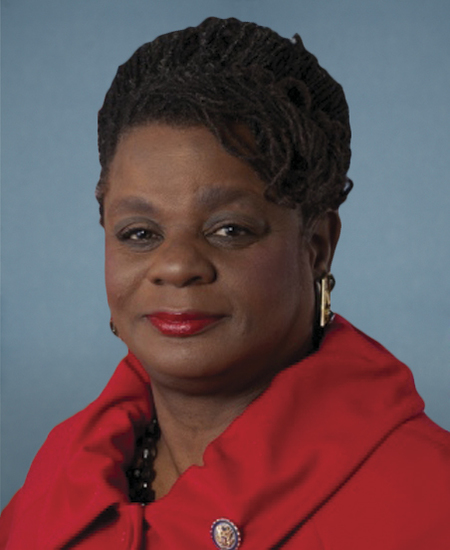
Rep. Gwen Moore
Sponsored bills
Access to Birth Control Act This bill requires pharmacies to comply with certain rules related to ensuring access to contraceptives. Specifically, pharmacies must provide without delay a customer with any contraceptive or related medication that is in stock. If the contraceptive is not in stock, the pharmacy must immediately inform the customer and either order the contraceptive or refer the customer to a pharmacy that has it in stock. Laws in some states provide pharmacists with the right to refuse to dispense contraceptive-related drugs on religious or conscience grounds. Pharmacies may refuse to provide a contraceptive to a customer (1) if the customer lacks a valid prescription for a prescription contraceptive or is unable to pay for the contraceptive, or (2) based on a pharmacy employee's professional clinical judgment. The bill also establishes a private cause of action and civil monetary penalties for violations of the bill.
Original Slavery Remembrance Day Resolution This joint resolution designates a Slavery Remembrance Day annually and condemns slavery and its progenies.
Precision Medicine Answers for Kids Today Act This bill establishes programs and requires reporting relating to Medicaid coverage of genetic and genomic testing, particularly for children. Specifically, the bill establishes a demonstration program for up to 15 state Medicaid programs to cover genetic and genomic testing for certain individuals under the age of 21 (or a lower age, if the state chooses) and for former foster youth under the age of 26. Additionally, the Centers for Medicare & Medicaid Services must report on overall Medicaid coverage of such services and issue guidance for states on ways to increase coverage for children; the National Academy of Medicine must study the impact of this guidance as well as the general utility of genetic and genomic testing.
This resolution recognizes the importance, effectiveness, and need for veteran-to-veteran sponsorship programs and encourages the use and practice of such programs within the federal government.
IDEA Full Funding Act This bill provides permanent, mandatory funding for the grant program that assists states and outlying areas in providing special education and related services to children with disabilities.
Maddy summaryHRES 790 is a symbolic resolution expressing the House of Representatives' support for designating November 2021 as "Pancreatic Cancer Awareness Month." It does not create new laws or allocate funding but aims to raise public awareness about pancreatic cancer, which has high mortality rates and disproportionately affects communities of color. The resolution highlights the need for increased research funding and early detection initiatives, referencing prior legislative actions that secured $15 million for pancreatic cancer research. It directly supports advocacy efforts to educate the public and encourage further research.
Maddy summaryHRES 785 is a symbolic resolution designating November 8, 2021, as "National First-Generation College Celebration Day." It urges all Americans to celebrate this day, recognize the contributions of first-generation college students (those whose parents did not earn bachelor's degrees), and honor the Higher Education Act of 1965. The resolution highlights existing federal programs like TRIO and Pell Grants that support underrepresented students but does not create new laws or funding. As a non-binding resolution, it has no direct policy impact but aims to raise awareness about first-generation students' challenges and achievements.
Veterans' Preference Parity Act This bill modifies the eligibility criteria for certain veterans to qualify for a preference in the federal hiring process. Specifically, an individual who is honorably discharged from active duty service is eligible for a veterans' preference, if the active duty service was performed for more than 180 total days (currently, consecutive days). Additionally, a retired member of the Armed Forces is eligible for a veterans' preference, even if the retiree (1) is not a disabled veteran and (2) retired at or above the rank of major or its equivalent.
Sarah Keys Evans Congressional Gold Medal Act This bill provides for the award of a Congressional Gold Medal to Sarah Keys Evans in recognition of her achievements relating to the desegregation of passengers on interstate buses in the 1950s.