This joint resolution honors the contributions of school counselors to the success of students in elementary and secondary schools. The resolution encourages the observation of National School Counseling Week with ceremonies and activities that promote awareness of the crucial role school counselors play in preparing students for fulfilling lives as contributing members of society.
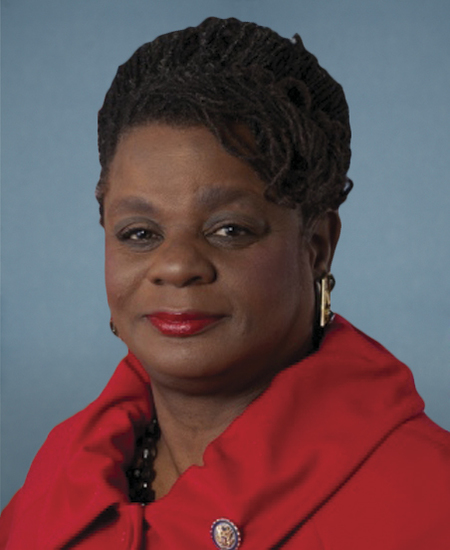
Rep. Gwen Moore
Sponsored bills
Maddy summaryHRES 911 is a symbolic resolution supporting National Black HIV/AIDS Awareness Day, observed annually on February 7 to address the disproportionate impact of HIV/AIDS on African American communities. It encourages state and local governments, public health agencies, and media to promote HIV testing, education, and community engagement within Black communities. The resolution commends organizations providing HIV services and aligns with the National HIV/AIDS Strategy’s goals to reduce new infections, improve care access, and address health disparities. As a non-binding resolution, it does not create new laws or funding but serves as a call to action to combat HIV/AIDS through prevention, treatment, and reducing stigma.
Advancing Maternal Health Equity Under Medicaid Act This bill provides a 90% federal matching rate for Medicaid maternal health care expenditures that exceed 2021 levels. Qualifying services must be provided by maternity care providers or perinatal health workers (e.g., doulas) and include prenatal and postpartum telehealth services, home visits, and behavioral health care.
Stop the Wait Act of 2022 This bill allows individuals with disabilities to begin receiving Social Security Disability Insurance (SSDI) benefits in the month they become eligible for the benefits. It also allows these individuals to immediately enroll in Medicare if they cannot afford minimum essential coverage. (Under current law, an individual must generally wait 5 months after the onset of disability to begin receiving SSDI benefits and an additional 24 months to become eligible for Medicare.)
Algorithmic Accountability Act of 2022 This bill requires certain businesses that use automated decision systems to make critical decisions to study and report about the impact of those systems on consumers. Critical decisions include those that have a significant effect on a consumer's life such as the cost or availability of health care, housing, educational opportunities, or financial services. The Federal Trade Commission (FTC), in consultation with relevant stakeholders, must issue regulations to implement the bill. The bill provides for enforcement by the FTC and specified state officials. Further, the bill establishes a Bureau of Technology to advise the FTC about the technological aspects of its functions.
Protecting Federal Agencies and Employees from Political Interference Act of 2022 This bill prohibits the relocation of the headquarters for any federal entity located in the National Capital region unless relocation legislation is enacted. In addition, any employee's position with a duty station in the National Capital region shall remain in that region unless legislation relocating the position is enacted.
Native American Child Protection Act This bill reauthorizes through FY2027 and otherwise revises certain programs related to the prevention, investigation, treatment, and prosecution of family violence, child abuse, and child neglect involving Indian children and families. Specifically, the bill revises the Indian Child Abuse Treatment Grant Program to encourage the use of grants for culturally appropriate treatment services and programs. The bill renames the Indian Child Resource and Family Services Centers as the National Indian Child Resource and Family Services Center. It also requires the center to (1) provide advice, technical assistance, and training to urban Indian organizations; (2) develop certain technical assistance materials for Indian tribes, tribal organizations, and urban Indian organizations; and (3) develop model intergovernmental agreements between tribes and states to prevent, investigate, treat, and prosecute incidents of family violence, child abuse, and child neglect involving Indian children and families. Additionally, the bill revises the Indian Child Protection and Family Violence Prevention Program to allow Indian tribes, tribal organizations, and intertribal consortia to use program funds for additional activities, such as operational costs for child protective services.

Funding Early Childhood is the Right IDEA Act This bill authorizes through FY2027 specified provisions of the Individuals with Disabilities Education Act for early childhood education. Specifically, the bill authorizes Part B, Section 619 (grants to states for preschool programs serving children with disabilities ages three to five) and Part C (grants to aid states in implementing early intervention services for infants and toddlers with disabilities and their families).
Heating and Cooling Relief Act This bill provides additional energy assistance to households, including heating and cooling assistance. Specifically, the bill reauthorizes through FY2031 and revises the Low Income Home Energy Assistance Program. Under the existing program, the Department of Health and Human Services (HHS) may award grants to states for assisting low-income households that pay a high proportion of their income for home energy. To be eligible under the existing program, households must have incomes which do not exceed the greater of an amount equal to 150% of the poverty level for their state or an amount equal to 60% of the state median income. The bill expands eligibility to households with incomes which do not exceed the greater of an amount equal to 250% of the poverty line as defined in the Community Services Block Grant Act or an amount equal to 80% of the state median income. In addition, the bill expands eligibility to households with a monthly energy burden of 3% or more per year. It also requires states to establish procedures to protect households receiving assistance under the program from energy shutoffs and certain late fees. In addition, the bill requires HHS and the Department of Energy to jointly carry out a program that awards grants to states and local governments for developing and implementing interagency plans to reduce energy burdens for eligible households with high home energy use. The plans must promote the reduction of energy from fossil fuels.
Maddy summaryThis resolution (HRES 884) symbolically recognizes January 2022 as "National Mentoring Month" to highlight the value of mentoring relationships for youth. It does not create new laws or provide funding, but instead acknowledges mentoring's role in supporting young people's education, career development, and well-being. The resolution encourages promoting mentoring programs across communities, schools, and workplaces to address the "mentoring gap" where one in three youth lacks a supportive adult outside their home. As a procedural resolution, it has no direct legal effect on individuals or programs.