

Maddy summaryThis symbolic resolution expresses congressional support for designating February 2026 as "Hawaiian Language Month" or "'Ōlelo Hawai'i Month." It urges the public to celebrate the language and commits to preserving Hawaiian language use in alignment with the Native American Languages Act. The resolution does not create new laws or funding but serves as a formal statement of support for ongoing revitalization efforts. It follows decades of grassroots work to restore the Hawaiian language, which saw over 20,000 speakers and expanded immersion education by 2026.
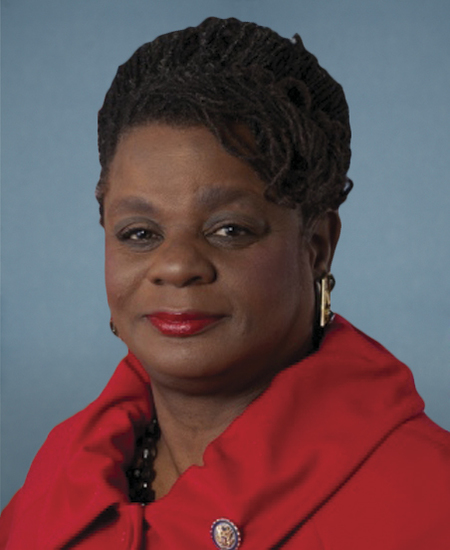
Rep. Gwen Moore
Sponsored bills
Maddy summaryHR 7740, the African American History Act of 2026, authorizes $4 million annually for the National Museum of African American History and Culture to develop educational resources and support teaching about African American history. The bill directs the museum to create digital and print materials, provide teacher training, and expand access to curriculum resources for K-12 and college classrooms. It requires annual reports to Congress on fund usage and expires in 2030. This program directly affects educators and students by enhancing classroom materials and professional development on African American history.
Maddy summaryThis bill requires the Bureau of Prisons to employ at least one full-time, board-certified OB-GYN at every federal prison housing female inmates. It mandates specific services including menstrual care, contraception, prenatal care, cancer screenings, and postpartum support, along with patient protections like informed consent and the right to refuse non-emergency care. The bill also requires initial OB-GYN visits within 14 days of incarceration and establishes a process for referrals to other specialists without delays. Annual reports to Congress will track facility compliance, staffing vacancies, and health outcomes like prenatal visits, childbirths, and pregnancy-related deaths.
Maddy summaryHRES 1077 is a non-binding resolution expressing the House of Representatives' support for the U.S. Postal Service to honor Lieutenant Colonel Charity Adams Earley with a commemorative stamp. It directly requests the Citizens’ Stamp Advisory Committee (part of the USPS) to recommend such a stamp to the Postmaster General. The resolution highlights Adams Earley’s historic role as the first Black officer in the Women’s Army Corps (WAC), her leadership of the 6888th Central Postal Directory Battalion during WWII, and her post-war advocacy for Black leadership development. This resolution does not create new law or funding but formally urges the USPS to recognize her legacy through a postage stamp.
Maddy summaryHRES 1084 designates February 28 as "HIV is Not a Crime Awareness Day" to address the criminalization of people living with HIV. The resolution calls for ending state laws that impose harsh penalties or criminalize consensual acts based solely on HIV status - regardless of transmission risk, intent, or disclosure - and notes these laws disproportionately impact Black and brown communities, Black women, and transgender women. It urges education for law enforcement and communities, removal of outdated HIV criminalization laws, and increased support for HIV prevention, testing, treatment, and care programs. The resolution does not create new laws but advocates for policy changes to align with current medical understanding and reduce stigma.
Maddy summaryHRES 1078 is a procedural resolution requesting the President and Health and Human Services (HHS) Secretary to provide specific documents to the House of Representatives. It seeks records related to the December 2025 "Defend the Spend" freeze on child care funding, including communications about the freeze, payment delays, social media posts alleging fraud, and related legal analyses. The resolution specifically targets documents concerning the freeze's impact on States, Tribes, and Territories receiving child care funds under federal programs. The request requires these documents to be submitted within 14 days of the resolution's adoption. This is a congressional oversight measure, not a policy change, focused on transparency around an existing funding freeze.
Maddy summaryHRES 1080 is a symbolic resolution recognizing and celebrating Black History Month 2026, focusing on its theme "A Century of Black History Commemorations." It highlights historical figures and events central to Black history, including Carter G. Woodson’s founding of Negro History Week (the precursor to Black History Month), Juneteenth, and key moments like the 1865 Charleston commemoration. The resolution emphasizes how Black history commemorations counter historical erasure and affirm Black contributions to U.S. history, referencing figures like Mary McLeod Bethune and W.E.B. Du Bois. As a ceremonial resolution, it has no binding effect but aims to raise awareness of Black achievements through official recognition.
Maddy summaryThis bill, the Tribal Tax and Investment Reform Act of 2026, treats federally recognized Indian tribes and Alaska Native entities as states for specific tax purposes, allowing them to issue tax-exempt bonds and maintain employee pension plans under the same rules as state governments. It creates a new $175 million annual tax credit allocation for investments in tribal areas, expands existing employment tax credits, and clarifies how tribal general welfare benefits and trust funds are treated for federal assistance programs. The legislation also establishes uniform fiduciary standards for tribal pension plans, provides technical assistance for tribal area investments, and ensures tribal areas qualify for certain affordable housing tax incentives.
Maddy summaryHR 7706, the Federal Retirement Safety Act, modifies federal retirement rules to protect victims of domestic violence. It allows federal employees to bypass spousal consent requirements for lump-sum retirement payments if they self-certify that their spouse or former spouse committed a domestic violence crime (as defined in federal law) against them within the past year. The bill requires the Office of Personnel Management to create safety-focused procedures for obtaining consent or waiving it without consent when domestic violence poses a safety risk. This directly affects federal employees in domestic violence situations who need to access retirement benefits without risking further harm. The law takes effect one year after enactment, with regulations required within one year of passage.
Maddy summaryThe Head Start for America's Children Act amends the Head Start Act to enhance early childhood education services for low-income children, with specific provisions to improve culturally responsive programming for Native American and Native Hawaiian communities. It increases funding for Head Start programs, including $91.575 million for transportation, $37.5 million for workforce development, and $863 million for extended operations to provide full calendar year services. The bill updates definitions throughout the law to use more inclusive language, replacing "limited English proficient" with "children who are developing English proficiency," and establishes new requirements for staff compensation and benefits to improve recruitment and retention. Native American Head Start programs and migrant/seasonal programs are exempt from certain requirements, such as the full calendar year service requirement.