Securing a Strong Retirement Act of 2022 This bill makes various changes with respect to employer-sponsored retirement plans, including providing for the automatic enrollment of employees in certain plans and increasing the age at which participants are required to begin receiving mandatory distributions.
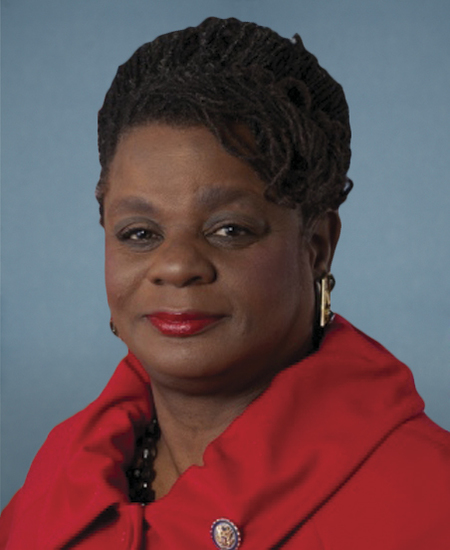
Rep. Gwen Moore
Sponsored bills
Veteran Deportation Prevention and Reform Act This bill provides protections from deportation for noncitizen veterans and contains other related provisions. U.S. Immigration and Customs Enforcement (ICE) must identify each individual in removal proceedings who is a member of the Armed Forces, a veteran, or a noncitizen spouse or minor child of such an individual. That individual may not be removed until (1) ICE has transferred that individual's case files to an advisory committee created under this bill, and (2) that committee has provided recommendations as to the outcome of the case. The Department of Homeland Security (DHS) shall create a system to share information across various agencies about noncitizen veterans who may be subject to removal to ensure that such a veteran's military service is taken into consideration in immigration-related cases. DHS shall also create a system for (1) identifying noncitizens who are or may be veterans, and (2) collecting data relating to such noncitizens who are in removal proceedings or may have been removed. DHS and the Department of Defense must jointly carry out a program to naturalize a noncitizen (and the noncitizen's spouse and minor children) who serves on active duty in the Armed Forces and is not otherwise ineligible for citizenship if that noncitizen submits an application. DHS shall also establish a program for eligible noncitizen veterans (generally those not convicted for certain serious crimes) to obtain permanent resident status. Similarly, the Department of Justice shall provide permanent resident status to such an eligible veteran in removal proceedings or subject to a final order of removal.
Emmett Till Antilynching Act This bill makes lynching a federal hate crime offense. Specifically, the bill imposes criminal penalties—a fine, a prison term of up to 30 years, or both—on an individual who conspires to commit a hate crime offense that results in death or serious bodily injury or that includes kidnapping or an attempt to kidnap, aggravated sexual abuse or an attempt to commit aggravated sexual abuse, or an attempt to kill.
This resolution supports the goals and ideals of National Women's History Month and recognizes the women and organizations that continue to promote the teaching of women's history.
9-8-8 Implementation Act of 2022 This bill modifies provisions to increase access to behavioral health services, with a focus on crisis services and the 9-8-8 telecommunication system. (The 9-8-8 system provides callers with mental health or suicide crisis support and resources through the existing National Suicide Prevention Lifeline and is scheduled to take effect by July 16, 2022.) The bill reauthorizes through FY2027 and revises the National Suicide Prevention Lifeline program and requires a national suicide prevention media campaign. In addition, the Substance Abuse and Mental Health Services Administration (SAMHSA) must establish standards for a behavioral health crisis continuum of care that health care providers and communities may use in responding to individuals experiencing a behavioral health crisis. The continuum must include emergency treatment, stabilization, and related services. The bill expands Medicaid and other insurance coverage for such services. The bill further expands Medicaid coverage for behavioral health services. This includes permanently allowing coverage of certain community-based mobile crisis services and exempting some short-term stabilization services from coverage restrictions that apply to institutions for mental diseases. Additionally, the bill establishes (1) an office within SAMHSA to coordinate behavioral health activities; and (2) various grants, including a pilot program for mobile crisis care teams that respond to behavioral health crises rather than law enforcement and a capital improvement program for certain behavioral health facilities. The bill also reauthorizes through FY2027 and expands certain workforce programs for behavioral health providers. It also addresses training for emergency services dispatchers and coordination of the 9-1-1 system with the 9-8-8 system.
Disadvantaged Business Enterprise Supportive Services Expansion Act The bill increases funding for and expands the disadvantaged business enterprise supportive services program of the Department of Transportation (DOT). The program provides training, assistance, and services to minority-owned small businesses to help them achieve proficiency to compete, on an equal basis, for federal aid highway project contracts and subcontracts. Specifically, the bill (1) increases the annual funding cap for the program from $10 million to $25 million, and (2) authorizes DOT to implement the program at the Federal Transit Administration and Federal Aviation Administration so that small businesses owned and controlled by socially and economically disadvantaged individuals may achieve proficiency to compete for contracts and subcontracts regarding public transportation and airport projects.
Medicaid Coverage for Addiction Recovery Expansion Act This bill allows state Medicaid programs to cover residential addiction treatment facility services for adults between the ages of 22 and 64 if such services are offered as part of a full continuum of evidence-based treatment services. Residential addiction treatment facility services are medically necessary inpatient services provided in an accredited, size-limited facility for the purpose of treating a substance-use disorder within a specified time period. In addition, the bill establishes a grant program for states to expand infrastructure and treatment capabilities of existing youth addiction treatment facilities that (1) provide addiction treatment services to youths under Medicaid or the Children's Health Insurance Program (CHIP), and (2) are located in communities with high numbers of medically underserved populations of at-risk youths. At least 15% of grant funds awarded to a state must be used for making payments to rural facilities.
Creating a Respectful and Open World for Natural Hair Act of 2022 or the CROWN Act of 2022 This bill prohibits discrimination based on a person's hair texture or hairstyle if that style or texture is commonly associated with a particular race or national origin. Specifically, the bill prohibits this type of discrimination against those participating in federally assisted programs, housing programs, public accommodations, and employment. Persons shall not be deprived of equal rights under the law and shall not be subjected to prohibited practices based on their hair texture or style. The bill provides for enforcement procedures under the applicable laws.
Forced Arbitration Injustice Repeal Act of 2022 or the FAIR Act of 2022 This bill prohibits a predispute arbitration agreement from being valid or enforceable if it requires arbitration of an employment, consumer, antitrust, or civil rights dispute.
Dr. Lorna Breen Health Care Provider Protection Act This bill establishes grants and requires other activities to improve mental and behavioral health among health care providers. Specifically, the Department of Health and Human Services (HHS) must award grants to hospitals, medical professional associations, and other health care entities for programs to promote mental health and resiliency among health care providers. In addition, HHS may award grants for relevant mental and behavioral health training for health care students, residents, or professionals. Additionally, HHS must conduct a campaign to (1) encourage health care providers to seek support and treatment for mental and behavioral health concerns, and (2) disseminate best practices to prevent suicide and improve mental health and resiliency among health care providers. HHS must also study and develop policy recommendations on improving mental and behavioral health among health care providers, removing barriers to accessing care and treatment, and identifying strategies to promote resiliency. Furthermore, the Government Accountability Office must report on the extent to which relevant federal grant programs address the prevalence and severity of mental health conditions and substance use disorders among health care providers.