

Maddy summaryHR 882, the American Teacher Act, requires states to ensure full-time teachers in public elementary and secondary schools earn at least $60,000 annually (adjusted for inflation), with part-time teachers receiving proportional pay. It provides federal grants to states to fund these salary increases, mandating sustainability plans beyond the 4-year grant period and prioritizing schools in high-poverty areas. The bill also includes cost-of-living adjustments tied to the Consumer Price Index and funds a national campaign to promote teaching as a career. It explicitly states grant funds must supplement existing education budgets without reducing current teacher pay or state loan forgiveness programs.
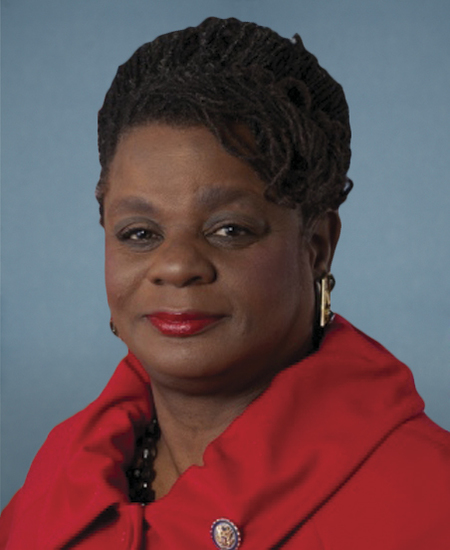
Rep. Gwen Moore
Sponsored bills
Maddy summaryThis joint resolution expresses congressional support for designating February 6-10, 2023, as "National School Counseling Week." It honors school counselors' roles in supporting students' academic, social-emotional, and career development, while encouraging public awareness of their contributions. The bill does not create new policies or funding but symbolically recognizes counselors' work in schools. It directly affects school counselors and the broader school community by promoting recognition of their vital role.
Maddy summaryThe Better Care Better Jobs Act (HR 547) aims to improve access to home and community-based services (HCBS) for Medicaid beneficiaries by providing states with planning grants and enhanced federal funding. States that develop approved HCBS infrastructure improvement plans will receive a 10 percentage point increase in federal Medicaid funding for HCBS services, with additional incentives for self-directed care programs. The bill requires states to address barriers to access, expand workforce development, improve payment rates for direct care workers, and track demographic data on service utilization. It also establishes quality measurement requirements and mandates regular reporting on progress toward improving HCBS access and quality.
Maddy summaryHR 755, the Protecting Sibling Relationships in Foster Care Act, creates a $10 million, 5-year competitive grant program to help states develop specialized foster care programs for specific sibling groups. The bill targets groups of three or more siblings, those with wide age gaps, or siblings with complex needs (such as serious mental health challenges, disabilities, or life-threatening illnesses). Eligible entities like state child welfare agencies can apply for grants to fund evidence-based programs designed to place these sibling groups together, requiring them to report on placement outcomes. The grants specifically aim to increase joint placements by addressing challenges in finding suitable foster homes for these groups.
Maddy summaryHR 770, the ESP Family Leave Act, amends the Family and Medical Leave Act (FMLA) to create specific eligibility rules for education support professionals and school support staff in public schools and public higher education institutions. It changes the standard FMLA work-hour requirement (1,250 hours) to a new threshold: these workers qualify if they've worked at least 60% of their expected monthly hours for the previous school year. Employers must maintain records of each employee's expected monthly hours, and the bill defines "education support professionals" to include roles like paraeducators, secretaries, custodians, food service workers, security staff, and health support staff. The bill directly affects these support staff members, making it easier for them to qualify for FMLA leave under the revised hours calculation.
Maddy summaryHR 765, the African American History Act, authorizes $2 million annually for the National Museum of African American History and Culture to develop educational resources and programs about African American history. The bill directs the museum to create accessible teaching materials, support teacher professional development, and expand digital content for schools and the public, focusing on contributions, civil rights, and historical contexts. It requires annual reports to Congress and expires in 2028. The program directly supports educators, students, and families in learning about African American history through museums, schools, and online platforms.
Maddy summaryHR 735 (Susan Muffley Act of 2023) requires the Pension Benefit Guaranty Corporation (PBGC) to recalculate and increase monthly pension benefits for participants and beneficiaries in six specific Delphi-related pension plans to their full vested amount. This includes making lump-sum payments for past underpayments, plus 6% annual interest on amounts owed since prior benefit calculations. The bill directly affects eligible retirees and beneficiaries in the Delphi Hourly-Rate Employees Pension Plan, Delphi Retirement Program for Salaried Employees, and four other Delphi pension plans. It does not change existing asset allocations but ensures payments reflect the full pension amount guaranteed under ERISA without prior phase-in limits.
Maddy summaryHR 715, the Bipartisan Background Checks Act of 2023, requires background checks for all firearm transfers between private individuals, not just those through licensed dealers. It mandates that unlicensed sellers must involve a licensed dealer to conduct a background check before transferring a firearm, with exceptions for family transfers (like spouses or parents/children), law enforcement, temporary safety transfers, and certain hunting or range activities. The bill also requires licensed dealers to provide a notice and certification form in both English and Spanish to buyers. It explicitly states it won't create a national gun registry or override state laws on the same topic. The law would take effect 180 days after enactment.
Maddy summaryHR 727 establishes a 12-member National Council on African American History and Culture within the National Endowment for the Humanities (NEH). The Council, appointed by the President with Senate consent, advises the NEH on preserving and celebrating African-American history and culture. Its key duties include evaluating NEH programs, gathering information on cultural trends, developing national policy recommendations, and submitting annual reports to the NEH Chair. The Council terminates 10 years after the bill's enactment, with members serving five-year terms (initially staggered) and receiving partial compensation for their service.
Maddy summaryThis bill amends the Elementary and Secondary Education Act to require that Black history be included in all federally supported American history and civics education programs. It directly affects K-12 public schools receiving federal education funding by mandating that curriculum frameworks, teacher training, and national assessments explicitly incorporate Black history as part of American history. The key mechanism is adding "which shall include Black history" to existing provisions across multiple sections of the law, including classroom instruction, teacher academies, and national assessments. This change ensures Black history is integrated into established educational standards rather than creating new programs.