

Maddy summaryThis bill requires state agencies administering the WIC program to publicly post details about infant formula bid solicitations online within 5 business days of posting the bid. Specifically, states must share the bid title, application website, contact information, and deadline via a central federal portal, which the Secretary must then publish publicly within 5 days. It directly affects state WIC agencies and the public by increasing transparency in how states purchase infant formula. The bill creates a new online information-sharing requirement under the Child Nutrition Act, without changing WIC eligibility or benefits.
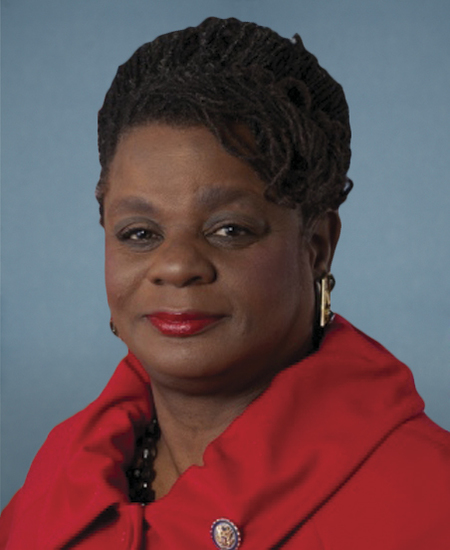
Rep. Gwen Moore
Sponsored bills
Maddy summaryThis bill modifies how distilled spirits taxes collected in Puerto Rico are handled. It repeals a rule limiting tax coverage to Puerto Rico and the U.S. Virgin Islands, allowing those territories to transfer certain distilled spirits taxes to the U.S. Treasury. Crucially, it requires Puerto Rico to transfer 1/6 of the tax difference (above $10.50 per gallon) from rum taxes covered over into the Puerto Rico Conservation Trust Fund, which supports natural habitat conservation and sustainable agriculture. This directly affects Puerto Rico's rum industry and ensures a portion of those tax revenues funds conservation efforts.
Maddy summaryThis bill requires airlines to publish cargo hold dimensions online and offer refunds if a traveler's wheelchair (powered, manual, or scooter) cannot fit. It mandates annual reports tracking wheelchair mishandling (damage, loss, or delay) by type and directs research into whether passengers could safely remain seated in their wheelchairs during flights. The law aims to improve accessibility for travelers with disabilities who rely on mobility devices, with research focusing on costs, demand, and safety for in-cabin wheelchair seating. The Department of Transportation must report findings to Congress within specified timelines.
Maddy summaryThis bill expands eligibility under federal health benefits programs to include employees of Tribal Colleges and Universities (TCUs), alongside existing Indian tribes, tribal organizations, and urban Indian organizations. It amends the Indian Health Care Improvement Act to explicitly allow TCUs (defined under the Higher Education Act) to participate in the Federal Employees Health Benefits (FEHB) Program, enabling their employees to purchase coverage. Additionally, it creates a new "Tribal Insurance Administrative Account" under Title 5 to collect a capped administrative fee (max 3% of average premiums) from tribal employers using the FEHB Program, funding the program's administration. The changes directly affect tribal entities and TCUs seeking to provide federal health benefits to their employees.
Maddy summaryHRES 362 is a symbolic House resolution recognizing elementary and secondary school teachers' contributions to U.S. civic, cultural, and economic well-being. It specifically thanks teachers and encourages students, parents, school leaders, and officials to acknowledge National Teacher Appreciation Week (May 8-12, 2023). The resolution has no binding effect or policy changes - it solely promotes public appreciation for the teaching profession through a formal expression of gratitude. It directly affects teachers by affirming their societal value but does not alter laws, funding, or educational standards.
Maddy summaryHRES 351 is a symbolic resolution designating May as "National Menstrual Health Awareness Month" to address stigma around menstruation. It recognizes that stigma and lack of access to products/facilities impact women, girls, and people who menstruate in education, work, and health. The resolution supports normalizing menstruation, improving menstrual health education, and promoting access to products and private sanitation facilities. As a non-binding resolution, it does not create new laws but aims to raise awareness and advance gender equity through public acknowledgment.
Maddy summaryHR 3105 amends the tax code to clarify how financial guaranty insurance companies qualify as "qualifying insurance corporations" under passive foreign investment company (PFIC) rules. It allows these companies to include unearned premium reserves in their insurance liabilities if they meet specific exposure thresholds: at least a 15-to-1 ratio of financial guaranty exposure to total assets (or 9-to-1 for state/local bonds), and they report only reserves within single-risk limits. This bill directly affects financial guaranty insurance companies whose sole business is writing or reinsuring financial guaranty insurance. The change simplifies their tax classification under existing PFIC rules without altering broader tax policy.
Maddy summaryHR 3121, the Journalist Protection Act, makes it a federal crime to intentionally assault journalists during newsgathering activities. It defines "journalist" broadly to include employees, contractors, or agents of news organizations (like newspapers, websites, TV, or radio) who regularly gather news about public interest matters. The bill criminalizes causing bodily injury to a journalist with knowledge of their status (up to 3 years in prison) or serious bodily injury (up to 6 years in prison), whether during newsgathering or to intimidate reporting. This directly affects journalists across all media platforms and those who assault them, creating specific federal penalties for attacks targeting news-gathering.
Maddy summaryHR 2965, the Autism Family Caregivers Act of 2023, establishes a federal pilot program to provide free or low-cost evidence-based skills training for family caregivers of children (ages 0-9) with autism spectrum disorder or other developmental delays. It authorizes $10 million annually to fund grants for eligible organizations (like nonprofits, health centers, and community groups) to teach caregivers practical strategies for communication, social engagement, daily living skills, and managing challenging behaviors. The program requires local stakeholder committees - including caregivers, healthcare providers, and community representatives - to ensure cultural relevance, and mandates annual evaluations to assess impacts on children's well-being and caregiver support.
Maddy summaryThe SAFE Banking Act of 2023 would protect banks and financial institutions that provide services to state-legal marijuana businesses and hemp-related businesses by preventing federal regulators from taking adverse actions against them solely for serving these businesses. It clarifies that income from state-legal marijuana businesses can be considered for mortgage applications, and requires regulators to update guidance on suspicious activity reports related to these businesses. The bill does not require financial institutions to serve these businesses, but ensures they won't face penalties for doing so. It extends similar protections to hemp-related businesses, which have faced banking challenges despite being federally legal under the 2018 Farm Bill.