

Maddy summaryHJRES 170 is a resolution seeking congressional disapproval of a federal rule that would have required new housing projects financed by the Department of Housing and Urban Development (HUD) or the Department of Agriculture (USDA) to meet specific energy efficiency standards. The rule, published in April 2024, aimed to set these standards for new construction in federally subsidized housing. If passed, this resolution would block the rule under the Congressional Review Act, making it legally void. It directly affects developers and builders of HUD- and USDA-financed housing by removing the requirement to comply with these energy standards.
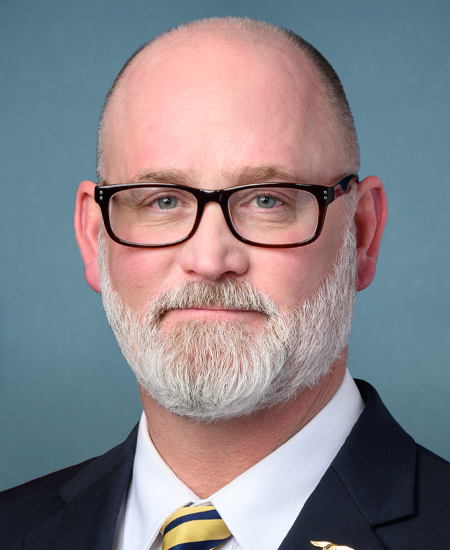
Rep. Derrick Van Orden
Sponsored bills
Maddy summaryThe VA Home Loan Program Reform Act establishes a new "Partial Claim Program" to help veterans avoid foreclosure on VA-guaranteed home loans. Under this program, the VA can purchase up to 20% of a defaulted or at-risk loan, requiring veterans to repay the VA with 0% interest if they agree to monthly payments within a year (0.5% otherwise), while the VA receives a secondary claim on the property. The bill also amends existing law to give the VA more authority to prevent foreclosure, such as paying loan holders to avoid foreclosure and requiring loan holders to place loans in forbearance. The program expires on September 30, 2026, and includes administrative rules for processing payments and conducting audits.
Maddy summaryThis bill sets new requirements for veterans' educational counseling services provided on college campuses. It requires VA counselors to hold at least a bachelor's degree in a relevant field and allows them to serve multiple institutions. Counselors are also limited to advising no more than 25 veterans at any single session. These changes directly affect veterans using on-campus counseling and VA staff delivering those services. The policy modifies how VA counselors operate on campuses to standardize qualifications and service capacity.
Maddy summaryThe Warriors to Workforce Act increases the percentage of educational costs covered by the Department of Veterans Affairs for veterans' first year of full-time apprenticeship or on-the-job training from 80% to 90%. This change applies specifically to veterans using Post-9/11 GI Bill benefits for these programs. The bill directly affects veterans enrolled in such training as they transition from military service to civilian careers. It represents a concrete policy change that enhances financial support during initial training.
Maddy summaryThis bill expands eligibility for Veterans Affairs (VA) education benefits to include independent study programs offered by institutions already participating in federal student aid programs (like Pell Grants). It directly affects veterans using VA education benefits and qualifying educational institutions. The key change amends VA rules to count these independent programs as eligible for benefit coverage, effective August 1, 2024. This allows veterans to use their benefits for non-traditional education options, such as online or self-paced courses, at schools that meet federal financial aid requirements.
Maddy summaryThis bill expands Post-9/11 GI Bill benefits to National Guard members who perform specific full-time duty. It amends eligibility rules to include service on "full-time National Guard duty" (as defined in Title 32) and "active duty" (as defined in Title 32), which previously did not count toward full benefits. The change applies retroactively to service since September 11, 2001, and takes effect one year after enactment. This directly affects National Guard members serving in these specific full-time roles, granting them parity with other veterans for educational benefits.
Maddy summaryHR 8850 amends the Child Nutrition Act to establish specific maximum monthly milk allowances for participants in the WIC program. It directly affects pregnant women, new mothers, infants, and children enrolled in WIC who receive milk as part of their food packages. The bill sets new caps: 16 quarts per month for Food Package IV, and 22 quarts for Packages V and VI, with 24 quarts for Package VII. These changes create clear, fixed limits on the amount of milk provided under the program, replacing previous flexible allowances.
Maddy summaryHR 8809, the Motor Carrier Safety Selection Standard Act of 2024, requires businesses like shippers, brokers, and freight forwarders (but not individual shippers) to verify a motor carrier’s safety compliance before shipping goods. Specifically, they must confirm the carrier is properly registered, has required insurance, and meets all Federal Motor Carrier Safety Administration (FMCSA) safety standards - verified through a public FMCSA status check - within 45 days before shipment. The bill also directs the Transportation Secretary to update safety fitness regulations within one year to include these verification requirements. Individual shippers are exempt from these checks and are automatically considered reasonable in carrier selection.
Maddy summaryHR 8800 designates the bald eagle as the national bird of the United States, amending Title 36 of the U.S. Code to formally state this. The bill directly affects official federal designations but does not change existing policies or government actions. It includes findings about the bald eagle's historical, cultural, and symbolic significance, including its role in Indigenous traditions and government imagery. The bill explicitly states that this designation cannot be used to alter any current government plans or regulations.
Maddy summaryThis bill rescinds unspent funds from specific federal programs. It targets leftover money from pandemic relief (like the CARES Act and American Rescue Plan) and certain infrastructure initiatives (including education stabilization funds and transportation programs like the Congestion Mitigation Program). The rescission is limited to amounts already allocated for Israel, Ukraine, and Indo-Pacific security supplements under recent appropriations. Unspent funds must be returned to the Treasury, with no new spending created.