

Maddy summaryHR 1277, the First Rhode Island Regiment Congressional Gold Medal Act, authorizes a single gold medal to honor the First Rhode Island Regiment for its service during the Revolutionary War. The bill commemorates the regiment as one of the first integrated military units in U.S. history, formed in 1778 when Rhode Island allowed enslaved and Indigenous men to enlist and gain freedom upon service. The medal, designed by the Treasury Secretary, will be displayed at the Rhode Island State Library, with Congress encouraging its availability for research and display at relevant historical sites. This is a commemorative measure with no direct policy impact or financial provisions for individuals, focusing solely on historical recognition.
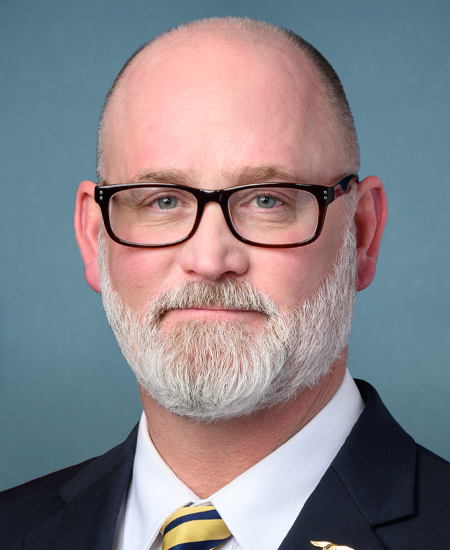
Rep. Derrick Van Orden
Sponsored bills
United States-Israel Defense Partnership Act of 2025 This bill requires or authorizes certain actions to increase defense-related cooperation between the United States and Israel. Specifically, the bill requires the Department of Defense (DOD) to establish a cooperative program, with the concurrence of Israel's Ministry of Defense (MOD), to develop and deploy advanced technologies for countering unmanned systems that threaten the United States and Israel; establish in Israel an office of the Defense Innovation Unit (an organization that focuses on rapidly fielding and scaling commercial technology across the U.S. military); and seek to engage Israel's MOD on the ascension of Israel into the national technology and industrial base (currently defined in law as the persons and organizations engaged in research, development, production, integration, services, or information technology activities conducted within the United States, the United Kingdom, Australia, New Zealand, and Canada). The bill authorizes DOD, upon request of Israel's MOD, to jointly conduct research, development, test, and evaluation (RDT&E) of emerging technologies such as artificial intelligence and robotics to meet defense challenges. Additionally, the bill extends the authority for DOD to (1) carry out RDT&E on a joint basis with Israel to establish anti-tunnel and counter unmanned aerial systems capabilities through 2028, and (2) transfer defense articles intended for use as reserve stocks for Israel through January 1, 2029.
Alternatives to Prevent Addiction In the Nation Act or the Alternatives to PAIN Act This bill reduces cost-sharing and prohibits the imposition of certain utilization requirements under the Medicare prescription drug benefit for certain non-opioid pain management drugs. Specifically, the bill requires such drugs to be covered without a deductible and to be placed on the lowest cost-sharing tier (if any). The bill also prohibits the imposition of prior authorization requirements (i.e., requiring prior approval from a plan) or step therapy requirements (i.e., requiring the use of alternative drugs before a drug is covered under a plan) with respect to such drugs.
Maddy summaryThis bill creates a 10% tax credit for businesses that modernize or replace freight railcars, directly affecting railcar owners and manufacturers. To qualify, railcars must meet an 8% improvement standard in capacity or fuel efficiency, be built or modernized after enactment, and replace two scrapped railcars. The credit is limited to 1,000 qualified railcars per business annually, with reporting requirements for the Treasury to track claimed credits, scrapped railcars, and new railcar production. The credit applies to railcars placed in service after December 2024, ending three years after enactment.
Maddy summaryHR 1216, the Defund Government-Sponsored Propaganda Act, prohibits federal funding for the Public Broadcasting Service (PBS) and National Public Radio (NPR) starting upon enactment, including direct support or indirect use of federal funds by public broadcast stations. The bill directly affects PBS and NPR, as well as any successor organizations, by ending their federal financial support. Key provisions require the Corporation for Public Broadcasting to transfer allocated funds to reduce the public debt for fiscal years 2025-2027, instead of funding PBS or NPR. This bill implements a concrete policy change by eliminating federal appropriations for these public media organizations.
Maddy summaryThis bill amends the Higher Education Act to set a new limit on clock hours for training programs preparing students for recognized professions. It requires that such programs cannot exceed 150% of either the state's minimum clock hour requirement or the relevant federal agency's requirement for that profession. The change directly affects vocational and career-focused training programs that already meet state standards but were previously allowed to offer significantly more hours. The rule applies starting with the 2024-2025 academic year for federal financial aid purposes.
Maddy summaryHR 1160, the Health Care Provider Shortage Minimization Act of 2025, changes tax treatment for temporary healthcare providers. It clarifies that locum tenens physicians (including doctors of medicine, dentistry, or podiatry) and advanced care practitioners (like nurse practitioners and physician assistants) working temporarily at a site for up to one year are not treated as employees for tax purposes. This means their pay is not considered employment income, and neither the facility, contracting agency, nor payor is treated as their employer. The law applies to services performed under written contracts specifying this tax status, effective after the bill's enactment.
Blind Americans Return to Work Act of 2025 This bill requires the Social Security Administration to carry out a demonstration project during which blind Social Security Disability Insurance (SSDI) beneficiaries receive reduced benefits commensurate with income above certain thresholds. Under current law, only individuals who earn under a specified monthly income, known as the substantial gainful activity (SGA) threshold, are considered disabled and thereby eligible for SSDI benefits. For blind workers, this limit is $2,700 per month in 2025. SSDI beneficiaries may earn beyond the SGA threshold for a limited period of time, known as the trial work period , before their benefits are suspended and ultimately terminate. The bill establishes a 20-year demonstration project during which individuals who are entitled to SSDI benefits by reason of blindness and who earn above the SGA threshold continue to receive benefits at an amount gradually reduced commensurate with their earnings beyond a specified amount. During this period, blind workers’ SSDI benefits must be reduced by $1 for every $2 that a worker earns above the sum of (1) the SGA threshold, and (2) the worker’s expenses reasonably attributable to their work. The SGA threshold may not be used to determine whether an individual is disabled during this period, and blind workers’ SSDI benefits may not be terminated due to work-related earnings. The trial work period also must not apply. After 10 years, affected beneficiaries may opt out of the modified benefits structure.
Maddy summaryThe SPEAR Act of 2025 amends the Endangered Species Act to prevent the federal government from listing lake sturgeon populations in Wisconsin as threatened or endangered. This change allows Wisconsin to continue its state-led management plan, including the annual sturgeon spearing season, without federal restrictions. The bill adds a specific provision to the Endangered Species Act explicitly prohibiting the Secretary of the Interior from determining that Wisconsin's lake sturgeon are threatened or endangered. The law directly affects federal regulatory actions for these sturgeon, supporting Wisconsin's conservation program and the cultural and economic significance of the spearing season to local communities.
Maddy summaryHR 1131 exempts certain family farms and small businesses from being counted as assets when calculating financial need for federal student aid under the Higher Education Act. Specifically, it amends the law to exclude the net value of a family farm where the family resides and small businesses (with ≤100 employees) owned by the family from need analysis calculations. This change directly affects students from qualifying family farm or small business households when applying for federal financial aid. The exemption applies to need analysis conducted for award years beginning after the bill's enactment date. The bill modifies Section 480(f)(2) of the Higher Education Act of 1965 to implement this policy change.