

Maddy summaryHR 2273, the UPRISERS Act, would require the revocation of student visas for international students on F-1, J-1, or M-1 visas who are convicted of assaulting a police officer or committing specific riot-related offenses. These offenses include inciting riots, organizing or participating in riots, committing violence during riots, or aiding others in such acts. The bill adds these convictions as automatic grounds for deportation under existing immigration law. It directly affects international students holding these specific visa types who face criminal convictions for the listed violent or disruptive conduct. The policy change would make visa revocation and deportation mandatory for these offenses, rather than leaving it to discretionary enforcement.
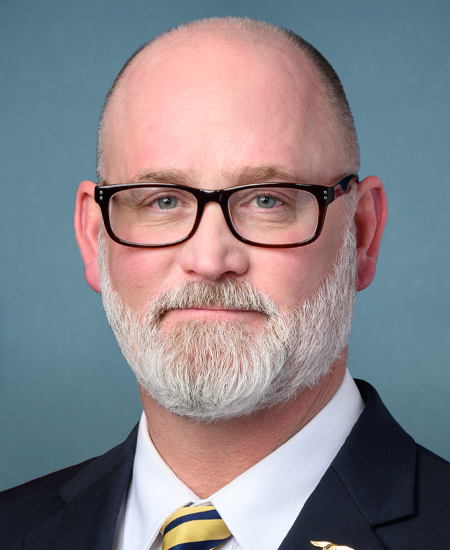
Rep. Derrick Van Orden
Sponsored bills
Maddy summaryHR 2272, titled the "FAFSA Act of 2025" (though unrelated to the FAFSA application), would terminate federal student aid eligibility for individuals convicted of specific violent offenses. It directly affects students convicted of assault against police officers or certain riot-related crimes (like inciting violence or participating in riots), requiring them to repay any grants received under the Higher Education Act and converting those grants into unsubsidized loans. Key provisions include automatic loss of future aid, repayment of past grants as loans, and exclusion from all loan forgiveness or discharge programs. The bill takes effect for the first aid year after its enactment, impacting only those with convictions meeting its defined criteria.
Investing in Rural America Act of 2025 This bill allows Farm Credit System (FCS) institutions to make and participate in loans and commitments (and extend other technical and financial assistance) for essential community facility projects as part of the Department of Agriculture's Community Facilities Direct Loan & Grant Program. This program provides funding to develop essential community facilities in rural areas. The FCS financing and technical assistance may be provided in order to make capital available to develop, build, maintain, improve, or provide related equipment or other support for essential community facilities in rural communities (e.g., certain facilities that provide healthcare, community support, public safety, educational, or utility services). Under the bill, the financing provided by an FCS institution may not exceed 15% of the total of all outstanding loans of the institution. Further, an FCS institution must (1) offer at least one non-FCS lending institution an interest in the financing under reasonable terms and conditions acceptable to the borrower, and (2) report the offer to the Farm Credit Administration (FCA). The FCA must submit an annual report to Congress on the activities undertaken by FCS institutions under this bill, including through the partnerships between FCS institutions and other lending institutions. The FCA must post the report on the administration's website.
Maddy summaryHRES 227 is a non-binding resolution expressing the House of Representatives' support for designating March 18, 2025, as "National Agriculture Day" to honor agriculture's role as a vital U.S. industry. It does not create new laws, allocate funds, or impose requirements on any group. The resolution serves as a symbolic gesture to highlight agriculture's economic impact and contributions to the nation. As a procedural resolution, it has no direct policy effect beyond raising awareness.
Maddy summaryThis bill (HR 2199) prevents private health insurance plans from discriminating against patients with end-stage kidney disease (ESRD) who require dialysis. It amends the Social Security Act to prohibit plans from treating dialysis coverage differently than other medical services or applying network restrictions that disproportionately harm ESRD patients. The law clarifies that plans cannot deny or limit benefits for dialysis based on a patient’s diagnosis, while preserving a plan’s right to choose which dialysis providers are in their network. It directly affects ESRD patients and their private health insurance coverage, ensuring dialysis is treated equally with other covered medical services. The bill does not require plans to include specific dialysis providers but stops them from unfairly restricting access to necessary care.
Maddy summaryHR 2228, the Survivor Benefits Fairness Act, modifies how the Department of Veterans Affairs calculates when survivor benefits stop for veterans' spouses or dependents. It changes the effective date for benefit reductions or discontinuances due to remarriage, marriage, or death from "the last day of the month before" to "the last day of the month during which" the event occurs. This means benefits will stop immediately in the month the qualifying event happens, rather than at the start of the following month. The bill directly affects veterans' spouses and dependents who receive dependency and indemnity compensation or pensions. It does not change benefit amounts or eligibility criteria, only the timing of when reductions take effect.
Maddy summaryThis bill delays two Medicare billing deadlines for ground ambulance services from 2025 to 2028. It amends the Social Security Act to extend the timeline for implementing specific billing rules under Section 1834(l). The change directly affects Medicare ambulance providers by postponing compliance deadlines for billing requirements. No new services or funding are created - only a technical extension of existing timelines.
Maddy summaryHR 2218 (Stop CARB Act of 2025) would block California from enforcing its own emissions standards for construction equipment, farm machinery, and locomotives by repealing federal provisions that allow states to set stricter rules. It specifically repeals Section 177 of the Clean Air Act, which authorizes California’s vehicle standards, and invalidates all existing waivers permitting California’s regulations (including those for nonroad engines) upon enactment. The bill also denies any pending waiver applications and removes references to California’s standards from other Clean Air Act sections. This directly affects California’s regulatory authority over emissions for these specific equipment types and vehicle categories.
Maddy summaryThe Air America Act of 2025 authorizes one-time payments of $40,000 to individuals who worked for Air America or its affiliated companies for at least five years during 1950-1976, or to their surviving spouses, children, or dependents. Additional payments of $8,000 per full year beyond five years are allowed. The program is capped at $60 million total funding, with claims required within two years of final regulations. Payments are a single lump sum with no ongoing benefits, and the bill explicitly states it does not create new entitlements beyond this one-time award.
Maddy summaryHR 2220, the PARA-EMT Act of 2025, creates a federal grant program to address the shortage of emergency medical technicians (EMTs) and paramedics. It authorizes $50 million annually (2026-2030) for grants to EMS agencies to fund recruitment, training, and retention programs - prioritizing youth, rural areas, and veterans with military EMS training. A separate $20 million annually supports state grants to help veterans transition to civilian EMT roles by covering certification costs and licensing fees. The bill also mandates a federal study on projected EMS workforce needs through 2034 to inform future policy. It directly affects EMS agencies, training programs, and veterans seeking civilian EMT careers.