

Maddy summaryHR 3386, the Streamlining the Solid Start Communications Act, amends a provision in the Department of Veterans Affairs' Solid Start program. It updates the definition of "tailored mailings" to "tailored lines of communication," explicitly including text messaging, virtual chatting, and other electronic messaging methods. This change directly affects veterans enrolled in the Solid Start program by allowing VA communications to use modern digital channels alongside traditional mail. The bill makes no other policy changes, solely expanding the approved communication methods for VA outreach.
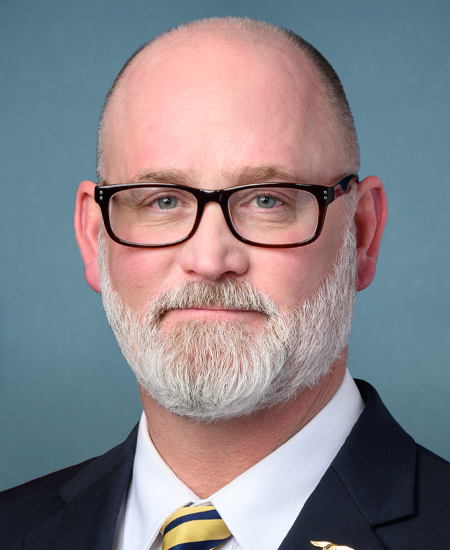
Rep. Derrick Van Orden
Sponsored bills
Maddy summaryThe ETS Act (HR 3387) enhances support for military members transitioning to civilian life through the Transition Assistance Program (TAP). It increases preseparation counseling from 365 to 540 days, requires at least 3 days of counseling for members with employment/education plans and 5 days for others, and mandates in-person counseling when possible. The bill creates standardized pathways across military branches, establishes a pilot program for military spouses with tailored counseling, and improves coordination between Defense, Veterans Affairs, and Labor to support service members at risk of difficult transitions. It also includes new reporting requirements to track TAP effectiveness and extends transitional health care availability from 180 to 270 days.
Maddy summaryThis bill updates Veterans Health Administration (VHA) anesthesia practice standards to align with Defense Health Agency (DHA) guidelines, directly affecting VA-employed anesthesia providers (including physician anesthesiologists and certified registered nurse anesthetists). It requires VHA to recognize certified registered nurse anesthetists as licensed independent practitioners under DHA’s 2023 standards and mandates certification from specific bodies for all anesthesia staff. Additionally, it sets a 25-hour minimum requirement for direct patient care experience for all VA anesthesia professionals and allows suspension for non-compliance. The bill also requires annual GAO reports comparing outcomes and costs across three anesthesia delivery models (anesthesiologist-led, CRNA-supervised, and CRNA-only) to be submitted to Congress.
Maddy summaryThis bill requires the Veterans Affairs (VA) Secretary to provide timely equitable relief to veterans who lose benefits due to VA administrative errors. It changes the law to make this relief mandatory ("shall" instead of "may") and sets a 120-day deadline for the VA to act after an error is confirmed. The bill also mandates that the VA must immediately cancel any debt collection agreements related to an error-based debt. It directly affects veterans who have suffered financial loss because of a VA mistake in processing benefits or claims.
Maddy summaryHR 3885, the Community TEAMS Act of 2025, creates a new grant program to expand medical student clinical training in rural and medically underserved communities. It provides funding for consortia of medical schools partnered with rural health clinics, community health centers, or facilities in underserved areas to support student rotations in outpatient settings. The grants, lasting 1-5 years, require applicants to detail project plans, sustainability, and how the program will improve community access to healthcare. This directly affects medical students, training facilities, and residents of high-need areas by aiming to build a sustainable physician workforce in those locations.
Maddy summaryThis bill would make non-citizens deportable if they incite or participate in riots during civil unrest involving assaults on law enforcement or military personnel, or destruction of public property, and who were unlawfully present, had DACA, or were lawful permanent residents at the time of the offense. It permanently bars such individuals from reentering the U.S. or accessing any relief from deportation, including asylum, cancellation of removal, or future DACA benefits. During declared emergencies (such as national disasters or state emergencies), the law mandates expedited removal and mandatory detention for those covered, with no discretion for enforcement.
Maddy summaryHR 3881, the "Stop Dangerous Sanctuary Cities Act," denies certain federal grants to states or localities that restrict sharing immigration status information or comply with federal immigration detainers. Specifically, it defines "sanctuary jurisdictions" as those with policies prohibiting cooperation with federal immigration enforcement requests (under Sections 236/287 of the Immigration and Nationality Act). The bill blocks recipients from receiving Economic Development Administration grants and Community Development Block Grants if they are deemed a sanctuary jurisdiction. Local officials complying with federal detainers gain legal protections, including immunity from lawsuits, while jurisdictions violating the law face mandatory return of funds. The policy takes effect October 1, 2025.
Maddy summaryHR 1948 authorizes the International Boundary and Water Commission (IBWC) to accept funds from federal or non-federal entities - including grants or agreements - to study, design, construct, operate, or maintain wastewater treatment facilities, water conservation projects, and flood control works along the U.S.-Mexico border. The bill requires these funds to be deposited into a specific U.S. Treasury account and imposes a $5 million annual limit on reimbursing non-federal partners for project costs. It also prohibits accepting funds from entities tied to "foreign countries of concern" (as defined in other law) and mandates annual reports to Congress detailing how funds were used. This bill directly affects the IBWC’s funding mechanisms and entities providing financial support for border water infrastructure projects.
Maddy summaryHR 3780, the Border Operations Service Medal Act, establishes a new service medal for military personnel who served in designated border security operations between January 1, 2025, and the conclusion of those operations. It directly affects active-duty service members, National Guard, and Reserve personnel who participated in these operations. The bill requires the Secretary of Defense to design and issue the medal within 60 days of enactment, authorizing its wear according to standard military uniform regulations. This is a procedural measure to formally recognize service during specific border operations authorized by the President in January 2025.
Maddy summaryHR 649, the Whole Milk for Healthy Kids Act of 2025, amends the National School Lunch Act to allow schools participating in the program to offer students both organic and non-organic whole milk, in addition to reduced-fat, low-fat, and fat-free options. Key provisions include clarifying that milk fat in whole milk should not count toward saturated fat limits for meal compliance, prohibiting schools from purchasing milk from Chinese state-owned enterprises, and ensuring schools cannot be barred from offering the full range of milk types listed. The bill directly affects public and private schools serving the National School Lunch Program by expanding their milk options for students. It focuses on concrete policy changes to dietary offerings and sourcing restrictions within the school nutrition program.