

Maddy summaryHR 8830, the High Court Gift Ban Act, sets strict limits on gifts federal judges may accept. It prohibits judges from receiving gifts valued over $50 from a single source in a year, unless the total from that source stays under $100 annually. Key exceptions include gifts paid for by the judge, gifts from relatives, honorary degrees from educational institutions, and public opportunities available to all federal employees. The bill also outlines enforcement mechanisms, requiring the Judicial Conference to refer violations to the Attorney General for civil or criminal penalties. This directly affects all federal judges, including Supreme Court justices and lower court judges, by restricting gifts from sources that may have business before them.
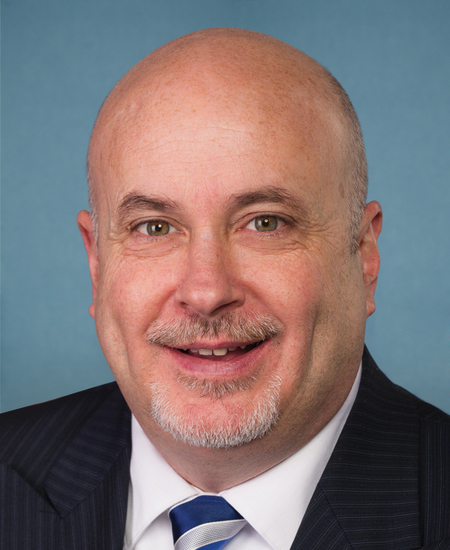
Rep. Mark Pocan
Sponsored bills
Maddy summaryThis resolution, introduced around World Refugee Day, expresses congressional support for U.S. efforts to protect refugees and displaced persons globally and within the United States. It highlights that over 117 million people are displaced worldwide, references the U.S. resettling 60,000 refugees in fiscal year 2024, and calls on federal agencies to maintain the Refugee Admissions Program, uphold asylum protections, and support host countries. The resolution does not create new laws but reaffirms existing commitments to refugee resettlement, safety, and integration through current programs.
Maddy summaryThe Pell Grant Preservation and Expansion Act of 2024 would double Federal Pell Grants, increasing the maximum award to $10,000 for the 2025-2026 academic year with annual inflation adjustments, and make Pell Grants a fully mandatory program rather than requiring annual appropriations. It would expand eligibility for students with negative student aid indexes (those with the lowest expected family contributions), provide Pell Grant eligibility for "Dreamer" students protected under DACA, and restore eligibility for students who previously lost it due to academic progress issues. The bill would also increase the total semesters of Pell Grant eligibility from 12 to 18. These changes would directly affect millions of undergraduate students, particularly students of color who currently rely on Pell Grants, with 3 in 5 African American students and half of Latino students depending on these grants. The bill would take effect for the 2025-2026 academic year.
Maddy summaryThis bill amends the Occupational Safety and Health Act to explicitly include public employees - such as those working for federal, state, or local government agencies - under OSHA's coverage. It changes the definition of "employee" to specify that public sector workers are protected, removing previous exclusions. The law takes effect 90 days after enactment for most workplaces, but gives states and local governments without OSHA-approved plans up to 36 months to comply. This directly affects public service workers in government roles by bringing their workplace safety protections under the same federal OSHA framework as private-sector employees.
Maddy summaryHR 8732, the Domestic Workers Bill of Rights Act, would establish new labor protections for domestic workers including nannies, housekeepers, and caregivers who work in private homes. The bill requires written agreements between employers and domestic employees, provides earned sick days, ensures fair scheduling practices, and prohibits unfair wage deductions for cash shortages or communications. It also creates a Domestic Employee Standards Board to recommend workplace standards and establishes a National Domestic Employee Hotline for assistance. The bill specifically targets domestic workers who have historically been excluded from labor protections under the Fair Labor Standards Act and Civil Rights Act, benefiting an estimated 2.2 million domestic workers in the U.S. who are disproportionately women of color and immigrants.
Maddy summaryThis bill amends federal jury selection laws to explicitly prohibit discrimination based on sexual orientation and gender identity. It updates definitions in Title 28 of the U.S. Code by adding "sexual orientation and gender identity" to the protected characteristics under "sex" and defining key terms like "gender identity" and "sexual orientation." The changes directly affect federal jury pools by requiring courts to consider these factors when selecting jurors and preventing discrimination in the process. The law clarifies that discrimination based on these characteristics - including associations with others who share them - is prohibited during jury selection. This is a concrete policy change to expand anti-discrimination protections in federal jury service.
Maddy summaryHR 8639, the Warehouse Worker Protection Act, requires employers in covered warehouse facilities (including distribution centers, storage facilities, and delivery services) to provide workers with clear written descriptions of any quotas they're subject to, including how performance is measured and monitored. The bill prohibits quotas that interfere with breaks, safety compliance, or anti-discrimination protections, and mandates that employers provide employee work speed data in human-readable formats. It creates new anti-retaliation protections for workers who exercise these rights or file complaints, and establishes a Fairness and Transparency Office within the Department of Labor to oversee implementation. The act also amends the National Labor Relations Act to explicitly prohibit quotas that discourage workers from exercising their labor rights.
Maddy summaryHRES 1260 is a non-binding resolution expressing the U.S. House of Representatives' support for designating May 2024 as "Progressive Supranuclear Palsy Awareness Month." It recognizes progressive supranuclear palsy (PSP) as a rare neurodegenerative disease affecting approximately 30,000 Americans, with no known cure and symptoms including cognitive decline, balance issues, and speech difficulties. The resolution specifically supports raising public awareness, encourages research for better treatments and a cure, and commends efforts by patients, families, and organizations working to improve PSP care. As a symbolic gesture, it does not create new laws or allocate funding but aims to increase visibility for this under-recognized condition.
Maddy summaryThe Endometriosis CARE Act (HR 8565) directs the National Institutes of Health to fund research and data collection on endometriosis, including $50 million annually from 2025-2029 for studies on treatments and potential cures. It requires the Department of Health and Human Services to analyze barriers to treatment access - like insurance coverage and provider shortages - and report findings within two years. The bill also mandates public education campaigns about endometriosis, with a focus on underserved racial/ethnic groups, and funds provider training on evidence-based care. Additionally, it authorizes a National Academies study on health disparities related to endometriosis diagnosis and treatment. The law directly affects people with endometriosis, healthcare providers, and research institutions through new federal funding and data collection requirements.
Maddy summaryThe George Floyd Justice in Policing Act of 2024 establishes a National Police Misconduct Registry to track complaints and disciplinary actions against officers, requiring all federal, state, and local law enforcement agencies to report use-of-force incidents with racial, gender, and age data. It bans chokeholds and carotid holds in police encounters, prohibits no-knock warrants in drug cases, and reforms qualified immunity to make it harder for officers to avoid accountability for misconduct. The bill mandates body cameras for federal officers, requires independent investigations of officer-involved shootings, and creates new data collection systems to monitor racial profiling and use-of-force patterns. It also includes provisions for civilian oversight boards, improved officer training on de-escalation and implicit bias, and restrictions on military equipment transfers to local police departments. This law affects all law enforcement agencies receiving federal funding under programs like Byrne and COPS grants.