

Maddy summaryThis resolution (HRES 1407) commemorates the 12th anniversary of the August 5, 2012, shooting at the Oak Creek Sikh Gurdwara in Wisconsin, which killed seven people. It specifically honors the victims - Paramjit Kaur, Suveg Singh Khattra, Satwant Singh Kaleka, Ranjit Singh, Sita Singh, Prakash Singh, and Baba Punjab Singh - and expresses condolences to their families. The resolution condemns the hate crime, recognizes the Sikh community’s resilience ("chardi kala"), and applauds first responders like Lieutenant Brian Murphy who saved lives. As a symbolic gesture, it does not create new laws or policies but formally acknowledges the tragedy and calls for continued efforts against religious discrimination.
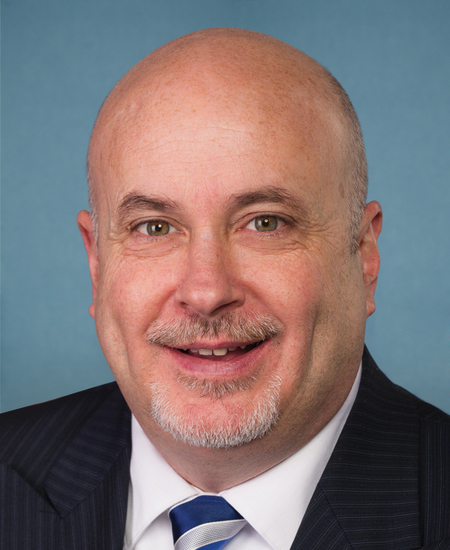
Rep. Mark Pocan
Sponsored bills
Maddy summaryThe NO BAN Act (HR 9244) prohibits U.S. immigration authorities from denying visas or entry based on national origin, religion, or sex. It amends immigration law to explicitly ban such discrimination in visa decisions and tightens restrictions on the president’s power to suspend entry of certain groups under Section 212(f). The bill requires specific evidence, narrow tailoring, time limits, and congressional notification for any entry restriction, while mandating public reports on visa denials and waivers. It directly affects nonimmigrant visa applicants (e.g., students, workers) and federal agencies administering immigration policy.
Maddy summaryThe EMIT LESS Act of 2024 establishes research facilities and training programs to study and reduce methane emissions from livestock digestion. It creates USDA-funded labs to test methane-mitigation products, requires training at land-grant universities on livestock management and emissions monitoring, and amends conservation programs to include livestock feed management practices that lower methane. The bill directly affects livestock farmers by expanding eligibility for USDA conservation payments when they adopt practices proven to reduce enteric methane emissions. Key mechanisms include updated conservation standards, new payment incentives for feed management, and mandatory annual reports to Congress on emission reduction progress.
Maddy summaryThe LET'S Protect Workers Act increases civil penalties for employers who violate labor and workplace safety laws. It significantly raises fines for child labor violations (up to $700,000 for serious injuries/deaths), wage and hour violations (up to $50,000 per violation for repeated/willful violations), and workplace safety violations (up to $800,000). The bill also increases penalties for farmworker protections (to $30,000), mine safety violations, and unfair labor practices (up to $100,000). New provisions require employers to pay penalties, with withdrawal orders for mines that fail to pay fines. These changes apply to violations occurring on or after January 1, 2025, with some provisions taking effect immediately.
Maddy summaryH.J. Res. 193 proposes a constitutional amendment to eliminate legal immunity for federal officials, including the President, from criminal prosecution for actions taken while performing official duties. It also prohibits the President from granting a pardon to themselves. The amendment would apply to all federal officers (such as the President, Vice President, and members of Congress) except for Congress members acting in their legislative role as defined in the Constitution. If ratified by 38 states, this change would become part of the U.S. Constitution, requiring no further congressional action.
Maddy summaryHRES 1381 is a symbolic resolution that commemorates the United States Olympic and Paralympic Teams' historical achievements, including over 5,300 total medals across past Games. It expresses congressional support for U.S. athletes competing in the 2024 Summer Olympics and Paralympics in Paris, France, and commends the Government of France for hosting the events. The resolution also commits to ensuring a safe environment for the 2028 Los Angeles Olympic and Paralympic Games. As a non-binding expression of support, it does not create new laws or allocate funds.
Maddy summaryThis resolution designates September 2024 as "PCOS Awareness Month" to highlight polycystic ovary syndrome (PCOS), a hormonal condition affecting an estimated 5-10 million U.S. women and girls. It recognizes PCOS as a serious health issue linked to infertility, type 2 diabetes, heart disease, mental health challenges, and other related conditions. The resolution urges increased public and medical education about PCOS, improved diagnosis, and research into better treatments, without creating new laws or funding. It directly supports women and girls living with PCOS by promoting awareness of its wide-ranging health impacts.
Maddy summaryHR 9104, the Access to Birth Control Act, requires pharmacies that normally stock contraception to provide birth control or related medications without delay if in stock, or immediately offer alternatives like referrals to other pharmacies or expedited orders if unavailable. It prohibits pharmacists from intimidating customers, misrepresenting availability, breaching confidentiality, or refusing to fill valid prescriptions for birth control. Pharmacies violating these rules face civil penalties up to $1,000 per day or private lawsuits. The law specifically applies to pharmacies that routinely carry contraception and excludes cases where a valid prescription is missing or payment cannot be made. It aims to address documented refusals to dispense birth control, particularly following the Dobbs decision.
Maddy summaryHRES 1355 is a non-binding resolution supporting the designation of July 10 as Journeyman Lineworkers Recognition Day. It honors lineworkers who maintain electrical infrastructure under hazardous conditions, including during disasters, and commemorates Henry Miller, the first president of the International Brotherhood of Electrical Workers, who died on July 10, 1896, while troubleshooting an electrical outage. The resolution encourages public recognition of these workers' contributions but does not create new laws or policies.
Maddy summaryHR 8988, the "Get Foreign Money Out of U.S. Elections Act," expands federal law to prohibit foreign-controlled businesses from influencing U.S. elections. It bans contributions or spending by any for-profit business entity where foreign nationals own 50% or more of voting shares, or where foreign entities collectively own 5% or more (or exert control over election activities). Businesses must certify compliance before making election-related spending, including contributions to political committees, and recipients cannot reuse uncertified funds for further election activities. This bill directly affects foreign-owned corporations, partnerships, and similar entities seeking to participate in U.S. elections.