

Maddy summaryThe Treat and Reduce Obesity Act of 2023 expands Medicare coverage for obesity treatment by allowing a wider range of healthcare providers - including nurse practitioners, dietitians, psychologists, and community-based counseling programs - to deliver intensive behavioral therapy for obesity, provided they coordinate with primary care providers. It also adds Medicare Part D coverage for medications used to treat obesity or for weight loss management in overweight individuals with related health conditions like diabetes or high blood pressure. These changes directly affect Medicare beneficiaries, particularly older adults (65+), who face higher obesity rates and associated costs, including $50 billion annually in Medicare spending for obesity-related care. The bill requires annual reports to Congress on implementation to improve coordination of obesity care across federal health programs.
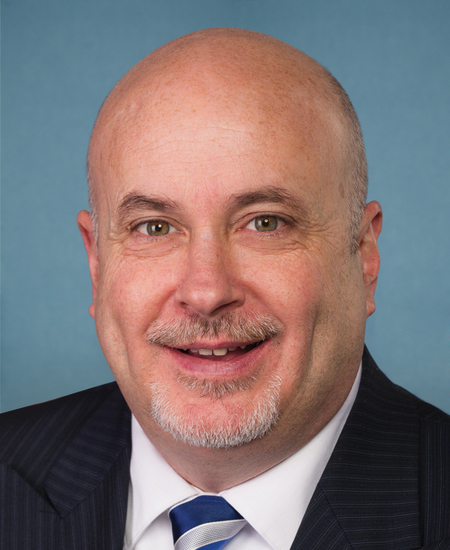
Rep. Mark Pocan
Sponsored bills
Maddy summaryThis bill updates federal law to ensure tribal child support enforcement agencies have the same access to tax information as state agencies. It amends the Social Security Act and Internal Revenue Code to explicitly include tribal organizations receiving federal grants under Section 455(f) in provisions allowing the use of tax refund data to collect overdue child support payments. Tribal agencies will now be treated equally with state agencies for accessing tax information and receiving reimbursement for enforcement reports. This change directly affects Native American tribes operating child support programs and the parents and children they serve, enabling more effective collection of overdue support.
Maddy summaryThe Autism CARES Act of 2024 reauthorizes and enhances federal programs supporting individuals with autism spectrum disorder. It requires the National Institutes of Health to expand research to include more fields like gerontology and psychiatry, and to ensure research reflects the full range of needs of people with autism, including those with co-occurring conditions. The bill mandates regular reports to Congress on progress, mental health needs, and transition services for young adults with autism, while increasing funding for autism-related programs from fiscal year 2025 through 2029. This legislation directly affects individuals with autism, their families, caregivers, and healthcare providers by improving access to evidence-based services and research.
Maddy summaryThis bill, HR 1097 (Everett Alvarez, Jr. Congressional Gold Medal Act of 2023), authorizes the award of a Congressional Gold Medal to Everett Alvarez, Jr., in recognition of his service as a U.S. Navy pilot and Vietnam War prisoner of war. It directly honors Alvarez, who was the first U.S. pilot shot down in the Vietnam War, spent over 8.5 years in captivity, and later served in the Peace Corps and Veterans Administration. The bill’s key mechanism is directing the U.S. Mint to strike a gold medal bearing his name and image, with bronze duplicates available for sale to cover costs. It does not create new policies or affect any group beyond the honoree.
Maddy summaryHRES 1617 is a non-binding resolution expressing the House of Representatives' view that the federal government should dramatically expand and strengthen the care economy. It calls for federal investments to address systemic gaps in care infrastructure, including universal access to affordable childcare, elder care, paid family leave, and mental health services, while prioritizing higher wages and union protections for care workers - particularly women of color and immigrants. The resolution emphasizes repairing historical inequities rooted in exclusion from labor protections and connecting care infrastructure to broader goals like climate justice and economic equity. It does not create new law but urges future legislation to adopt these principles as a foundation for policy. The resolution directly affects millions of care workers, families relying on care services, and communities facing systemic barriers to care access.
Maddy summaryHR 10456, the SAFE SEX Workers Study Act, requires the Department of Health and Human Services and the Department of Justice to study the impacts of the SESTA/FOSTA law on sex workers and human trafficking investigations. The HHS study will examine how the loss of online platforms (like Backpage) affected sex workers' health, safety, economic stability, and access to harm reduction services. The Justice Department will assess how SESTA/FOSTA changed human trafficking investigations, prosecutions, and law enforcement practices. Both reports must be completed within one year of the bill's enactment and made publicly available.
Maddy summaryThis bill requires states to prohibit physicians from performing specific non-emergency surgeries on foster children under age 6 who have variations in sex characteristics (commonly called intersex traits), unless the procedure addresses an immediate life threat. It targets procedures like clitoral reduction, gonadectomy, and vaginoplasty that are often done without consent on infants. States must enforce this through licensing penalties, and it applies only to children in foster care as a condition for receiving federal foster care funding. The bill explicitly states it does not restrict medically necessary surgeries or procedures for transgender youth.
Maddy summaryThis bill extends Medicare payment adjustments for physicians and other practitioners through 2025 instead of ending in 2024. It specifically adds a 4.73% payment increase for services provided between January 1, 2025, and January 1, 2026. The legislation modifies existing Medicare payment rules to stabilize practice revenues during transition periods. It directly affects doctors and healthcare providers who bill Medicare for patient services. The key change is the extended timeframe and the defined 4.73% rate for the 2025-2026 period.
Maddy summaryHR 9774, the Health Care Affordability Act of 2024, would expand premium tax credits under the Affordable Care Act for households earning between 150% and 400% of the federal poverty level. It modifies the sliding scale calculation to reduce the percentage of monthly insurance premiums these households must pay, with the lowest out-of-pocket costs for those near 400% of poverty. This directly affects individuals and families purchasing health insurance through marketplace plans who qualify for these tax credits. The changes apply to tax years beginning after December 31, 2025.
Maddy summaryThe SAFE for Survivors Act of 2024 provides comprehensive workplace protections for survivors of domestic violence, dating violence, sexual assault, and stalking. It establishes a new entitlement to 40 work days of safe leave per year (with 10 days paid) for employees to address qualifying acts of violence, including time for counseling, safety planning, legal assistance, and medical care. The bill prohibits employers from discriminating against or retaliating against employees who take this leave, requires reasonable accommodations for survivors, and ensures unemployment compensation eligibility for those who separate from work due to violence. It also includes insurance protections preventing insurers from denying coverage or charging higher premiums based on a person's status as a survivor. This legislation directly affects employees, employers, and insurance providers across the United States.