

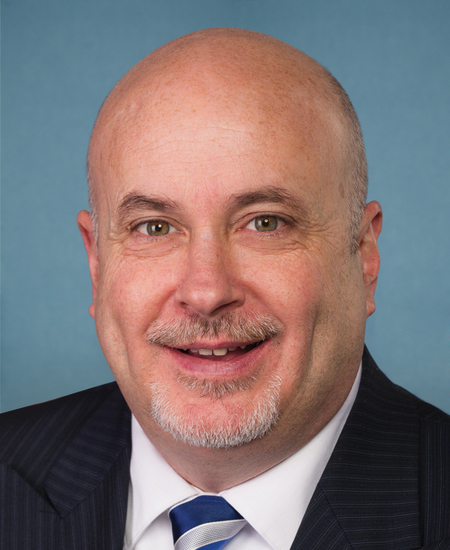
Photo of Mark Pocan
D United States House · District 2 · Wisconsin On the 2026 ballot

Rep. Mark Pocan

Compare
Total votes
2,837
all sessions
Attendance
97%
76 missed
Near the chamber average
With party
97%
of cast votes
Near the chamber average
Bipartisan score
2%
crosses aisle rarely
Near the chamber average
Sponsored
1,992
bills & resolutions
Higher than 88% of chamber peers
Committees
4
assignments
1,992 bills and resolutions

Sponsored bills

Total
1,992
Primary
74
Co-sponsor
1,918
This page
1,992
matching current filters
Co-sponsor HR 1989
In committee · United States House · Co-sponsor
Protect Our Probationary Employees Act

Maddy summaryThis bill adjusts probationary periods for certain federal employees who were involuntarily separated between January 20, 2025, and January 20, 2029. It allows eligible employees (those separated while on probation in an Executive agency) to count their prior service time toward a new probationary period when rehired into a similar position with their former agency. Specifically, the new probation period equals the original required duration minus the time already served in their previous federal role. The law expires on January 20, 2029, and applies only to appointments matching the employee’s prior position.

In committee Mar 10, 2025 1 co-sponsor
Co-sponsor HR 2021
In committee · United States House · Co-sponsor
American Teacher Act

American Teacher Act This bill establishes grants to increase the minimum salary of public elementary and secondary school teachers. It also authorizes a national campaign regarding the value of the teaching profession. First, the bill directs the Department of Education (ED) to award four-year grants to state educational agencies (SEAs) and, through them, subgrants to local educational agencies to establish a minimum annual salary of $60,000 (to be adjusted annually for inflation) for these teachers. Second, the bill directs ED to award grants to eligible SEAs to provide cost-of-living adjustments to the annual base salary of teachers. Finally, the bill authorizes ED to carry out a national campaign to (1) increase awareness about the importance of teachers and the value of the teaching profession, (2) encourage secondary school and college students to consider teaching as a professional career, and (3) diversify the pool of individuals who enter the teaching profession.

In committee Mar 10, 2025 1 co-sponsor
Co-sponsor HR 1992
In committee · United States House · Co-sponsor
Kangaroo Protection Act of 2025

Maddy summaryThe Kangaroo Protection Act of 2025 prohibits the commercial import, sale, or distribution of kangaroos and kangaroo products (like leather goods) within the United States. It directly affects businesses or individuals engaged in importing or selling items made from the western grey kangaroo, eastern grey kangaroo, common wallaroo, or red kangaroo. Violations carry fines up to $10,000, up to one year in prison, or both, with each violation treated as a separate offense. The Secretary of Commerce will develop implementing regulations, effective 180 days after enactment.

In committee Mar 10, 2025 1 co-sponsor
Co-sponsor HR 2013
In committee · United States House · Co-sponsor
Medicare Home Health Accessibility Act

Maddy summaryThis bill amends Medicare eligibility rules to clarify that beneficiaries needing occupational therapy *or* speech therapy qualify for home health services. It updates two sections of the Social Security Act (Parts A and B) to replace "need occupational therapy or speech therapy" with "need occupational, or speech therapy," ensuring both therapies are explicitly covered. The change directly affects Medicare beneficiaries requiring either therapy for home-based care, removing potential confusion about eligibility. The updated rules will take effect for services provided on or after January 1, 2026.

In committee Mar 10, 2025 1 co-sponsor
Co-sponsor HR 1988
In committee · United States House · Co-sponsor
Pay Federal Workers and Servicemembers Act

Maddy summaryThis bill (HR 1988) provides unemployment benefits eligibility for certain federal workers and military members during government shutdowns. It deems eligible employees - such as military personnel, NOAA Commissioned Corps members, and excepted civilian workers performing emergency duties - as "totally separated from federal service" during funding gaps. This allows them to access unemployment benefits immediately, without waiting periods, for weeks of unemployment starting March 14, 2025. The bill directly affects federal employees who remain on duty but are unpaid due to shutdowns.

In committee Mar 10, 2025 1 co-sponsor
Co-sponsor HR 1902
In committee · United States House · Co-sponsor
HERO Act

Maddy summaryHR 1902, the HERO Act, creates a national data system to track suicide rates among public safety officers (including firefighters, EMTs, police, and telecommunicators) and requires annual reports to Congress with detailed breakdowns by age, gender, occupation, and employment status (volunteer, career, etc.). The bill funds peer-support mental health programs for fire departments and EMS agencies, establishes confidential wellness services for healthcare providers, and develops resources to train mental health professionals on first responder-specific stressors and PTSD. It prohibits using suicide data to deny life insurance or benefits to survivors and mandates that all collected data be kept confidential and secure. This legislation directly affects all public safety officers nationwide by improving data collection, access to mental health resources, and evidence-based interventions to address suicide and trauma.

In committee Mar 6, 2025 1 co-sponsor
Primary HR 1950
In committee · United States House · Lead sponsor
Protect Social Security and Medicare Act

Maddy summaryHR 1950, the Protect Social Security and Medicare Act, requires a two-thirds vote in both the House and Senate to consider any bill or amendment that would reduce Social Security or Medicare benefits administered by the Social Security Administration (SSA) or Centers for Medicare & Medicaid Services (CMS). This rule applies directly to lawmakers who would need supermajority support to advance proposals affecting these programs. An exception allows changes to Medicare Advantage plan payments if offset by increased payments elsewhere in Medicare. Determinations about whether a provision reduces benefits are made solely by the SSA's Office of the Chief Actuary during legislative consideration.

In committee Mar 6, 2025 0 co-sponsors
Co-sponsor HR 1918
In committee · United States House · Co-sponsor
Farewell to Foam Act of 2025

Maddy summaryHR 1918, the Farewell to Foam Act of 2025, prohibits the sale of most foam food containers, packaging peanuts, and foam coolers starting January 1, 2028. It directly affects restaurants, grocery stores, food vendors, manufacturers, and retailers who sell these items, excluding medical coolers used for drugs or medical products. The bill imposes escalating civil penalties for violations: $250 for the second offense, $500 for the third, and $1,000 for fourth or subsequent violations, with reduced penalties for small businesses under specific revenue thresholds. Enforcement is led by the EPA Administrator, with states allowed to enforce under federal guidelines.

In committee Mar 6, 2025 1 co-sponsor
Co-sponsor HR 1954
In committee · United States House · Co-sponsor
Do No Harm Act

Maddy summaryHR 1954, the "Do No Harm Act," amends the Religious Freedom Restoration Act (RFRA) to clarify that RFRA does not override specific federal laws protecting against harm. It explicitly exempts provisions related to anti-discrimination (like the Civil Rights Act), workplace protections (wages, leave, collective activity), child safety, and healthcare access from RFRA's requirements. The bill ensures RFRA cannot be used to challenge government programs or contracts that provide these essential protections. It also clarifies that RFRA applies only to disputes involving government as a party, not private disputes between individuals. This change preserves existing legal safeguards while modifying RFRA's scope.

In committee Mar 6, 2025 1 co-sponsor
Co-sponsor HR 1901
In committee · United States House · Co-sponsor
CHIPP Act

Maddy summaryHR 1901, the CHIPP Act, makes Children's Health Insurance Program (CHIP) funding permanent for all future fiscal years, removing previous expiration dates that required annual congressional renewal. This directly affects low-income children and families who rely on CHIP coverage and the states that administer these programs. The key mechanism is amending federal law to require "such sums as are necessary" for CHIP funding starting in fiscal year 2029 and beyond. Other provisions adjust funding for related programs like pediatric quality measures and outreach, but the primary change is CHIP’s permanent funding structure.

In committee Mar 6, 2025 1 co-sponsor
Showing 491 to 500 of 1,992 bills
Previous 1 … 49 50 51 … 200 Next