

Maddy summaryThe WRCR Act of 2025 expands the Earned Income Tax Credit (EITC) to include qualifying students who meet specific criteria, such as receiving a Federal Pell Grant or having household income below 300% of the poverty line. It lowers the age requirement for eligibility from 25 to 18 and creates a special rule treating certain care-giving and learning activities as "compensated work" for EITC purposes. The bill increases credit percentages for certain taxpayers, modifies phaseout amounts to $4,000 (single filers) and $30,000 (joint filers), and establishes an advance payment system allowing monthly EITC payments up to 75% of the estimated credit. These changes directly affect low-income workers, students, and families with children who qualify for the EITC, with the advance payments beginning in 2026 for taxable years after 2024.
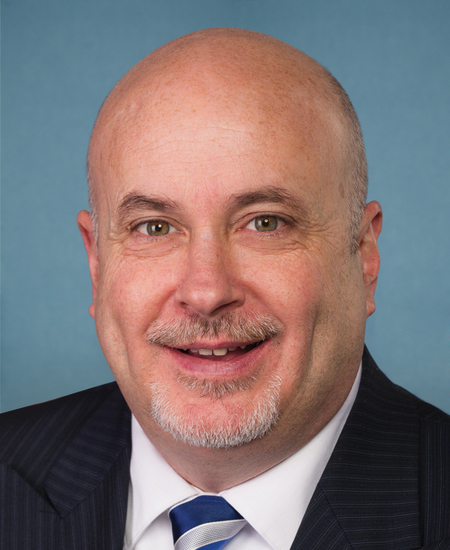
Rep. Mark Pocan
Sponsored bills
Maddy summaryThe Paycheck Fairness Act strengthens equal pay protections by expanding the definition of "sex" to include pregnancy, childbirth, sexual orientation, gender identity, and sex characteristics. It modifies employer defenses for pay disparities to require proof that any pay difference is job-related, not based on sex, and accounts for the entire pay gap. The bill prohibits employers from asking about salary history, enhances penalties for violations, and requires employers with 100+ employees to collect and report detailed pay data by race, sex, and job category. It also establishes training programs for employers on eliminating pay bias and creates a National Equal Pay Enforcement Task Force to coordinate enforcement efforts. This legislation directly affects employers, particularly those with 100+ employees, and aims to address pay disparities impacting women, people of color, and other underrepresented groups.
Maddy summaryH.J. Res. 80 would declare the Equal Rights Amendment (ERA) part of the U.S. Constitution, asserting it has been ratified by 38 states (three-fourths of the states) despite the original 1972 deadline. If passed, this resolution would formally establish the ERA as a constitutional amendment, requiring all federal and state laws to align with its gender equality protections. The bill does not create new laws but confirms the ERA's status as part of the Constitution, affecting how laws are interpreted and enforced. It is a procedural step to resolve the legal dispute over the ERA's validity after decades of debate.
Maddy summaryHR 2311, the Pakistan Democracy Act, imposes U.S. sanctions on Pakistani military and government officials who undermine democracy or wrongfully detain political figures. Specifically, it requires sanctions within 180 days on General Asim Munir (Pakistan’s Army Chief) and identifies individuals involved in the persecution of Imran Khan or other political detainees, barring them from U.S. entry via visa inadmissibility. The bill mandates the President to certify to Congress for waivers, requiring proof that military rule has ended and political detainees are freed. It defines key terms like "knowingly" and "foreign person" to clarify eligibility for sanctions. The law directly affects targeted Pakistani officials and their immediate family members, with no mention of broader economic or diplomatic measures.
Maddy summaryHRES 238 is a non-binding House resolution expressing the House's position that every person has the basic right to emergency health care, including abortion care during medical emergencies. It does not create new laws or alter existing regulations but formally states the House's view that abortion restrictions in emergencies endanger patients' health and lives. The resolution specifically highlights how current abortion bans put pregnant people at risk during life-threatening conditions like hemorrhage or infection, disproportionately impacting Black, Indigenous, people of color, immigrants, and low-income individuals. It serves as a symbolic statement opposing policies that restrict emergency reproductive care access.
Maddy summaryHR 2257 authorizes the U.S. Mint to produce three commemorative coins (a $5 gold coin, a $1 silver coin, and a half-dollar) to honor fallen firefighters, with specific quantity limits and specifications. The bill requires a surcharge ($35 for gold, $10 for silver, $5 for half-dollar) on each coin sold, which is directed entirely to the National Fallen Firefighters Foundation to support its programs. The coins must be issued in 2026, will be legal tender, and the government must recover all costs through sales before distributing funds to the Foundation. This is a commemorative coin program, not a direct legislative policy change affecting broader public programs.
Maddy summaryThe Air America Act of 2025 authorizes one-time payments of $40,000 to individuals who worked for Air America or its affiliated companies for at least five years during 1950-1976, or to their surviving spouses, children, or dependents. Additional payments of $8,000 per full year beyond five years are allowed. The program is capped at $60 million total funding, with claims required within two years of final regulations. Payments are a single lump sum with no ongoing benefits, and the bill explicitly states it does not create new entitlements beyond this one-time award.
Maddy summaryHR 2146 creates a refund process for businesses that paid tax on certain dyed diesel fuel or kerosene later determined to be exempt from tax under the Internal Revenue Code. Specifically, it allows businesses to receive a refund equal to tax paid under Section 4081 for "eligible indelibly dyed" fuels that are exempt under Section 4082(a). The bill amends tax code provisions to treat these refunds like standard tax credits, requiring the IRS to process them without interest. This applies to fuel removed from terminals 180 days after the bill’s enactment. It directly affects fuel distributors and retailers who previously paid tax on exempt dyed fuels.
Maddy summaryThis bill amends the PACT Act to correct an oversight affecting veterans who served in Guam. It specifically adds the period from August 15, 1958, to July 31, 1980, to the eligibility window for veterans who served in Guam (or its territorial waters) and developed diseases linked to herbicide exposure. The change ensures veterans who served in Guam during that specific timeframe are included in the presumption of service connection for such conditions. This directly impacts veterans who served in Guam between 1958 and 1980, who were previously excluded from the PACT Act's benefits due to the original language. The provision updates the legal text to accurately reflect Guam's historical status during that period.
Maddy summaryHR 2118, the Protecting our Guests During Hostilities in Ukraine Act, establishes "Ukrainian guest status" for individuals paroled into the U.S. under the Uniting for Ukraine program (announced April 21, 2022). This status, effective from their initial parole date, grants eligible Ukrainians work authorization and temporary legal presence. The status expires 120 days after the Secretary of State determines hostilities in Ukraine have ceased and safe return conditions exist. It may be revoked if the Secretary of Homeland Security finds an individual meets specific immigration grounds for removal under the Immigration and Nationality Act.