

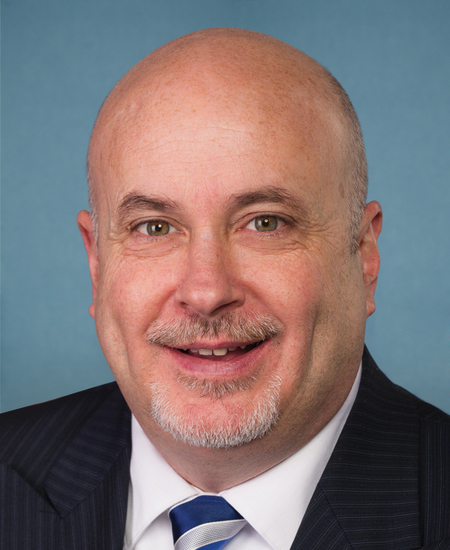
Photo of Mark Pocan
D United States House · District 2 · Wisconsin On the 2026 ballot

Rep. Mark Pocan

Compare
Total votes
2,837
all sessions
Attendance
97%
76 missed
Near the chamber average
With party
97%
of cast votes
Near the chamber average
Bipartisan score
2%
crosses aisle rarely
Near the chamber average
Sponsored
1,992
bills & resolutions
Higher than 88% of chamber peers
Committees
4
assignments
1,992 bills and resolutions

Sponsored bills

Total
1,992
Primary
74
Co-sponsor
1,918
This page
1,992
matching current filters
Co-sponsor HR 2799
In committee · United States House · Co-sponsor
Closing the Bump Stock Loophole Act of 2025

Maddy summaryHR 2799, the Closing the Bump Stock Loophole Act of 2025, prohibits the sale, possession, and modification of devices that increase the firing rate of semi-automatic firearms to mimic machine guns (commonly called "bump stocks"). It specifically bans manual, power-driven, or electronic devices designed to speed up firing, as well as modified firearms that achieve this effect. Owners of pre-existing modified firearms must register them within 120 days of the law's enactment, with exemptions for government entities and firearms already lawfully modified and registered before the bill passes. The bill does not restrict standard semi-automatic firearms or require registration of unmodified guns.

In committee Apr 9, 2025 1 co-sponsor
Co-sponsor HR 2757
In committee · United States House · Co-sponsor
Medicare Audiology Access Improvement Act of 2025

Maddy summaryThis bill expands Medicare coverage to include audiology services provided by qualified audiologists without requiring a physician referral or supervision. Starting January 1, 2027, Medicare will pay 80% of the standard rate for these services, which include hearing and balance assessments and treatment. It specifically allows audiologists to legally provide these services under state law, as long as they are covered if provided by a physician. The bill does not expand the types of services covered beyond those already payable under Medicare as of December 31, 2026.

In committee Apr 9, 2025 1 co-sponsor
Co-sponsor HR 2753
In committee · United States House · Co-sponsor
Hands Off Medicaid and SNAP Act of 2025

Maddy summaryHR 2753, the Hands Off Medicaid and SNAP Act of 2025, is a procedural bill that would prevent Congress from using budget reconciliation to cut Medicaid or SNAP benefits. It amends the Congressional Budget Act to block reconciliation bills or amendments that reduce Medicaid enrollment/benefits (under Social Security Act Title XIX) or SNAP eligibility/benefits (under the Food and Nutrition Act of 2008). This rule would apply until January 20, 2029, and only affects the budget reconciliation process, not the programs themselves. The bill does not change current benefit levels or eligibility rules for Medicaid or SNAP recipients.

In committee Apr 9, 2025 1 co-sponsor
Co-sponsor HR 1423
In committee · United States House · Co-sponsor
Guard and Reserve GI Bill Parity Act of 2025

Maddy summaryHR 1423, the Guard and Reserve GI Bill Parity Act of 2025, expands GI Bill benefits to National Guard members who serve on full-time National Guard duty or active duty under Title 32. It removes previous exclusions by counting this service toward eligibility for Post-9/11 educational benefits, just like active-duty service. The change applies retroactively to service performed since September 11, 2001, allowing affected veterans to access benefits they were previously denied. This policy adjustment directly affects National Guard members who completed qualifying full-time duty since 2001.

In committee Apr 9, 2025 1 co-sponsor
Co-sponsor HR 2743
In committee · United States House · Co-sponsor
Raise the Wage Act of 2025

Maddy summaryThe Raise the Wage Act of 2025 gradually increases the federal minimum wage from $9.50 to $17.00 per hour over six years, with annual adjustments based on median wage growth. It raises the base wage for tipped workers from $6.00 to $17.00 per hour, phasing out their separate minimum wage structure by 2029. The bill also eliminates special minimum wage certificates for disabled workers after 2029, requiring employers to pay the standard minimum wage. These changes apply to most covered workers, including tipped employees and those under 20, with specific transition timelines for each group.

In committee Apr 8, 2025 1 co-sponsor
Co-sponsor HR 2739
In committee · United States House · Co-sponsor
Counseling Not Criminalization in Schools Act

Maddy summaryThis bill prohibits federal funding for school police officers and establishes a $5 billion grant program to help schools replace law enforcement with mental health professionals like counselors, social workers, and psychologists. It requires schools to eliminate police contracts before receiving funds and mandates that grant money be used for trauma-informed services, restorative justice programs, and evidence-based mental health support instead of punitive discipline. The bill directly affects schools with police presence but insufficient mental health staff, particularly those serving Black, Latino, Native American, and other marginalized students who face racial disparities in school discipline. It aims to reduce the school-to-prison pipeline by shifting resources from law enforcement to supportive services that address students' needs. The legislation includes reporting requirements for schools to track disciplinary practices and demographic data to monitor progress in reducing disparities.

In committee Apr 8, 2025 1 co-sponsor
Co-sponsor HR 2731
In committee · United States House · Co-sponsor
Great Lakes Mapping Act of 2025

Maddy summaryThe Great Lakes Mapping Act of 2025 requires the National Oceanic and Atmospheric Administration (NOAA) to create high-resolution maps of all Great Lakes lakebeds by December 31, 2030. This includes collecting detailed depth measurements, cataloging existing data, and managing metadata, with NOAA coordinating with Great Lakes states, regional councils, and existing initiatives. The bill mandates that partial maps be shared publicly during the project and the full map with supporting data must be released within 180 days of completion. It authorizes $50 million annually (2025-2029) for this effort, with funds available through 2030. The law directly affects NOAA and its partners, enabling improved resource management and navigation through publicly accessible lakebed data.

In committee Apr 8, 2025 1 co-sponsor
Co-sponsor HR 2736
In committee · United States House · Co-sponsor
Public Service Freedom to Negotiate Act of 2025

Maddy summaryThis bill establishes federal minimum standards for collective bargaining rights for public employees and supervisors. The Federal Labor Relations Authority would determine if state laws provide these rights, and if not, would establish them for affected employees. The bill guarantees public employees the right to form unions, bargain collectively, and engage in concerted activities, while requiring public employers to recognize unions and put agreements in writing. It also prohibits strikes or lockouts that would disrupt emergency services. This would apply to public employees in states that don't meet the federal standards for collective bargaining rights.

In committee Apr 8, 2025 1 co-sponsor
Primary HR 2737
In committee · United States House · Lead sponsor
ELON MUSK Act

Maddy summaryHR 2737, titled the "ELON MUSK Act," is a procedural bill with a satirical title referencing Elon Musk. The bill prohibits "special Government employees" (as defined under 18 U.S.C. § 202) from entering into or benefiting from federal government contracts, requiring termination of any existing such contracts upon enactment. It uses standard legal terminology without creating new policy mechanisms beyond this contractual restriction. The bill does not directly affect specific individuals or entities but applies to a defined category of federal employees under existing law. The title's reference to Elon Musk is purely nominal and unrelated to the bill's actual provisions.

In committee Apr 8, 2025 0 co-sponsors
Co-sponsor HR 2687
In committee · United States House · Co-sponsor
End Kidney Deaths Act

Maddy summaryHR 2687, the End Kidney Deaths Act, creates a federal tax credit for living kidney donors who give non-directed donations (meaning they don't know the recipient's identity). It provides a $10,000 annual credit for five years ($50,000 total) to donors whose kidney is removed after December 31, 2026, with special rules if the donor dies during this period. The credit applies only to living, non-directed kidney donations and explicitly states it does not count as "valuable consideration" under laws prohibiting organ sales. This bill directly affects living kidney donors who choose to donate anonymously, aiming to incentivize such donations by offsetting related costs through tax relief. The credit expires after December 31, 2036.

In committee Apr 7, 2025 1 co-sponsor
Showing 431 to 440 of 1,992 bills
Previous 1 … 43 44 45 … 200 Next