

Maddy summaryThe FAIR Act of 2025 would prohibit companies from requiring pre-dispute arbitration agreements or waivers that prevent individuals from joining class or collective lawsuits in employment, consumer, antitrust, or civil rights cases. This directly affects workers, consumers, and small businesses who currently face forced arbitration for issues like workplace discrimination, product defects, or unfair business practices. The bill makes such agreements unenforceable while allowing voluntary arbitration after disputes arise and leaving collective bargaining agreements unaffected. It applies to all disputes occurring after the law takes effect, without changing how voluntary arbitration works post-dispute.
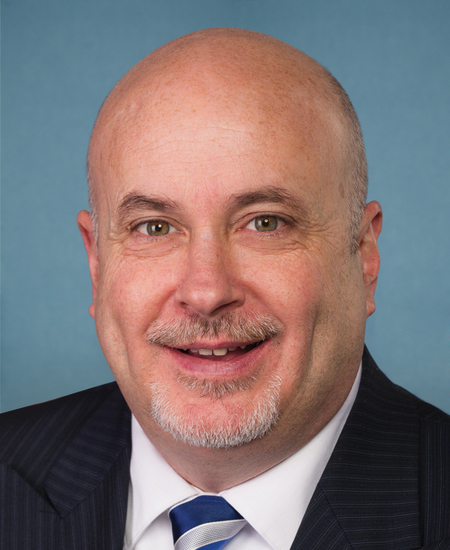
Rep. Mark Pocan
Sponsored bills
Maddy summaryHJRES 121 proposes a constitutional amendment to allow Congress and states to set reasonable limits on money raised or spent to influence elections. It would permit regulations distinguishing between natural persons (individuals) and corporations or other artificial entities, potentially restricting corporate spending in elections. The amendment explicitly states that such regulations cannot abridge press freedom. This is a proposed constitutional change requiring ratification by three-fourths of state legislatures, not yet law.
Maddy summaryHRES 704 is a non-binding resolution expressing the House's opposition to the proposed "Wasteful and Inappropriate Service Reduction Model" (WISeR) for traditional Medicare. It opposes expanding prior authorization requirements for Medicare services by 30% - requiring doctors to seek approval before treatment - using private companies with a history of incorrect denials and AI tools reported to have high error rates. The resolution states this would undermine beneficiary access to timely care, citing data showing prior authorization causes physician burnout and that Medicare Advantage denials are overturned 81.7% of the time. It urges CMS to terminate the model but does not change existing law.
Maddy summaryHR 5309, the Congressional Tribute to Constance Baker Motley Act of 2025, authorizes a posthumous Congressional gold medal for Constance Baker Motley, a pioneering civil rights attorney and judge. The bill directs the Treasury Secretary to strike the medal with her image and name, to be presented to her son, Joel W. Motley III, and her niece, Constance Royster. It also permits the sale of bronze duplicates at cost to cover expenses, with proceeds going to the U.S. Mint fund. This is a commemorative measure with no substantive policy changes, honoring Motley’s legacy as the first African-American woman appointed to a federal judgeship.
Maddy summaryHRES 694 is a non-binding House resolution calling on the Centers for Medicare & Medicaid Services (CMS) to halt a pilot program using artificial intelligence to decide Medicare coverage for medical services. It directly affects seniors who rely on Medicare, as the resolution argues AI-driven coverage decisions could jeopardize their access to critical healthcare. The resolution expresses the House's "sense" that CMS should not proceed with this AI evaluation method, referencing CMS's June 2025 announcement of the pilot. As a resolution, it does not create new law but urges CMS to pause the program.
Maddy summaryThe RESULTS Act (HR 5269) changes how Medicare calculates payment rates for clinical diagnostic laboratory tests. It requires Medicare to collect data on private payor rates for widely available non-Advanced Diagnostic Laboratory Tests (non-ADLTs) from a qualifying independent claims data entity (a national nonprofit organization meeting specific criteria) rather than relying on data reported directly by laboratories. For tests where data is unavailable, the bill establishes default payment rates based on previous years' rates adjusted for inflation. The law also requires Medicare to publicly explain payment rates with supporting data, affecting Medicare beneficiaries, clinical laboratories, and private payors that provide services covered by Medicare.
Maddy summaryThis bill directs the U.S. President to identify Pakistani officials responsible for undermining democracy and human rights within 180 days of enactment, then impose Global Magnitsky sanctions on them. It targets senior government, military, or security officials found to have committed gross human rights violations or interfered with democratic processes, such as during Pakistan’s 2024 elections or through constitutional changes. Sanctions would include asset freezes and travel bans, with exceptions for humanitarian aid, UN obligations, and national security activities. The bill expires on September 30, 2030, and aims to pressure Pakistan to uphold democratic norms, human rights, and judicial independence.
Maddy summaryHRES 684 is a non-binding House resolution designating September 9, 2025, as "National Firearm Suicide Prevention Day." It aims to raise public awareness about firearm suicide statistics (including that firearms were used in 55% of U.S. suicides in 2023) and promote safe firearm storage as a key suicide prevention strategy. The resolution encourages health professionals to discuss safe storage with patients and supports existing awareness efforts led by organizations like Brady and End Family Fire. It directly affects the public and healthcare providers by emphasizing evidence-based prevention practices, not by creating new laws.
Maddy summaryThe Empowering Striking Workers Act of 2025 would expand unemployment insurance eligibility to workers unable to work due to labor disputes, including strikes or lockouts. It sets a 14-day waiting period (or earlier if replacements are hired, a lockout starts, or the dispute ends) before benefits begin, treating these workers as "unemployed" under federal law. The bill also removes the standard requirement for these workers to actively seek other employment to qualify for benefits. This directly affects workers involved in labor disputes, such as those on strike or unable to work due to employer lockouts.
Maddy summaryThis bill protects farmers and ranchers who apply for or receive loans or payments through the Farm Service Agency (FSA) by restricting how their personal information is shared. It prohibits FSA employees from disclosing borrower details to certain government employees (like special government employees or staff detailed to FSA under specific rules), except for anonymized statistics or with the borrower's voluntary consent. Violations could result in fines up to $10,000 or imprisonment. The law directly affects agricultural borrowers by strengthening privacy safeguards around their financial data in FSA programs.