

Investing in Cures Before Missiles Act of 2021 or the ICBM Act This bill addresses the transfer and use of funds intended for defense programs. Specifically, the bill requires the Department of Defense (DOD) to transfer $1 billion of unobligated balances intended for its ground-based strategic deterrent program to the National Institute of Allergy and Infectious Disease for research on the development of a universal coronavirus vaccine. Next, the bill requires the Department of Energy to transfer unobligated balances for the W87-1 warhead modification program administered by the National Nuclear Security Administration to the Centers for Disease Control and Prevention to research and combat emerging and zoonotic infectious diseases. The bill prohibits the use of funds authorized for FY2022 for the ground-based strategic deterrent program or the W87-1 warhead modification program. Finally, the bill requires DOD to enter into a contract with the National Academy of Sciences to study extending to 2050 the life of Minuteman III intercontinental ballistic missiles.
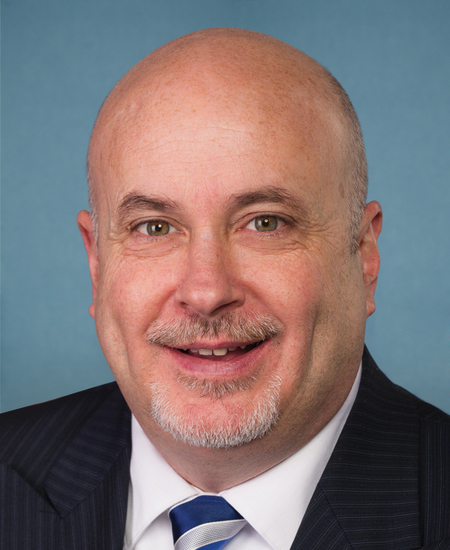
Rep. Mark Pocan
Sponsored bills
Emmett Till and Mamie Till-Mobley Congressional Gold Medal Act of 2021 This bill provides for the posthumous presentation of a Congressional Gold Medal in commemoration of Emmett Till and Mamie Till-Mobley. After the award the medal shall be given to the National Museum of African American History and Culture.
Expanded Telehealth Access Act This bill permanently allows audiologists, physical therapists, occupational therapists, speech-language pathologists, and other providers designated by the Centers for Medicare & Medicaid Services (CMS) to provide telehealth services under Medicare. Currently, the CMS is authorized to waive requirements for Medicare telehealth services during the public health emergency relating to COVID-19, and it has done so to allow all providers that are otherwise eligible to furnish in-person services under Medicare to also furnish telehealth services.
Affordable and Safe Prescription Drug Importation Act This bill allows expanded importation of eligible prescription drugs and addresses related issues. Current law allows the Department of Health and Human Services (HHS) to authorize the importation of certain eligible prescription drugs from Canada if HHS certifies to Congress that doing so would pose no additional risk to public health and safety and would result in significant cost savings for consumers. The bill removes this certification requirement and requires HHS to issue regulations that permit the importation of qualifying prescription drugs from Canada. After a certain amount of time, HHS may authorize importation from certain other countries if it determines that importation from Canada has resulted in cost savings for consumers and increased access to safe medication. The bill also expands the types of prescription drugs eligible for importation to include, for example, biologics such as insulin. Furthermore, the bill allows individuals to use an eligible licensed foreign pharmacy to fill a U.S.-issued prescription for a qualifying drug for personal use. Currently, an individual seeking to import a prescription drug generally must acquire a waiver from HHS. The bill imposes various requirements related to certification of foreign sellers, labeling of imported drugs, and supply chain security. The bill also (1) prohibits certain acts that discriminate against foreign sellers, such as charging higher prices to foreign sellers than to other sellers in the same country; and (2) imposes criminal penalties for online websites that sell counterfeit drugs or dispense drugs without a required prescription.
Safe Hydration is an American Right in Energy Development Act of 2021 This bill requires hydraulic fracturing operations to test for and report on underground sources of drinking water that are contaminated by such operations. Hydraulic fracturing, or fracking, is a process to extract underground resources such as oil or gas from a geologic formation by injecting water, a propping agent (e.g., sand), and chemical additives into a well under enough pressure to fracture the formation. Specifically, this bill revises requirements governing state underground injection control programs. In order to obtain primary enforcement responsibility for such programs, states must prohibit the underground injection of fluids or propping agents pursuant to hydraulic fracturing operations related to oil, gas, or geothermal production activities unless the hydraulic fracturing operations agree to test for and report on contamination of drinking water. Hydraulic fracturing operations are exempted from those testing and reporting requirements if there is no accessible underground source of drinking water within a radius of one mile of the site where the operations occur. The Environmental Protection Agency must establish and maintain a publicly accessible and searchable database of the testing results.
Focused Reduction of Effluence and Stormwater runoff through Hydrofracking Environmental Regulation Act of 2021 or the FRESHER Act of 2021 This bill addresses stormwater runoff from mining, oil, or gas operations. Specifically, it eliminates a prohibition on the Environmental Protection Agency from requiring a permit under the National Pollutant Discharge Elimination System for discharges of certain collected, uncontaminated stormwater runoff from mining operations or oil and gas operations. In addition, the Department of the Interior must study stormwater runoff associated with oil or gas operations, including an analysis of (1) measurable contamination, (2) groundwater resources, and (3) the susceptibility of aquifers to contamination from stormwater runoff associated with the operations.
CLEANER Act of 2021 or the Closing Loopholes and Ending Arbitrary and Needless Evasion of Regulations Act of 2021 This bill eliminates the exemption of waste associated with the exploration, development, or production of crude oil, natural gas, or geothermal energy from regulations governing the disposal of hazardous waste. Within a year of enactment, the Environmental Protection Agency (EPA) must determine whether such waste meets the criteria for hazardous waste, promulgate regulations concerning the disposal of such waste if the EPA determines it is hazardous, and revise regulations applicable to solid waste management and disposal facilities (e.g., landfills) to address such waste that is nonhazardous.
Medicare Drug Price Negotiation Act This bill makes a series of changes relating to the prices of prescription drugs under the Medicare prescription drug benefit and Medicare Advantage (MA) prescription drug plans (PDPs). Under current law, the Centers for Medicare & Medicaid Services (CMS) may neither negotiate the prices of covered drugs nor establish a formulary. The bill repeals these restrictions and instead specifically requires the CMS to (1) negotiate the prices of covered drugs; and (2) either establish a formulary for covered drugs, or require changes to PDP formularies that take into account CMS negotiations. If the CMS is unable to negotiate an appropriate price for a drug in accordance with certain criteria, the price must be the lowest of three specified options (e.g., the median price in other countries). The CMS must identify drugs that are subject to negotiation, with priority given to certain categories of drugs based on usage and cost. Additionally, drug manufacturers must issue rebates to the CMS for drugs dispensed to eligible low-income individuals. Subject to civil monetary penalties, a Medicare or MA PDP sponsor must report, both to drug manufacturers and to the CMS, specified information related to the determination and payment of such rebates.
Children and Media Research Advancement Act or the CAMRA Act This bill requires the National Institutes of Health to fund research regarding the effects of media on infants, children, and adolescents. Such research must examine the impact of media (e.g., social media, television, video games) on cognitive, physical, and social-emotional development.
Quit Because of COVID-19 Act This bill provides for Medicaid and Children's Health Insurance Program (CHIP) coverage of certain tobacco cessation services. Specifically, the bill provides for coverage, without cost-sharing, of diagnostic, therapy, and counseling services and pharmacotherapy, including prescription and nonprescription tobacco cessation agents, that are provided under medical supervision and in accordance with specified guidelines. It also applies a 100% Federal Medical Assistance Percentage (i.e., federal matching rate) for such items and services during the public health emergency relating to COVID-19 and for two years after the emergency period ends.