LymeX Authorization Act This bill authorizes the Department of Health and Human Services to carry out prize competitions to accelerate innovation in the prevention, diagnosis, and treatment of Lyme disease. Lyme disease is a bacterial infection carried by ticks that can spread to joints, the heart, and the nervous system.
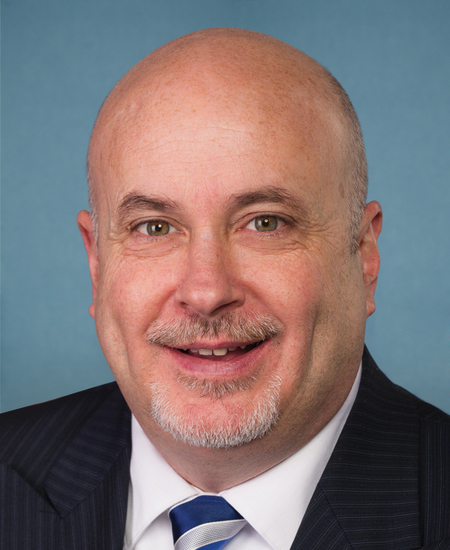
Rep. Mark Pocan
Sponsored bills
Adopt the Greenhouse gases, Regulated Emissions, and Energy use in Transportation model Act or the Adopt GREET Act This bill requires the Environmental Protection Agency (EPA) to update the methodology used in life-cycle analyses of greenhouse gas emissions that result from the production and use of corn-based ethanol and biodiesel fuel. The EPA must update its methodology within 90 days and every five years thereafter. In the first update, the EPA must adopt the most recent Greenhouse gases, Regulated Emissions, and Energy use in Transportation model (commonly referred to as the GREET model) developed by Argonne National Laboratory.
Children Inflicted by Lyme Disabilities Act of 2021 or the CHILD Act of 2021 This bill expands the applicability of certain special education provisions to children with Lyme disease or other tick-borne diseases. (Lyme disease is the most common vector-borne disease in the United States. The disease is transmitted to humans through the bite of an infected blacklegged tick and, if left untreated, can spread to joints, the heart, and the nervous system.) Specifically, the bill defines child with a disability for purposes of the Individuals with Disabilities Education Act to include a child who needs special education and related services because the child has a health impairment resulting from Lyme disease or another tick-borne disease.
United States Army Rangers Veterans of World War II Congressional Gold Medal Act This bill provides for the award of a single Congressional Gold Medal to the U.S. Army Rangers Veterans of World War II in recognition of their dedicated service during World War II.
Reproductive Rights are Human Rights Act of 2021 This bill directs the Department of State to include in its annual reports on human rights in countries receiving U.S. development and security assistance a discussion of the status of reproductive rights in each country. This must include whether a country has adopted and enforced policies to (1) promote access to contraception and accurate, nondiscriminatory family planning and sexual health information; (2) provide services to ensure safe and healthy pregnancy and childbirth; (3) expand or restrict access to safe abortion services; and (4) prevent and treat sexually transmitted diseases. For each country, the reports shall also contain (1) data concerning pregnancy-related injuries and deaths; and (2) a description of the nature and extent of discrimination and violence against women, girls, and LGBTQI+ individuals in health care settings and the relevant government's response to such actions.
Victims of Agent Orange Relief Act of 2021 This bill requires the Department of State, the Department of Health and Human Services (HHS), and the Department of Veterans Affairs (VA) to provide assistance to people in Vietnam in relation to Agent Orange exposure. Specifically, the State Department must provide assistance (1) to address the health care needs of certain residents of Vietnam affected by Agent Orange exposure, (2) to institutions in Vietnam that provide health care to such individuals, (3) to improve housing and reduce poverty for specified individuals and their families, and (4) to remediate areas of Vietnam that contain high levels of Agent Orange. HHS must (1) make grants to public health organizations and Vietnamese American organizations to conduct a broad health assessment of Vietnamese Americans who may have been exposed to Agent Orange and their descendants; and (2) establish centers in U.S. locations where large populations of Vietnamese Americans reside to provide assessment, counseling, and treatment for conditions related to Agent Orange exposure. Under the bill, certain benefits will be made available to the children of male Vietnam veterans who are affected by certain birth defects. Currently, these benefits are only available to the children of women Vietnam veterans. The VA shall require any health care provider with whom the VA enters into a contract for the provision of health care to such children to provide the VA access to their medical records for research into the intergenerational effects of Agent Orange exposure.
John Lewis Every Child Deserves a Family Act This bill prohibits discrimination on the basis of sexual orientation, gender identity, marital status, or religion in the provision of child welfare programs and services by entities receiving federal funding. The Department of Health and Human Services (HHS) must provide technical assistance to help states follow this requirement, including (1) guidance for bringing state laws into compliance, (2) developing training to increase cultural competency related to social identity, and (3) training for judges and attorneys involved in child welfare cases, among other supports. Additionally, HHS must establish the National Resource Center on Safety, Well-Being, Placement Stability, and Permanency for LGBTQ Children and Youth Involved with Child Welfare Services to provide training, technical assistance, and guidance to applicable state and local agencies and service providers. Further, the Religious Freedom Restoration Act may not be the basis for challenging the application or enforcement of this bill. The Government Accountability Office must study and report on states' compliance with the requirements of the bill no later than three years after enactment.

Increasing Access to Osteoporosis Testing for Medicare Beneficiaries Act of 2021 This bill specifies that certain Medicare payment rules applicable to imaging services shall apply to dual-energy x-ray absorptiometry services used in bone mass scans beginning in 2022. The Centers for Medicare & Medicaid Services must establish national minimum payment amounts for such services.
End Polluter Welfare Act of 2021 This bill limits or eliminates certain fossil fuel oil and gas subsidies for oil companies, including by (1) eliminating the limit on liability for offshore facilities and pipeline operators; (2) eliminating the authority of the Department of Energy to carry out the Fossil Energy Research and Development Program and prohibiting funds made available to the Advanced Research Project Agency from being used to carry out any project that supports fossil fuels; (3) terminating certain provisions relating to enhanced oil recovery, producing oil and natural gas from marginal wells, and limitations on percentage depletion for oil and natural gas wells; (4) terminating other deductions and accounting methods supporting oil, natural gas, and coal companies; (5) increasing the Oil Spill Liability Trust Fund financing rate; (6) denying a tax deduction for removal costs and damages relating to oil spills; (7) imposing an excise tax on the removal price of any taxable crude oil or natural gas; (8) increasing amortization periods for tertiary injectant expenses, development expenditures of a mine or other natural deposit, mining exploration expenditures, and intangible drilling and development costs for oil and gas wells and geothermal wells; (9) repealing the tax credits for the production of electricity from refined coal and for carbon oxide sequestration; and (10) requiring a study and elimination of certain other fossil fuel subsidies.
Keeping All Students Safe Act This bill prohibits the use of seclusion and limits the use of physical restraint in schools and Head Start programs that receive federal funding. Specifically, the bill prohibits the use of seclusion, which is the involuntary confinement of a student alone in a room or area from which the student is physically prevented from leaving. The term does not include a time out, which may involve separating the student from others in a non-locked setting. The bill prohibits the use of mechanical or chemical restraints or physical restraints that restrict breathing or are life threatening. The bill outlines the requirements for the use of physical restraint, including that the student's behavior must pose an imminent danger of serious physical injury to the student or other individual. Each state must ensure that a sufficient number of program personnel are trained and certified by a state-approved crisis intervention training program. Additionally, each program must establish procedures to follow after an incident involving physical restraint. Further, the bill establishes enforcement provisions, including a private right of action for a student who has been subjected to unlawful seclusion or restraint. The Department of Education and the Department of Health and Human Services must withhold payments from a program for unlawful seclusion or restraint. Finally, the bill requires each state educational agency (SEA) to establish, implement, and enforce policies and procedures required by the bill. It also creates a grant program to assist SEAs with these activities.