Global Respect Act This bill imposes visa-blocking sanctions on foreign persons responsible for or complicit in violating the human rights of individuals due to actual or perceived sexual orientation, gender identity, or sex characteristics. The President must report and periodically update a list of foreign persons responsible for such human rights violations and apply sanctions accordingly. The Department of State must designate at least one senior officer who shall be responsible for tracking violence and discrimination against individuals based on actual or perceived sexual orientation, gender identity, or sex characteristics in foreign countries.
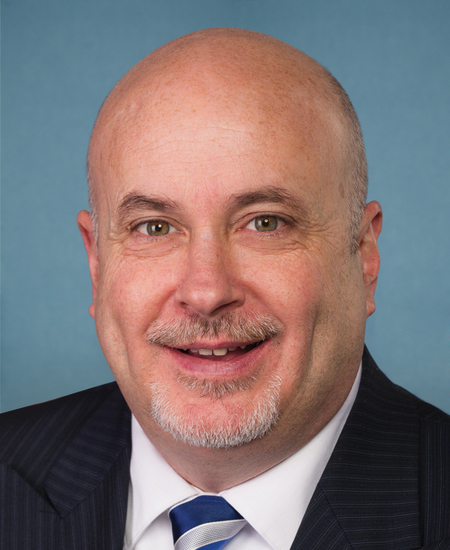
Rep. Mark Pocan
Sponsored bills
Stop the Wait Act of 2022 This bill allows individuals with disabilities to begin receiving Social Security Disability Insurance (SSDI) benefits in the month they become eligible for the benefits. It also allows these individuals to immediately enroll in Medicare if they cannot afford minimum essential coverage. (Under current law, an individual must generally wait 5 months after the onset of disability to begin receiving SSDI benefits and an additional 24 months to become eligible for Medicare.)
Office of Technology Assessment Improvement and Enhancement Act This bill renames and revises the functions and duties of the Office of Technology Assessment which, composed of a Technology Assessment Board and a director, provides Congress with assessments of probable technology application impacts. Specifically, the bill renames the office the Congressional Office of Technology, and it requires the office to undertake additional duties, such as providing to Members of Congress (1) certain information without the need for board review, (2) certain technical assistance on legislation related to science and technology without the need for board review, and (3) objective policy options on how Members may achieve goals with respect to science and technology policy. The bill authorizes individual Members of Congress to submit to the board a request that the office undertake an assessment activity. Additionally, the bill requires the Congressional Research Service and the Government Accountability Office to coordinate technology assessment activities with the office to avoid duplication or overlapping of research activities. The bill also (1) allows the office to temporarily appoint specified technical and professional personnel to work for the office, (2) requires the office to make the findings of completed analyses publicly available, (3) revises the appointment of board members, (4) requires the board to hold an annual meeting at which Members of Congress may appear and present information regarding technology assessment activities, and (5) requires the board to report annually on the activities of the office.

Striking Workers Healthcare Protection Act This bill prohibits an employer from terminating or significantly altering the employer-provided health insurance coverage of an employee engaged in a lawful strike. An employer that violates this prohibition is subject to a maximum civil penalty of $50,000 for each violation.
This resolution recognizes the cultural and historical significance of the Lunar New Year. The resolution expresses, in observance of this Lunar New Year, the Year of the Tiger, the deepest respect of the House of Representatives for Asian Americans and all individuals throughout the world who celebrate this significant occasion. The resolution wishes Asian Americans and all individuals who observe this holiday a happy and prosperous new year.
Maddy summaryHR 6525, the Lunar New Year Day Act, would designate the Lunar New Year as an official federal holiday. The bill amends Section 6103(a) of Title 5 of the U.S. Code to add "Lunar New Year Day" to the list of holidays observed by federal employees. This holiday would be observed on the actual date of the Lunar New Year, which varies annually based on the lunar calendar. As a result, federal employees would receive a paid day off, and federal agencies would adjust operations to accommodate the new holiday.
Heating and Cooling Relief Act This bill provides additional energy assistance to households, including heating and cooling assistance. Specifically, the bill reauthorizes through FY2031 and revises the Low Income Home Energy Assistance Program. Under the existing program, the Department of Health and Human Services (HHS) may award grants to states for assisting low-income households that pay a high proportion of their income for home energy. To be eligible under the existing program, households must have incomes which do not exceed the greater of an amount equal to 150% of the poverty level for their state or an amount equal to 60% of the state median income. The bill expands eligibility to households with incomes which do not exceed the greater of an amount equal to 250% of the poverty line as defined in the Community Services Block Grant Act or an amount equal to 80% of the state median income. In addition, the bill expands eligibility to households with a monthly energy burden of 3% or more per year. It also requires states to establish procedures to protect households receiving assistance under the program from energy shutoffs and certain late fees. In addition, the bill requires HHS and the Department of Energy to jointly carry out a program that awards grants to states and local governments for developing and implementing interagency plans to reduce energy burdens for eligible households with high home energy use. The plans must promote the reduction of energy from fossil fuels.
This resolution expresses support for the goals and ideals of PCOS Awareness Month. Polycystic ovary syndrome (PCOS) is caused by a hormone imbalance. Symptoms can include infertility, weight gain, excess hair growth, and acne.
Black Lung Benefits Disability Trust Fund Solvency Act of 2022 This bill extends until December 31, 2031, the excise tax on coal. The revenues from such tax provide funding for the Black Lung Disability Trust Fund.
Refuge From Cruel Trapping Act of 2021 This bill prohibits, with specified exceptions, the use or possession of body-gripping traps in the National Wildlife Refuge System. The bill imposes on persons who possess or use such traps in the system (1) for a first offense, a civil fine of up to $500 for each body-gripping trap possessed or used; and (2) for subsequent offenses, a civil fine of up to $1,000 for each body-gripping trap possessed or used, imprisonment for up to 180 days, or both such a civil fine and imprisonment. The bill makes any body-gripping traps that are possessed or used in violation of this bill, and any wildlife captured by the use of such traps, including the pelts and raw fur, subject to civil forfeiture. Persons found to be in violation of such prohibition shall pay all associated court costs.