

No Shame at School Act of 20 22 This bill establishes requirements for the treatment of a child who is participating in the National School Lunch Program or the School Breakfast Program and owes unpaid school meal fees. It also requires local educational agencies to certify certain children (e.g., homeless children) as categorically eligible for free lunches or breakfasts without an application.
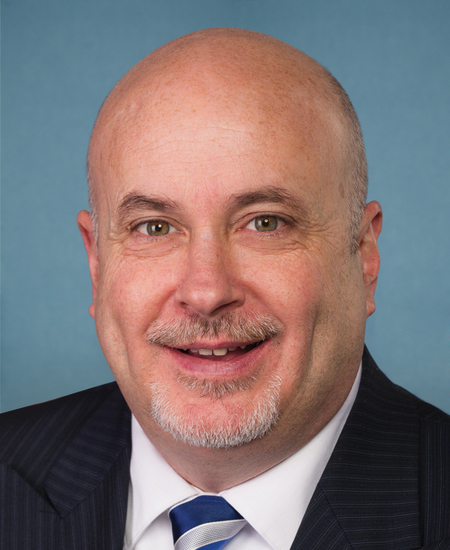
Rep. Mark Pocan
Sponsored bills
Right to Contraception Act This bill sets out statutory protections for an individual's right to access and a health care provider's right to provide contraception and related information. Contraception refers to an action taken to prevent pregnancy, including the use of contraceptives (i.e., a device or medication used to prevent pregnancy), fertility-awareness based methods, and sterilization procedures. Generally, the bill prohibits measures that single out and impede access to contraception and related information. However, a party may defend against a claim that a measure violates the bill's prohibitions by demonstrating, through clear and convincing evidence, that the measure significantly advances access to contraception and cannot be achieved through less restrictive means. The Department of Justice, individuals, or health care providers may bring a lawsuit to enforce this bill, and states are not immune from suits for violations.
Reproductive Health Travel Fund Act of 2022 This bill authorizes the Department of Health and Human Services to award grants to pay for travel, childcare, and other expenses of an individual seeking access to abortion services. Eligible grant recipients must be nonprofit or community-based organizations that assist individuals seeking abortion services through programs that are unbiased and medically and factually accurate. The grants may not be used to pay for abortion procedures.
No Tax Breaks for Union Busting (NTBUB) Act This bill denies employers a tax deduction for any expenditures incurred for attempting to influence their employees with respect to labor organizations or labor organization activities, such as elections, labor disputes, and collective actions. The bill requires employers to report on their attempts to influence their employees with respect to labor organizations and their activities.
Expanding Access to Family Planning Act This bill provides, subject to specified conditions, funding through FY2032 for federally funded family planning services and clinics. In particular, the funds must be used for (1) grants and contracts that support the provision of family planning services, and (2) clinic infrastructure (e.g., construction and renovation of clinics). Clinics that receive funding to provide family planning services must offer each patient with a positive pregnancy test the opportunity for nondirective counseling on (1) prenatal care and delivery; (2) infant care, foster care, and adoption; and (3) pregnancy termination. This counseling must include referrals if requested by a patient. Additionally, if a funding recipient makes subawards for the provision of family planning services, the recipient may not prohibit an entity from participating in a subaward program for reasons other than the entity's inability to provide family planning services.
Department of Veterans Affairs Continuing Professional Education Modernization Act or the VA CPE Modernization Act This bill modifies the program under which the Department of Veterans Affairs (VA) reimburses specified full-time health care professionals for continuing professional education expenses. Under current law, only board-certified physicians and dentists are eligible for such reimbursement. The bill expands the program to require reimbursement for various specified full-time health care professionals (e.g., registered nurses) and increases the amount available for a physician or dentist. Additionally, the bill removes the requirement that an individual be board-certified to receive reimbursement. The VA may adjust the amounts available based on inflation.
Ensuring Women's Right to Reproductive Freedom Act This bill prohibits anyone acting under state law from interfering with a person's ability to access out-of-state abortion services. ( Abortion services includes the use of any drugs that are approved to terminate pregnancies and any health care services related to an abortion, whether or not provided at the same time or on the same day.) Specifically, the bill prohibits any person acting under state law from preventing, restricting, impeding, or retaliating against health care providers who provide legal abortion services to out-of-state residents, any person or entity who helps health care providers to provide such services, any person who travels to another state to obtain such services, any person or entity who helps another person travel to another state to obtain such services, or the movement in interstate commerce of drugs that are approved to terminate pregnancies. The Department of Justice may enforce this bill through civil actions; the bill also establishes a private right of action for violations.
Locked Out Workers Healthcare Protection Act This bill prohibits an employer from terminating or altering the employer-provided health insurance coverage of an employee during the period that the employer is taking action to lock out, suspend, or otherwise withhold employment from the employee in order to influence the position of such employee or the representative of such employee in collective bargaining prior to a strike. An employer that violates this prohibition is generally subject to a maximum civil penalty of $75,000 for each violation.
Health Share Transparency Act of 2022 This bill requires a health care sharing ministry (HCSM) to disclose specific information to individuals enrolling in the HCSM and to designated government agencies. (An HCSM is a faith-based organization with members who share a common set of ethical or religious beliefs and who contribute regular payments to cover the medical expenses of other members.) The bill requires an HCSM to disclose to an enrolling individual information such as (1) the average out-of-pocket expenses an enrollee incurs, (2) how to file a complaint or appeal a coverage determination, and (3) a list of the HCSM's non-reimbursable items and services. The bill also requires that an HCSM submit annual financial disclosures and program information to the Department of Health and Human Services (HHS), the Internal Revenue Service, and the Consumer Financial Protection Bureau. HHS is required to publicly post this information. Additionally, health insurance brokers contracting with an HCSM are required to provide an enrolling individual with information about health insurance coverage that is available through Medicare, Medicaid, or a health insurance exchange, as appropriate. HHS may apply civil monetary penalties to an HCSM that fails to comply with the bill's requirements. Further, the bill requires the Federal Trade Commission to publicly disclose information about consumer complaints regarding HCSMs.
Assuring Medicare’s Promise Act This bill increases net investment income tax revenues by applying such tax to the trade or business income of certain high income taxpayers and includes the increased tax revenues in the Federal Hospital Insurance Trust Fund.