

Maddy summaryThis bill allows asylum seekers not in detention to obtain work authorization 30 days after filing their asylum application, provided their application isn't deemed frivolous. It directly affects individuals seeking asylum in the U.S. who are awaiting a final decision on their case. The authorization remains valid until the asylum application receives a final denial, including any administrative or court appeals. This changes the prior system where many asylum seekers faced prolonged work restrictions while their cases were processed.
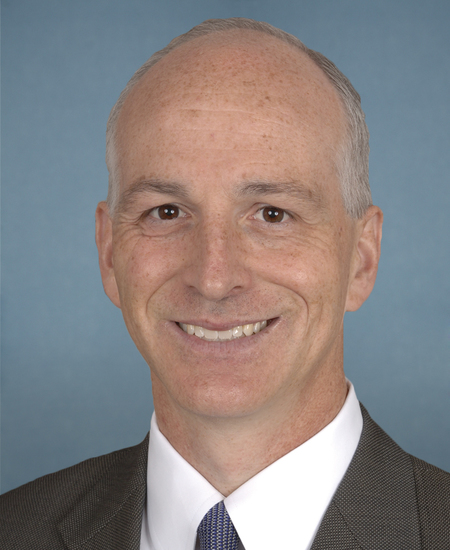
Rep. Adam Smith
Sponsored bills
Maddy summaryHR 1302, the Gun Records Restoration and Preservation Act, repeals key restrictions known as the Tiahrt Amendments. It eliminates the requirement to destroy background check records within 24 hours, removes barriers to researchers accessing firearm trace data, and ends prohibitions on requiring gun dealers to conduct annual inventory audits. The bill directly affects law enforcement agencies (like the ATF), researchers studying gun violence, and federally licensed firearms dealers. These changes aim to improve access to data for tracking illegal gun trafficking and supporting evidence-based policy development.
Maddy summaryThe Air Carrier Access Amendments Act of 2023 updates the 1986 Air Carrier Access Act to improve accessibility for travelers with disabilities. It creates a private right of action (allowing individuals to sue for violations), sets new standards for accessible aircraft (including boarding equipment, seating, lavatories, and communication systems), and requires airports to provide accessible facilities and digital services. The bill establishes clearer complaint procedures with the Department of Transportation, including a 120-day investigation timeline and specific civil penalties for violations like delayed assistance or damage to assistive devices. These changes directly affect air carriers, foreign air carriers, and travelers with disabilities who face barriers such as inaccessible aircraft and inadequate assistance. The legislation aims to address ongoing issues including damaged assistive devices, inaccessible aircraft features, and inappropriate treatment of service animals.
Maddy summaryThis resolution (HRES 184) formally recognizes and celebrates Black History Month as an annual observance in February. It highlights the significance of the 2023 theme "Black Resistance," acknowledging historical and ongoing Black American efforts to overcome oppression. The resolution does not create new laws or policies but serves as a commemorative statement to raise awareness of Black achievements and resistance history. It directly affects public awareness, encouraging all Americans to recognize this history during February.
Maddy summaryThe Richard L. Trumka Protecting the Right to Organize Act of 2023 strengthens workers' rights to organize unions by making it harder for employers to interfere with organizing efforts. Key provisions include changing the definition of "employee" to make it more difficult to classify workers as independent contractors, prohibiting employers from threatening to permanently replace striking workers, and requiring employers to provide voter lists for union elections. The bill also creates a new electronic voting system for union elections, strengthens whistleblower protections for workers reporting labor violations, and increases penalties for unfair labor practices. These changes directly affect workers seeking to form unions, employers who may interfere with organizing, and labor organizations. The bill aims to make it easier for workers to exercise their right to collective bargaining under the National Labor Relations Act.
Maddy summaryHR 1202, the REDI Act, amends the Higher Education Act to allow medical and dental residents to temporarily pause federal student loan payments without accruing interest during their internship or residency programs. This directly affects borrowers with federal student loans who are enrolled in qualifying medical or dental training programs. The key provision adds a new rule (paragraph 6) ensuring these borrowers qualify for a deferment period where they don't pay principal and interest accrues at 0%. The change modifies existing loan rules to explicitly include medical/dental residents under the "in-school" deferment category. This policy change provides immediate financial relief during a critical training phase for healthcare professionals.
Maddy summaryThis bill mandates a study on airborne ultrafine particles (UFPs) near nine major U.S. airports, including Seattle, Boston, Chicago, New York, Atlanta, and others. The study, to be conducted by a qualified university in partnership with the FAA and EPA, will examine UFP sources (especially aircraft operations), health effects like respiratory issues, and potential mitigation strategies such as sustainable aviation fuels. It requires a detailed report on findings, including data gaps and health impacts on vulnerable groups, to be submitted to Congress within two years of the study's completion. The bill does not impose new regulations but aims to provide data for future policy decisions affecting communities near these airports.
Maddy summaryThe Aviation Noise and Emissions Mitigation Act creates two grant programs to address noise and pollution from airports. The first program funds 3-year pilots for communities near airports to measure noise and emissions (including greenhouse gases and particulate matter) using technology that traces sources to specific aircraft and neighborhoods, with a focus on identifying disproportionately impacted areas. The second program provides grants to community groups, health departments, and local governments to implement mitigation strategies - such as noise-reducing building upgrades, health services, and environmental programs - prioritizing low-income and disadvantaged communities identified through the monitoring. Both programs require regular community engagement, public reporting, and alignment with environmental justice goals.
Maddy summaryHR 724, the Arctic Refuge Protection Act, repeals the existing oil and gas program for the Arctic National Wildlife Refuge in Alaska and designates approximately 1.56 million acres of the refuge's coastal plain as federal wilderness. This bill directly affects the Arctic Refuge by permanently prohibiting oil and gas leasing and development in that specific area. The key mechanism is adding the designated land to the National Wilderness Preservation System under the Wilderness Act, requiring it to be managed for its natural conditions. This change legally protects the area from future fossil fuel extraction activities.
Maddy summaryThis bill prohibits the federal government from issuing oil and gas leases for exploration, development, or production on the outer Continental Shelf off the coasts of California, Oregon, and Washington. It amends the Outer Continental Shelf Lands Act to specifically block the Secretary of the Interior from authorizing such leasing in those coastal areas. The direct effect is on the Department of the Interior, which would no longer be permitted to conduct lease sales in these regions. The bill does not create new programs or funding but changes existing leasing authority.