

Maddy summaryH.J. Res. 193 proposes a constitutional amendment to eliminate legal immunity for federal officials, including the President, from criminal prosecution for actions taken while performing official duties. It also prohibits the President from granting a pardon to themselves. The amendment would apply to all federal officers (such as the President, Vice President, and members of Congress) except for Congress members acting in their legislative role as defined in the Constitution. If ratified by 38 states, this change would become part of the U.S. Constitution, requiring no further congressional action.
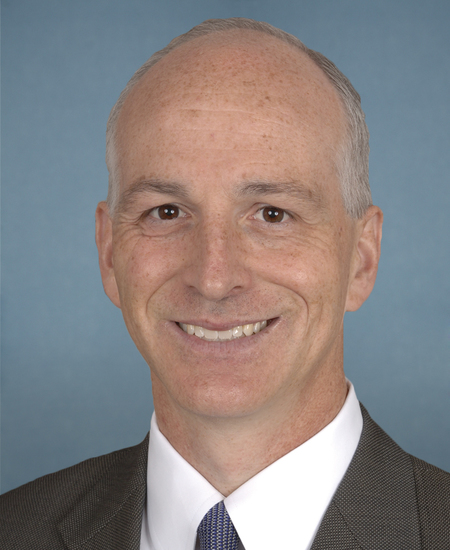
Rep. Adam Smith
Sponsored bills
Maddy summaryHR 3042 updates the eligibility rules for countries seeking to become "candidate countries" under the Millennium Challenge Corporation (MCC) program. It revises the income threshold to align with World Bank graduation standards and clarifies that U.S. waivers or suspensions of foreign aid restrictions no longer disqualify countries. The bill specifies that the MCC Board will make the final determination on candidate country status. This directly affects countries aiming to qualify for U.S. economic aid through the MCC program.
Maddy summaryHRES 1355 is a non-binding resolution supporting the designation of July 10 as Journeyman Lineworkers Recognition Day. It honors lineworkers who maintain electrical infrastructure under hazardous conditions, including during disasters, and commemorates Henry Miller, the first president of the International Brotherhood of Electrical Workers, who died on July 10, 1896, while troubleshooting an electrical outage. The resolution encourages public recognition of these workers' contributions but does not create new laws or policies.
Maddy summaryHCONRES 118 is a symbolic congressional resolution recognizing the wage disparity faced by Black women in the U.S. It specifically highlights that Black women earn 69 cents for every dollar earned by White, non-Hispanic men, as noted in Census Bureau data. The resolution marks July 9, 2024, as Black Women’s Equal Pay Day to symbolize how long into 2024 Black women must work to earn what White men earned in 2023. It does not create new laws or policies but formally acknowledges this disparity and reaffirms congressional support for equal pay for equal work.
Maddy summaryThis bill increases military pay rates for all service members across pay grades and years of service, effective January 1, 2025, with specific rate adjustments detailed in the legislation. It expands eligibility for the basic needs allowance to 200% of current rates and authorizes $1.2 billion for housing allowances in fiscal year 2025. The bill also improves child care access by requiring competitive pay for military child care staff, reducing fees for children of child care employees, and mandating regular reports on child care services. Additionally, it enhances health care access by waiving referral requirements for certain services in military medical facilities and establishes a permanent program to support military spouses' employment.
Maddy summaryThis bill (HR 2365, Public Law 118-66) directs the U.S. Department of Health and Human Services (HHS) to establish the National Parkinson’s Project. It requires HHS to create and update a coordinated national plan for preventing, diagnosing, treating, and researching Parkinson’s disease and related disorders (including multiple system atrophy and progressive supranuclear palsy), while coordinating federal research and care efforts across agencies like the NIH, CDC, and VA. The law mandates annual progress assessments, an advisory council with patient advocates and diverse experts, and annual reports to Congress on federal Parkinson’s programs and recommendations for improvement. It affects federal agencies managing Parkinson’s-related programs and aims to improve care coordination and research efficiency for patients and caregivers, with the law sunsetting in 2035.
Maddy summaryThis bill creates a federal framework for "extreme risk protection orders" (ERPOs) that temporarily remove firearms from individuals who pose a risk of harming themselves or others. Family members or law enforcement officers can petition a federal court for a temporary order (up to 14 days) based on probable cause, followed by a hearing within 72 hours to determine if a longer-term order (up to 180 days) is warranted. The bill requires clear and convincing evidence of risk at the hearing and mandates respondents to surrender firearms to law enforcement within 48 hours. It also includes provisions for reporting, training law enforcement on ERPOs, and a federal grant program to support state ERPO implementation, without preempting state laws.
Maddy summaryThis resolution (HRES 1318) is a symbolic congressional recognition designating the Museum of Pop Culture in Seattle, Washington, as the "National Museum of Pop Culture." It does not create new laws, allocate funding, or alter the museum's operations - it solely affirms the institution's role in preserving pop culture history through its collections and scholarship. The resolution cites the museum's work in documenting pop culture's impact on society, including its holdings on hip-hop, science fiction, Jimi Hendrix, and Star Trek. As a procedural resolution, it has no direct effect on individuals, policies, or government programs.
Maddy summaryHR 8830, the High Court Gift Ban Act, sets strict limits on gifts federal judges may accept. It prohibits judges from receiving gifts valued over $50 from a single source in a year, unless the total from that source stays under $100 annually. Key exceptions include gifts paid for by the judge, gifts from relatives, honorary degrees from educational institutions, and public opportunities available to all federal employees. The bill also outlines enforcement mechanisms, requiring the Judicial Conference to refer violations to the Attorney General for civil or criminal penalties. This directly affects all federal judges, including Supreme Court justices and lower court judges, by restricting gifts from sources that may have business before them.
Maddy summaryThis resolution recognizes June 19, 2024, as Juneteenth Independence Day, acknowledging its historical significance as the anniversary of the end of slavery in the U.S. (specifically referencing Union soldiers' announcement in Galveston, Texas, on June 19, 1865). It does not create new policy but formally encourages all Americans to observe the day through ceremonies and educational activities. The resolution emphasizes Juneteenth's role in honoring African American freedom and its importance to U.S. history and cultural heritage. It follows the 2022 law that established Juneteenth as a federal holiday, focusing solely on symbolic recognition and annual observance.