

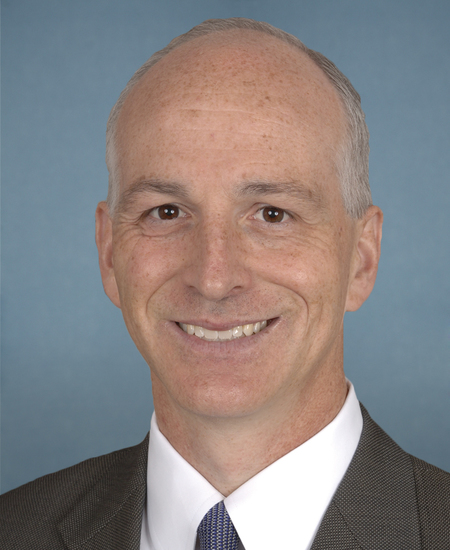
Photo of Adam Smith
D United States House · District 9 · Washington On the 2026 ballot

Rep. Adam Smith

Compare
Total votes
2,837
all sessions
Attendance
98%
66 missed
Lower than 87% of chamber peers
With party
98%
of cast votes
Higher than 88% of chamber peers
Bipartisan score
1%
crosses aisle rarely
Lower than 89% of chamber peers
Sponsored
1,280
bills & resolutions
Near the chamber average
Committees
1
assignment
1,280 bills and resolutions

Sponsored bills

Total
1,280
Primary
71
Co-sponsor
1,209
This page
1,280
matching current filters
Co-sponsor HR 1859
In committee · United States House · Co-sponsor
Apprenticeship Opportunity Act

Maddy summaryThis bill requires states to ignore income earned during the first year of a registered apprenticeship when determining eligibility for Temporary Assistance for Needy Families (TANF) welfare benefits. It directly affects low-income individuals entering apprenticeships who might otherwise lose welfare support due to their first-year earnings. The law mandates states to disregard this income in eligibility calculations, with a penalty of a 1% reduction in federal TANF funding for states that fail to comply. The policy change takes effect in the first federal fiscal year after the bill becomes law, ensuring apprentices can maintain welfare access while starting their training.

In committee Mar 5, 2025 1 co-sponsor
Co-sponsor HR 1877
In committee · United States House · Co-sponsor
Protecting Americans’ Social Security Data Act

Protecting Americans’ Social Security Data Act This bill prohibits political appointees and special government employees from accessing Social Security data systems that contain personally identifiable information about Social Security beneficiaries. Specifically, political appointees and special government employees may not access systems maintained by the Social Security Administration (SSA) that issue or record Social Security account numbers, that are used to determine eligibility for or to pay Social Security benefits, or that otherwise contain personally identifiable information about individuals receiving or applying for benefits.  The bill also establishes a civil right of action for an individual whose information was negligently accessed or disclosed in violation of these provisions. The individual may bring suit against the United States if the violator was a U.S. employee or officer, or against the violator if they were not a U.S. employee or officer. Such a claim must be brought within two years of the affected individual’s discovery of the violation. Upon a finding of liability, defendants are liable for specified monetary damages.  If an individual is criminally charged or subject to proposed disciplinary or adverse action by a federal or state agency for having accessed or disclosed information in violation of these provisions, SSA must notify the individual whose information was accessed or disclosed of the violation as soon as practicable.  Finally, the bill requires the SSA Office of the Inspector General to investigate and report to Congress on any unauthorized access to or disclosure of information in a beneficiary data system.

In committee Mar 5, 2025 1 co-sponsor
Co-sponsor HR 14
In committee · United States House · Co-sponsor
John R. Lewis Voting Rights Advancement Act of 2025

Maddy summaryThis bill strengthens the Voting Rights Act of 1965 by clarifying how to prove voting discrimination and expanding requirements for preclearance of voting changes. It establishes new standards for determining when voting practices dilute minority voting strength or deny/abridge voting rights, requiring plaintiffs to show specific conditions for vote dilution claims and including factors like historical discrimination and racial polarization in court analyses. The bill modifies the criteria for determining which states and political subdivisions must seek preclearance for voting changes, and adds new transparency requirements for jurisdictions to publicly disclose changes to voting qualifications, polling locations, and election districts. It directly affects states and local governments that implement voting policies, particularly those with a history of voting rights violations or that make changes to voting qualifications, procedures, or district boundaries. The bill aims to prevent discriminatory voting practices by providing clearer standards for courts and requiring greater transparency in voting rule changes.

In committee Mar 5, 2025 1 co-sponsor
Co-sponsor HR 20
In committee · United States House · Co-sponsor
Richard L. Trumka Protecting the Right to Organize Act of 2025

Maddy summaryThe Richard L. Trumka Protecting the Right to Organize Act of 2025 strengthens workers' organizing rights by making it an unfair labor practice for employers to threaten permanent replacement of striking workers, discriminate against workers who support unions, or require employees to attend employer campaigns unrelated to their job duties. It expands the definition of "employee" to make it harder for companies to classify workers as independent contractors and requires employers to post notices about workers' rights in conspicuous locations. The bill establishes a new electronic voting system for union elections, creates a 90-day bargaining period before mediation can be requested, and increases penalties for violations of labor laws. These changes are intended to make it easier for workers to form unions and negotiate better wages and working conditions.

In committee Mar 5, 2025 1 co-sponsor
Co-sponsor HR 1835
In committee · United States House · Co-sponsor
MERIT Act

Maddy summaryHR 1835 (MERIT Act) provides reinstatement or compensation to federal employees who were terminated during a specific mass layoff period (January 20, 2025, through the bill’s enactment date). Affected probationary employees - newly hired workers on a trial period or not yet permanent - can choose to return to a similar position with matching benefits or receive a lump-sum payment covering the pay difference between their terminated role and any new federal job they held during the layoff period. Agencies must notify affected employees within 30 days and offer reinstatement or payment within 90 days, with employees required to accept or decline within 30 days to avoid losing eligibility. The bill defines "mass termination" as 15+ separations in a 30-day period by a single agency.

In committee Mar 4, 2025 1 co-sponsor
Co-sponsor HR 1781
In committee · United States House · Co-sponsor
To repeal certain executive orders.

Maddy summaryHR 1781 repeals four executive orders issued on January 20, 2025, which covered energy development, international environmental agreements, a declared energy emergency, and a pause on offshore wind projects. The bill would prevent federal agencies from using funds to implement these orders, effectively halting their enforcement. This directly affects agencies like the Department of Energy and Environmental Protection, which had been directing actions under these orders. The repeal takes effect immediately upon the bill's enactment.

In committee Mar 3, 2025 1 co-sponsor
Co-sponsor HR 1812
In committee · United States House · Co-sponsor
Care Across Generations Act

Maddy summaryThe Care Across Generations Act establishes a competitive grant program to fund multigenerational programs in long-term care facilities. It allows eligible facilities (like nursing homes or assisted living centers) to operate or partner with licensed childcare centers on-site, or coordinate activities between childcare and senior care programs. Facilities receiving grants must evaluate program effectiveness and report outcomes to the federal government, including impacts on both children and seniors. The bill aims to create integrated community spaces where childcare and senior care services coexist, directly benefiting facilities seeking to expand such services and the communities they serve.

In committee Mar 3, 2025 1 co-sponsor
Co-sponsor HR 1787
In committee · United States House · Co-sponsor
Roberto Clemente Commemorative Coin Act

Maddy summaryHR 1787 authorizes the U.S. Mint to produce commemorative coins honoring baseball legend Roberto Clemente, including $5 gold, $1 silver, and half-dollar coins, with specific specifications for weight, size, and metal content. The bill requires the coins to feature Clemente's image and commemorative inscriptions, and mandates a surcharge ($35 for gold, $10 for silver, $5 for half-dollar) paid to the Roberto Clemente Foundation for its educational, youth sports, and disaster relief programs. All coins must be minted in 2027, sold at face value plus surcharge and production costs, and will be legal tender. The bill focuses solely on the coin program, not broader policy changes.

In committee Mar 3, 2025 1 co-sponsor
Co-sponsor HR 1810
In committee · United States House · Co-sponsor
Safe Schools Improvement Act

Safe Schools Improvement Act This bill requires states to direct their local educational agencies (LEAs) to establish policies that prevent and prohibit bullying and harassment of elementary and secondary school students. In particular, these policies must prohibit bullying and harassment based on race, color, national origin, disability, religion, or sex. Sex includes sexual orientation, gender identity, and sex characteristics (including intersex traits). Further, LEAs must provide (1) students, parents, and educational professionals with annual notice of the conduct prohibited in their disciplinary policies; (2) students and parents with grievance procedures that target such conduct; and (3) the public with annual data on the incidence and frequency of that conduct at the school and LEA level. The Department of Education must conduct and report on an independent biennial evaluation of programs and policies to combat bullying and harassment in elementary and secondary schools. The National Center for Education Statistics must collect state data to determine the incidence and frequency of the conduct prohibited by LEA disciplinary policies.

In committee Mar 3, 2025 1 co-sponsor
Co-sponsor HR 793
In committee · United States House · Co-sponsor
SNAP Benefits Fairness Act of 2025

Maddy summaryThis bill amends Section 5(e)(6) of the Food and Nutrition Act of 2008 by removing a reference to "subparagraph (B)" and renumbering the following provisions. It does not change SNAP eligibility rules or benefits; it only adjusts the internal numbering of existing provisions. The change takes effect January 1 following enactment. As a procedural amendment, it directly affects how the law is cited but does not alter policy or impact beneficiaries.

In committee Feb 28, 2025 1 co-sponsor
Showing 321 to 330 of 1,280 bills
Previous 1 … 32 33 34 … 128 Next