

Comprehensive Paid Leave for Federal Employees Act This bill provides paid family and medical leave to federal employees. Currently, federal employees are entitled to 12 weeks of administrative leave for one or more of the following reasons: (1) the birth of a child, (2) the adoption or foster care of a child, (3) the care of an immediate family member with a serious health condition, (4) inability to work due to a serious health condition, and (5) exigencies relating to an immediate family member's active duty service in the Armed Forces. However, of these reasons, employees are entitled to paid administrative leave only in connection with the birth, adoption, or foster care of a child (i.e., parental leave). The bill provides 12 weeks of paid administrative leave for any of these reasons, and specifies that this leave is in addition to any annual or sick leave to which employees are entitled.
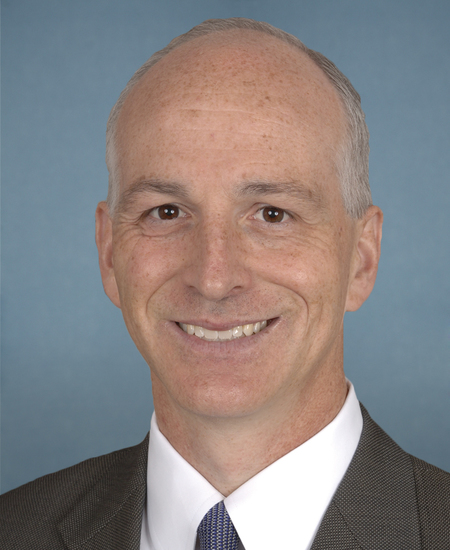
Rep. Adam Smith
Sponsored bills
Emergency Economic and Workforce System Resiliency Act This bill requires the Department of Labor to award to states (1) temporary five-year supplemental formula grants for emergency layoff aversion, workforce training, and other assistance to reduce and prevent unemployment and limit the impact of disruptions on labor markets; and (2) planning and implementation grants for innovative layoff aversion models. A state receiving a grant under the bill must establish an advisory council to oversee and assess the performance of activities carried out under such grants. The bill also requires the Departments of Commerce and Labor to jointly establish a federal interagency task force to (1) identify any challenges that a state or local area receiving funds under this bill has had to overcome; (2) collect and disseminate best practices and develop and recommend policies at the federal level to support ongoing efforts to limit the impact of market disruptions on workers, employers, and industry sectors or occupations; (3) establish a framework for a state receiving a grant under the bill to measure employer satisfaction for activities funded under it; and (4) establish the minimum standards of job quality that an employer is required to meet as a condition of receiving assistance under the bill.
Green New Deal for Public Schools Act of 2021 This bill provides environmental and educational resources to public elementary and secondary schools and Bureau of Indian Education (BIE) schools. Specifically, the bill requires the Department of Energy's (DOE's) Office of Energy Efficiency and Renewable Energy to provide climate capital facilities grants to eligible entities (e.g., public schools and BIE schools). Grant recipients must use these funds to construct new, or convert existing facilities into, healthy zero-carbon schools. Healthy zero-carbon school refers to a school with highly energy-efficient facilities that produce or procure sufficient carbon-free and pollution-free renewable energy to meet the school's needs. Next, the bill directs the Department of Education (ED) to award resource block grants to qualified local educational agencies (LEAs) to hire and retain educators and support staff in high-need schools. ED must award grants to eligible consortia of LEAs for educational equity planning and implementation. In addition, ED must establish the Climate Change Resiliency Program to increase the resiliency of public and BIE schools during climate change-related events, natural disasters, and public health crises. Further, ED must establish a related grant program for state educational agencies. Grant recipients must use these funds for certain activities (e.g., green infrastructure projects). The bill establishes the Office of Sustainable Schools within ED to (1) administer the resource block grant and educational equity grant programs, and (2) coordinate with DOE and the White House Office of Domestic Climate Policy on climate capital facilities grants and the Climate Change Resiliency Program.
Allowing Steady Savings by Eliminating Tests Act or the ASSET Act This bill prohibits the use of asset tests or resource limits in certain means-tested public assistance programs and increases the resource limits to qualify for Supplemental Security Income (SSI). SSI is a federal income supplement program designed to help aged, blind, and disabled individuals with limited income and resources meet basic needs. Under the bill, states may not use asset or resource limits to determine eligibility for (1) programs funded by Temporary Assistance for Needy Families grants, (2) the Supplemental Nutrition Assistance Program, or (3) the Low-Income Home Energy Assistance Program. In addition, an individual may have up to $10,000 in certain resources (or up to $20,000 for a couple) and qualify for SSI. Under current law, the limit is $2,000 for an individual (or $3,000 for a couple).
Data to Save Moms Act This bill expands data collection and research on maternal morbidity and mortality among minority populations. Specifically, the bill adds requirements to a program within the Centers for Disease Control and Prevention (CDC) that supports maternal mortality review committees. To the extent practicable, the committees must use the most up-to-date indicators of severe maternal morbidity; review deaths caused by suicide, overdose, or other behavioral health conditions attributed to or aggravated by pregnancy or childbirth; and consult with representatives of communities about nonclinical factors that may contribute to adverse maternal outcomes. The CDC may also award grants to committees to increase their engagement with local communities, such as by bringing on community representatives as committee members. Additionally, the Centers for Medicare & Medicaid Services and the Agency for Healthcare Research and Quality must consult with diverse stakeholders to review maternal health data collection processes and quality measures and make recommendations to improve them. The Indian Health Service and the Department of Health and Human Services must also arrange for studies on adverse maternal health outcomes among tribal and minority populations, respectively.
This bill extends by one year the deadline for completion of proposed management plans for the Appalachian Forest National Heritage Area in West Virginia and Maryland, the Maritime Washington National Heritage Area in Washington, the Mountains to Sound Greenway National Heritage Area in Washington, the Sacramento-San Joaquin Delta National Heritage Area in California, the Santa Cruz Valley National Heritage Area in Arizona, and the Susquehanna National Heritage Area in Pennsylvania.
This resolution expresses support for the designation of Journeyman Lineworkers Recognition Day. (A journeyman lineworker is a person who builds and maintains electrical power systems.)
Assuring Regular Consultation to Have Indigenous Voices Effectively Solicited Act This bill establishes requirements for tribal consultation prior to the sale or transfer of certain federal civilian real property. Federal civilian real property generally refers to federal real property assets, including public buildings, occupied and improved grounds, leased space, or other physical structures under the custody and control of a federal agency. Specifically, a federal agency must consult with tribal governments prior to the sale or transfer of certain federal civilian real property if the proposed sale or transfer would affect a tribe's access to federal agency services. Further, the bill prohibits the property from being sold or transferred if the sale or transfer would substantially reduce or eliminate a tribe's access to these services.
Preserving Rules Ordered for The Entities Covered Through 340B Act of 2021 or the PROTECT 340B Act of 2021 This bill prohibits pharmacy benefit managers (PBMs) and health insurance plans from discriminating against health providers participating in the 340B drug pricing program, including pharmacies contracted with such providers to dispense 340B drugs. The 340B program allows certain providers to receive covered outpatient drugs at reduced prices from manufacturers. Specifically, PBMs and insurance plans may not reimburse 340B participants at a lower rate than other entities not participating in the program; impose differing terms (such as fees, charge-backs, or audits) on 340B participants; interfere with an individual's choice to receive drugs from a 340B participant; require 340B participants to identify which drugs fall within the program; or refuse to contract with a 340B participant on the basis that they utilize the program. Violations of this bill are subject to a civil penalty of not more than $5,000 per violation per day. These prohibitions also apply to prescription drug (Part D) sponsors under Medicare. The bill also provides for a process to prevent duplicate 340B drug discounts to states under Medicaid.
This bill repeals the joint resolution of March 9, 1957, that provided for the use of certain funds to promote peace and stability in the Middle East.