

Strengthening the Vaccines for Children Program Act of 2021 This bill modifies vaccination programs and coverage for children under Medicaid and the Children's Health Insurance Program (CHIP). Specifically, the bill expands and otherwise modifies the Vaccines for Children Program, which provides free vaccinations to individuals 18 years of age or younger who are uninsured or underinsured (i.e., with limited or no insurance for vaccines), are eligible for Medicaid, or are American Indians or Alaskan Natives. The bill expands the program to include children enrolled in CHIP and temporarily provides for additional payments to incentivize provider participation. The Government Accountability Office must report on the related effects of the bill's changes. The bill also expands coverage under Medicaid and CHIP to include vaccine counseling and educational services for children and temporarily requires payments to be made at a rate that is no less than the rate under Medicare for equivalent services. It also temporarily increases the Federal Medical Assistance Percentage (i.e., federal matching rate) for states that conduct culturally appropriate outreach regarding the benefits of vaccinations for children.
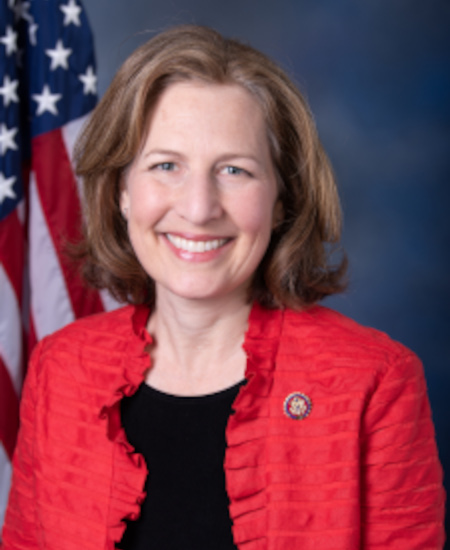
Rep. Kim Schrier
Sponsored bills
Maintaining and Enhancing Hydroelectricity and River Restoration Act of 2021 This bill allows a new tax credit for maintaining and enhancing hydroelectric dams that is equal to 30% of the basis of any qualified dam safety, environmental, and grid resilience enhancement property placed in service in a taxable year. It also allows a 30% credit for qualified obsolete river obstruction removal expenditures for demolishing and removing certain nonpowered or hydroelectric dams.
Allowing Steady Savings by Eliminating Tests Act or the ASSET Act This bill prohibits the use of asset tests or resource limits in certain means-tested public assistance programs and increases the resource limits to qualify for Supplemental Security Income (SSI). SSI is a federal income supplement program designed to help aged, blind, and disabled individuals with limited income and resources meet basic needs. Under the bill, states may not use asset or resource limits to determine eligibility for (1) programs funded by Temporary Assistance for Needy Families grants, (2) the Supplemental Nutrition Assistance Program, or (3) the Low-Income Home Energy Assistance Program. In addition, an individual may have up to $10,000 in certain resources (or up to $20,000 for a couple) and qualify for SSI. Under current law, the limit is $2,000 for an individual (or $3,000 for a couple).
Protecting Seniors Through Immunization Act of 2021 This bill specifies that certain deductible, coinsurance, initial coverage limit, and cost-sharing requirements that apply under the Medicare prescription drug benefit shall not apply with respect to vaccines that are recommended by the Advisory Committee on Immunization Practices of the Centers for Disease Control and Prevention. The Centers for Medicare & Medicaid Services must provide to Medicare beneficiaries specified information regarding (1) coverage of vaccines for seniors, and (2) access to recommended vaccines without cost-sharing.
This bill extends by one year the deadline for completion of proposed management plans for the Appalachian Forest National Heritage Area in West Virginia and Maryland, the Maritime Washington National Heritage Area in Washington, the Mountains to Sound Greenway National Heritage Area in Washington, the Sacramento-San Joaquin Delta National Heritage Area in California, the Santa Cruz Valley National Heritage Area in Arizona, and the Susquehanna National Heritage Area in Pennsylvania.
Legacy Roads and Trails Act This bill directs the Department of Agriculture (USDA) to establish the Forest Service Legacy Roads and Trails Remediation Program. Specifically, under the program, the Forest Service, taking into account predicted changes in weather and hydrology related to global climate change, shall carry out storm damage risk reduction, including deferred maintenance, repairs, road and trail relocation, and associated activities on roads, trails, tunnels, and bridges under the jurisdiction of the Forest Service; restore waterways and natural migration of fish and other aquatic species by removing or replacing culverts or other infrastructure from such waterways; and decommission unneeded roads. In implementing the program, the Forest Service shall give priority to projects that protect or restore water quality and watershed function; a watershed that supplies a public drinking water system; the habitat of a threatened, endangered, or sensitive fish or wildlife species, or a species of conservation concern; or a watershed for which the Forest Service has completed a watershed protection and restoration action plan. The Forest Service shall identify the minimum road system needed for each unit of the National Forest System. USDA shall review, and may revise, an identification of the minimum road system in accordance with federal regulations relating to the administration of the forest transportation system.
Repairing Existing Public Land by Adding Necessary Trees Act or the REPLANT Act This bill directs the Department of Agriculture (USDA) annually for each of the 10 years after enactment of this bill to transmit to Congress an estimate of the sums necessary to be appropriated, in addition to the funds available from other sources, to replant and otherwise treat an acreage equal to the acreage to be cut over that year, plus a sufficient portion of the backlog of lands found to be in need of treatment to eliminate the backlog within the 10-year period. After such 10-year period, USDA shall transmit annually to Congress an estimate of the sums necessary to replant and otherwise treat all lands being cut over and maintain planned timber production on all other forested lands in the National Forest System to prevent the development of a backlog of needed work larger than the needed work at the beginning of the fiscal year. Each reforestation activity included in a renewable resource assessment shall be carried out in accordance with applicable Forest Service management practices and definitions, including definitions relating to silvicultural practices and forest management. The Forest Service shall, based on recommendations from regional foresters, create a priority list of reforestation projects that primarily take place on priority land, promote effective reforestation following unplanned events, and may include activities to ensure adequate and appropriate seed availability. USDA shall give priority to projects on the priority list.
Assuring Regular Consultation to Have Indigenous Voices Effectively Solicited Act This bill establishes requirements for tribal consultation prior to the sale or transfer of certain federal civilian real property. Federal civilian real property generally refers to federal real property assets, including public buildings, occupied and improved grounds, leased space, or other physical structures under the custody and control of a federal agency. Specifically, a federal agency must consult with tribal governments prior to the sale or transfer of certain federal civilian real property if the proposed sale or transfer would affect a tribe's access to federal agency services. Further, the bill prohibits the property from being sold or transferred if the sale or transfer would substantially reduce or eliminate a tribe's access to these services.
Safe Schools Improvement Act of 2021 This bill requires states to direct their local educational agencies (LEAs) to establish policies that prevent and prohibit bullying and harassment of elementary and secondary school students. In particular, these policies must prohibit bullying and harassment based on race, color, national origin, sex, sexual orientation, gender identity, disability, or religion. Further, LEAs must provide (1) students, parents, and educational professionals with annual notice of the conduct prohibited in their disciplinary policies; (2) students and parents with grievance procedures that target such conduct; and (3) the public with annual data on the incidence and frequency of that conduct at the school and LEA level. The Department of Education must conduct and report on an independent biennial evaluation of programs and policies to combat bullying and harassment in elementary and secondary schools. The National Center for Education Statistics must collect state data to determine the incidence and frequency of the conduct prohibited by LEA disciplinary policies.
National Prescribed Fire Act of 2021 This bill directs the Department of Agriculture (USDA) and the Department of the Interior to significantly increase the number and size of prescribed fires conducted on federal lands. Before the end of FY2023, Interior and USDA shall each have carried out a minimum of one prescribed fire on each unit of the National Forest System, unit of the National Wildlife Refuge System, unit of the National Park System, and Bureau of Land Management district (1) that includes an area that has a historical low-severity fire regime, has a historical fire-return interval of not more than 35 years, and is larger than 100 acres; and (2) less than half of which was burned by a wildland fire during the previous 10-year period. Interior shall establish a collaborative prescribed fire program to provide financial assistance to eligible entities to conduct prescribed fires in priority landscapes. Interior shall establish an incentive program to encourage the implementation of large, cross-boundary prescribed fires. Interior and USDA shall hire additional employees and provide training to increase the number of skilled and qualified prescribed fire practitioners in the departments and other organizations. To address the public health and safety risk of the expanded use of prescribed fire, USDA and Interior shall conduct research to improve or develop, among other things, cost-effective, and consistent mitigation strategies for communities impacted adversely by smoke from prescribed fire.