

Maddy summaryThis bill requires student loan lenders to provide clear, plain-language disclosures to borrowers before loan disbursement and monthly throughout the loan term. Before disbursing a loan, lenders must give a written statement showing the loan's principal, interest rate, estimated repayment timeline, total projected cost (including fees), and how existing loans affect the borrower's total debt. Monthly statements must detail current balances, interest rates, payments made, interest accrued, and projections of future payments, including explanations of how interest capitalization increases long-term costs. These disclosures directly affect all borrowers of federal student loans and the lenders/servicers managing those loans, aiming to improve transparency about loan terms and costs.
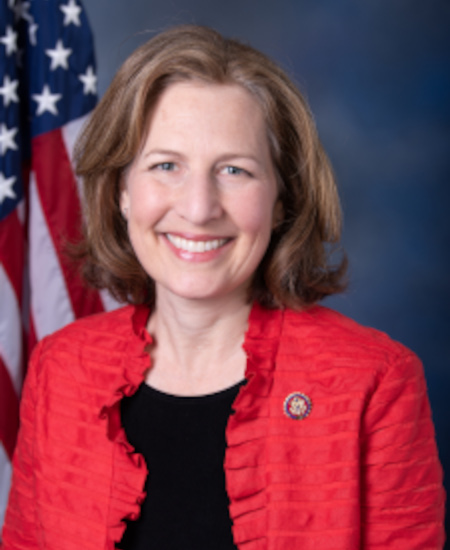
Rep. Kim Schrier
Sponsored bills
Maddy summaryThis bill requires airlines to train flight crews and maintenance staff on identifying and responding to cabin smoke/fume incidents, implement a standardized reporting system for such events, and install real-time air quality monitors to detect dangerous contaminants like carbon monoxide. It directly affects airline crews, maintenance technicians, and passengers by mandating new safety protocols and equipment on commercial flights. Key provisions include annual training on fume sources and health impacts, detailed incident reports covering flight details and symptoms, and public databases of reported events (with personal information redacted). The law also mandates aircraft manufacturers to include monitoring procedures in flight manuals and requires the FAA to investigate incidents involving health symptoms. These changes aim to improve cabin air safety through better detection, reporting, and response systems.
Maddy summaryHR 1322 expands federal retirement benefits to include specific non-traditional law enforcement roles. It adds IRS employees focused on tax collection, U.S. Postal Inspection Service staff, Department of Veterans Affairs police officers, and U.S. Customs and Border Protection seized property specialists to the definition of "law enforcement officer" under federal retirement systems. Current employees in these newly covered positions must elect to pay deposits for past service to receive full retirement credit, while their agencies must contribute additional funds for that past service. The bill also temporarily prevents mandatory separation for current law enforcement officers for three years after enactment.
Maddy summaryThe Military Spouse Hiring Act expands the Work Opportunity Tax Credit to include military spouses. Employers who hire a spouse of an active-duty military member - certified by a local agency as meeting eligibility requirements on the hiring date - can claim this tax credit. The credit reduces the employer's federal tax liability for hiring such individuals. This provision applies to new hires after the bill's enactment date.
Maddy summaryThis bill establishes pay equity for federal firefighters by adjusting how their retirement benefits are calculated and setting a standard workweek. It requires retirement annuities to include overtime hours worked as part of a firefighter's regular schedule (e.g., overtime during standard shifts), rather than excluding them. The bill also mandates a maximum 60-hour regular workweek for federal firefighters, set by the Office of Personnel Management within one year of enactment. These changes directly affect federal firefighters, aiming to improve pay comparability with municipal firefighters and other federal employees while supporting recruitment and retention.
Maddy summaryHR 1247 would award a Congressional Gold Medal to the Freedom Riders collectively, honoring their pivotal role in challenging segregation in interstate travel during the Civil Rights movement. The medal, to be struck by the U.S. Mint and displayed at the Smithsonian Institution, recognizes their nonviolent protests that led to the 1961 federal ban on segregation in interstate public facilities. This is a symbolic tribute with no legal effect, as the bill does not create new policies or alter existing laws.
Maddy summaryHR 1160 requires owners, operators, and users of critical electric infrastructure (like power grid systems) to report cybersecurity incidents and potential incidents to the Department of Energy within 24 hours. The bill amends federal law to establish this mandatory reporting requirement, with the Department of Energy tasked with creating regulations within 240 days of enactment to define "potential incidents" and manage submissions. It also mandates annual reports from the Department to Congress detailing the number of incidents reported and actions taken. This directly affects electric utility companies and grid operators responsible for maintaining critical infrastructure.
Maddy summaryThe Richard L. Trumka Protecting the Right to Organize Act of 2023 strengthens workers' rights to organize unions by making it harder for employers to interfere with organizing efforts. Key provisions include changing the definition of "employee" to make it more difficult to classify workers as independent contractors, prohibiting employers from threatening to permanently replace striking workers, and requiring employers to provide voter lists for union elections. The bill also creates a new electronic voting system for union elections, strengthens whistleblower protections for workers reporting labor violations, and increases penalties for unfair labor practices. These changes directly affect workers seeking to form unions, employers who may interfere with organizing, and labor organizations. The bill aims to make it easier for workers to exercise their right to collective bargaining under the National Labor Relations Act.
Maddy summaryHR 1194, the "Fighting Presidential Budget Waste Act," requires the President and the Office of Management and Budget (OMB) to consider findings from the most recent GAO report on reducing government waste when preparing the annual federal budget. The bill specifically directs them to review the GAO report titled "Additional Opportunities to Reduce Fragmentation, Overlap, and Duplication and Achieve Billions of Dollars in Financial Benefits" (or a successor report). This mandate applies to all budget submissions under Section 1105 of Title 5, U.S. Code. The law does not create new spending or programs but changes the budget preparation process by requiring federal officials to factor in GAO recommendations for cost savings.
This bill authorizes the Department of Agriculture to waive the matching funds requirement for grants under the specialty crop research initiative. Currently, entities that receive grants under the initiative must provide nonfederal matching funds (including funds from an agricultural promotion, research, and information program) equal to not less than the amount of the grant.