

Maddy summaryThe Vote by Mail Protection Act of 2026 directly affects the federal government by nullifying Executive Order 14399, which previously required citizenship verification in federal elections. This legislation prohibits any federal agency from enforcing the order or using taxpayer funds to carry out its activities. By repealing the executive order, the bill removes the mandate for agencies to verify citizenship as a condition for voting in federal elections.
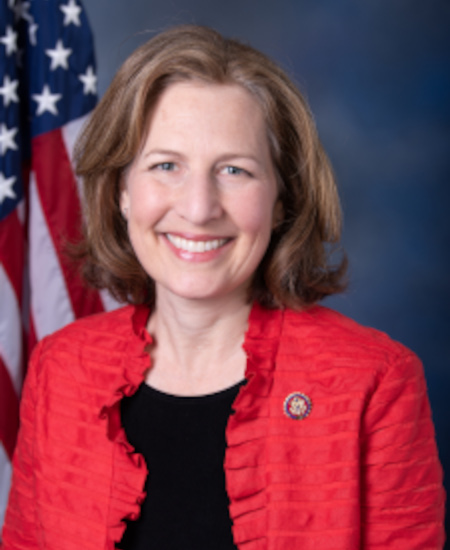
Rep. Kim Schrier
Sponsored bills
Maddy summaryThis bill is a non-binding resolution that expresses the House of Representatives' sentiment to honor public servants for their dedication to the United States. It specifically acknowledges the work of federal, state, and local government employees, as well as uniformed service members, who deliver essential services and support the economy. The resolution calls on the American public to observe Public Service Recognition Week with ceremonies and activities that recognize these contributions. Because it is a symbolic expression of the House's feelings rather than a law with enforceable rules, it does not create new policies or mandate specific actions.
Maddy summaryThe Gas Prices Relief Act of 2026 temporarily eliminates the federal excise tax on gasoline for fuel sold between the date of enactment and January 1, 2027. To maintain funding for highway and environmental projects, the Treasury Department will transfer money from the general fund to replace the lost tax revenue. The bill also directs the Treasury to enforce measures ensuring that fuel producers and dealers pass these tax savings directly to consumers through lower prices.
Maddy summaryThe Medicare Advantage Improvement Act of 2026 aims to speed up care decisions and increase transparency for Medicare Advantage enrollees and providers. Starting in 2028, the bill requires insurance plans to respond to most prior authorization requests within 72 hours and to provide real-time decisions for low-risk services, while also banning requirements for re-authorization when a treatment plan is clinically modified. The legislation introduces a new compliance scoring system that will publicly rank plans and reduce payments to those with poor performance, alongside stricter rules ensuring medical necessity standards match those of traditional Medicare.
Maddy summaryThis bill reauthorizes three existing rural health care grant programs under the Public Health Service Act through 2030, extending funding from the previous 2021-2025 period. It requires all funded projects to directly serve rural underserved populations and involve these communities in planning, development, and operations. The programs support rural clinics, health networks, and quality improvement initiatives to expand access to care in underserved areas. Funding will now continue through 2030, maintaining critical support for rural health providers.
Maddy summaryThis bill strengthens the Vaccines for Children Program and Medicaid immunization coverage to improve vaccine access for children. It expands eligibility to include children enrolled in state child health plans and clarifies that providers can charge fees for vaccine administration and counseling services up to Medicare rates. The legislation also increases federal funding for Medicaid by 1% per quarter starting in 2027, contingent on states providing culturally competent vaccination outreach, and requires annual public reports on vaccination rates by demographic factors.
Maddy summaryThe Momnibus Act is a comprehensive legislative bill designed to improve maternal health outcomes across the United States by addressing social determinants of health, expanding access to care, and reducing disparities among pregnant and postpartum individuals. The bill establishes a federal task force to coordinate efforts between agencies and stakeholders to eliminate preventable maternal mortality and severe morbidity, while providing sustained funding to community-based organizations to address nonclinical factors like housing, nutrition, and transportation. Key provisions include extending WIC eligibility to 24 months postpartum, creating grants to grow and diversify the perinatal workforce, implementing respectful maternity care training for all healthcare employees, and establishing compliance programs to track and address bias in maternity care settings. The legislation also includes specific measures for incarcerated mothers, veterans, and vulnerable populations affected by climate change, alongside funding for maternal mental health services and technology-enabled care models to expand access in underserved areas.
Maddy summaryThis bill establishes the 6PPD Task Force, led by the Department of Transportation and the Environmental Protection Agency, to address the environmental impacts of 6PPD, a chemical commonly used in tires. The Task Force will bring together experts from federal agencies, Tribal governments, the tire industry, and research institutions to improve data sharing and identify federal funding opportunities. Its key duties include researching 6PPD's effects on aquatic species and human health, developing safer alternatives, and recommending ways to expedite their testing and adoption. The Task Force will also share best practices for mitigating 6PPD runoff and identify other exposure pathways, submitting annual public reports to Congress on its findings and recommendations.
Maddy summaryThis bill, titled the "Drug Origin Transparency Act of 2026," aims to increase transparency regarding the manufacturing and supply chain of drugs, primarily affecting drug manufacturers and suppliers of active pharmaceutical ingredients. It mandates that drug manufacturers submit more detailed and frequent reports to the government, identifying suppliers of active pharmaceutical ingredients and intermediate materials, including the amounts sourced from each. These reports could be required up to four times annually. Additionally, the bill requires drug labels to include the name, place of business, and unique facility identifier of the original manufacturer of both the finished drug and its active pharmaceutical ingredients. Labels must also identify all manufacturers involved, from the original active ingredient supplier to the final packer or distributor.
Maddy summaryThis bill directs the Secretary of Agriculture to work with federal agencies, tribes, universities, and private nurseries to improve training, technical assistance, and research for tree planting and forest restoration programs. It creates a new grant program that will become available two years after enactment, allowing eligible recipients such as state forestry agencies, tribes, and private nurseries to use funds for expanding nursery infrastructure, improving seed storage, and developing workforce skills. The legislation also authorizes up to $5 million per year from the Reforestation Trust Fund to support these efforts and includes provisions to speed up the permit process for collecting seeds on national forest lands.