

Maddy summaryHR 5664 amends the Water Infrastructure Finance and Innovation Act to improve access to funding for small communities (populations under 25,000) and rural water projects, including those serving tribal communities. The bill lowers the minimum project cost threshold from $5 million to $1 million, creates new technical assistance for small communities to develop project proposals, and clarifies eligibility for rural water projects under various federal laws. It introduces "collaborative project delivery methods" like design-build and construction management at-risk, and requires a study on these methods' implementation. The bill extends annual funding through 2027 with $68 million for EPA and $15 million for the Army Corps of Engineers.
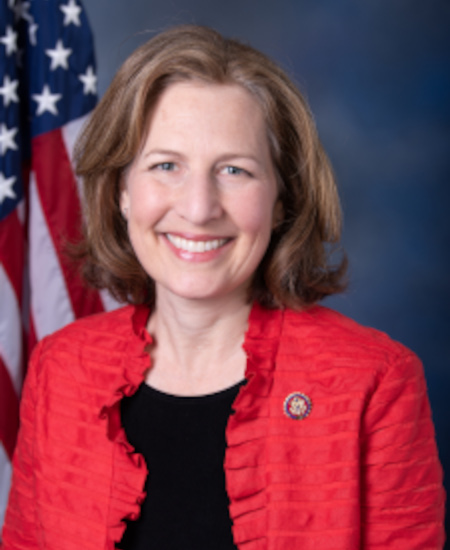
Rep. Kim Schrier
Sponsored bills
Maddy summaryThe RNGR Support Act of 2023 provides federal funding and technical assistance to support tree nurseries and seed orchards focused on reforestation, restoration, and conservation. It authorizes $25 million annually (2024-2028) for grants to state forestry agencies, tribal nations, and qualified private nurseries to expand infrastructure, improve seedling production, develop workforce skills, and manage genetic resources. The bill requires the Forest Service to partner with agencies and tribes to share technical knowledge, address reforestation challenges, and promote climate-informed practices. This directly affects nurseries, seed orchards, and tribal entities working on reforestation projects across the U.S. and internationally.
Maddy summaryThe STORE Act of 2023 amends the Emergency Food Assistance Act to improve how infrastructure grants are distributed to food banks and pantries. It increases annual funding from $15 million to $25 million (2024-2028), prioritizes support for Tribal, low-income, and remote communities, and allows grants to cover mobile delivery services, home delivery, and refrigeration equipment. The bill also requires a report assessing national cold storage and refrigerated truck shortages for emergency food organizations. This directly affects food banks serving underserved areas by expanding their access to funding for critical refrigeration and distribution infrastructure.
Maddy summaryHR 1418 reauthorizes user fees for animal drug and generic animal drug applications to the FDA, requiring manufacturers to pay fees for reviewing new animal drug applications, supplemental applications, and generic animal drug applications. The bill sets annual fee revenue targets of $33.5 million for animal drugs and $25 million for generic animal drugs for fiscal years 2024-2028, with mechanisms for adjusting fees based on inflation and workload. It requires the FDA to maintain operating reserves of 16-22 weeks of funding to ensure consistent review capacity. The fees will directly affect animal drug manufacturers and generic drug sponsors who submit applications to the FDA, with the program set to expire in 2028.
Maddy summaryHR 5492, the Veteran Families Health Services Act of 2023, provides fertility treatment, counseling, and adoption assistance to military members and veterans with infertility conditions. The bill requires the Department of Defense to offer fertility preservation services like cryopreservation before deployment or hazardous assignments, and to cover fertility treatments including in vitro fertilization for current service members. For veterans, it adds fertility treatment and counseling to VA medical services, allows adoption assistance up to the cost of three adoptions, and mandates coordination between military and VA health systems. These provisions apply regardless of sex, gender identity, sexual orientation, or marital status, and are designed to support military families affected by service-related infertility.
Maddy summaryThe Better CARE for Animals Act of 2023 amends the Animal Welfare Act to strengthen enforcement of animal welfare standards. It gives the Attorney General authority to bring civil cases for violations, including seeking penalties up to $10,000 per day per violation and injunctions to remove or relocate animals. The bill also requires the Secretary of Agriculture and Attorney General to coordinate through a new Memorandum of Understanding, focusing on repeat violators. These changes directly affect dealers, exhibitors, and enforcement agencies by expanding civil enforcement tools and clarifying jurisdiction over rule violations.
Maddy summaryHR 5044, the Timber Innovation for Building Rural Communities Act, creates a federal platform to track carbon emissions and storage from forests and wood products, using data from USDA programs. It establishes grant programs to fund wood-building projects in rural areas with high unemployment, support wood-based construction education at colleges, and pilot innovative wood infrastructure projects like mass timber buildings in rural communities. The bill prioritizes projects that boost local jobs, reduce wildfire risks, and demonstrate economic benefits from wood products, requiring matching funds from non-federal sources. These grants, totaling up to $10 million annually per program, aim to strengthen rural economies tied to forestry while promoting wood as a carbon-friendly building material.
Maddy summaryThis bill extends existing programs that provide payments to counties and states with federal land, primarily to support local schools and communities. It updates key deadlines, extending secure payments through 2026, special project authorities through 2029, and county fund expenditure authority through 2028. A new pilot program allows regional foresters to appoint resource advisory committee members directly, with this authority ending October 1, 2028. These changes directly affect rural counties and states managing federal lands, maintaining current funding mechanisms without altering eligibility or payment amounts.
Maddy summaryHR 5031 reauthorizes and updates the Joint Chiefs Landscape Restoration Partnership program, which helps restore forests and natural resources. The bill expands the program's purposes to include wildfire recovery and enhancing soil/water resources, while requiring better coordination between the Natural Resources Conservation Service and Forest Service. It extends the program's authorization period through 2028 and adds new requirements for considering forest management plans and post-wildfire impacts. This directly affects landscape restoration projects in wildfire-prone areas and natural resource management efforts across participating states.
Maddy summaryThe John R. Lewis Voting Rights Advancement Act of 2023 would strengthen the Voting Rights Act of 1965 by updating the criteria for which states and localities must obtain federal preclearance before changing voting practices. It would establish new standards for proving vote dilution and vote denial by requiring courts to consider historical discrimination, racial polarization in voting, and whether voting practices disproportionately burden minority voters. The bill would also require states and localities to provide public notice of voting changes and share demographic data about polling locations. These changes would primarily affect jurisdictions with a history of voting rights violations, aiming to prevent discriminatory voting practices before they take effect.