

Maddy summaryHR 1902, the HERO Act, creates a national data system to track suicide rates among public safety officers (including firefighters, EMTs, police, and telecommunicators) and requires annual reports to Congress with detailed breakdowns by age, gender, occupation, and employment status (volunteer, career, etc.). The bill funds peer-support mental health programs for fire departments and EMS agencies, establishes confidential wellness services for healthcare providers, and develops resources to train mental health professionals on first responder-specific stressors and PTSD. It prohibits using suicide data to deny life insurance or benefits to survivors and mandates that all collected data be kept confidential and secure. This legislation directly affects all public safety officers nationwide by improving data collection, access to mental health resources, and evidence-based interventions to address suicide and trauma.
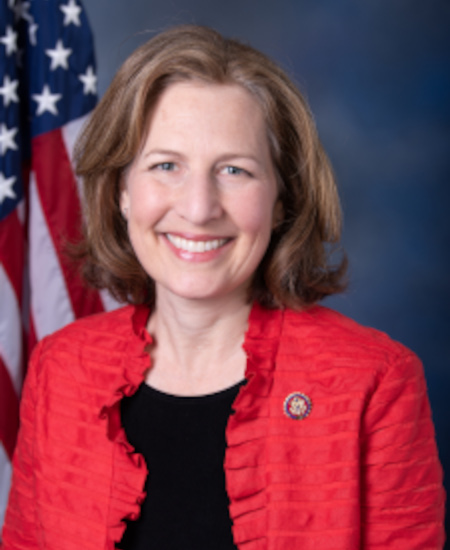
Rep. Kim Schrier
Sponsored bills
Maddy summaryThis bill creates a process for establishing Medicare payment rates for pediatric-specific medical devices. It requires the Medicare program (via the Secretary of Health and Human Services) to set national payment rates (called "relative value units") for qualifying pediatric technologies upon manufacturer request, starting in 2026. A "qualifying pediatric technology" is defined as a covered medical device that is FDA-approved/cleared, has a temporary HCPCS code, and is either predominantly used for pediatric procedures or specifically designed for children. Manufacturers must submit detailed data with their requests, and the timeline for setting rates depends on when the request is received (by May 1 for same-year implementation). The bill does not mandate coverage but ensures payment mechanisms exist for these devices once approved.
Maddy summaryThis bill strengthens the Voting Rights Act of 1965 by clarifying how to prove voting discrimination and expanding requirements for preclearance of voting changes. It establishes new standards for determining when voting practices dilute minority voting strength or deny/abridge voting rights, requiring plaintiffs to show specific conditions for vote dilution claims and including factors like historical discrimination and racial polarization in court analyses. The bill modifies the criteria for determining which states and political subdivisions must seek preclearance for voting changes, and adds new transparency requirements for jurisdictions to publicly disclose changes to voting qualifications, polling locations, and election districts. It directly affects states and local governments that implement voting policies, particularly those with a history of voting rights violations or that make changes to voting qualifications, procedures, or district boundaries. The bill aims to prevent discriminatory voting practices by providing clearer standards for courts and requiring greater transparency in voting rule changes.
Maddy summaryThe Richard L. Trumka Protecting the Right to Organize Act of 2025 strengthens workers' organizing rights by making it an unfair labor practice for employers to threaten permanent replacement of striking workers, discriminate against workers who support unions, or require employees to attend employer campaigns unrelated to their job duties. It expands the definition of "employee" to make it harder for companies to classify workers as independent contractors and requires employers to post notices about workers' rights in conspicuous locations. The bill establishes a new electronic voting system for union elections, creates a 90-day bargaining period before mediation can be requested, and increases penalties for violations of labor laws. These changes are intended to make it easier for workers to form unions and negotiate better wages and working conditions.
Maddy summaryHR 1781 repeals four executive orders issued on January 20, 2025, which covered energy development, international environmental agreements, a declared energy emergency, and a pause on offshore wind projects. The bill would prevent federal agencies from using funds to implement these orders, effectively halting their enforcement. This directly affects agencies like the Department of Energy and Environmental Protection, which had been directing actions under these orders. The repeal takes effect immediately upon the bill's enactment.
Safe Schools Improvement Act This bill requires states to direct their local educational agencies (LEAs) to establish policies that prevent and prohibit bullying and harassment of elementary and secondary school students. In particular, these policies must prohibit bullying and harassment based on race, color, national origin, disability, religion, or sex. Sex includes sexual orientation, gender identity, and sex characteristics (including intersex traits). Further, LEAs must provide (1) students, parents, and educational professionals with annual notice of the conduct prohibited in their disciplinary policies; (2) students and parents with grievance procedures that target such conduct; and (3) the public with annual data on the incidence and frequency of that conduct at the school and LEA level. The Department of Education must conduct and report on an independent biennial evaluation of programs and policies to combat bullying and harassment in elementary and secondary schools. The National Center for Education Statistics must collect state data to determine the incidence and frequency of the conduct prohibited by LEA disciplinary policies.
Maddy summaryHR 1383 extends the Secure Rural Schools program, which provides payments to counties and states with federal land (like national forests) to support local schools and services. It reauthorizes these payments through fiscal year 2026, adding specific rules to ensure counties don’t receive duplicate payments for 2024 and 2025. The bill also extends related authorities for special projects on federal land and county fund expenditures through 2028-2029. This directly affects rural communities adjacent to federal lands that rely on these payments for education and infrastructure.
Maddy summaryThis bill prohibits the U.S. Interior and Agriculture Secretaries from transferring title of certain federal lands to non-government entities. It specifically blocks transfers of lands that are publicly accessible (via roads, trails, or waterways) or adjacent to such lands, unless the land is under 300 acres or meets specific exceptions. Key exceptions include small parcels under 5 acres accessible by water, transfers authorized by historical laws like the Alaska Statehood Act, and land exchanges already permitted by federal law. The bill does not affect existing transfers under these authorized programs or prevent agencies from subdividing land to meet acreage thresholds.
Maddy summaryThe Headwaters Protection Act of 2025 reauthorizes and updates the Water Source Protection Program under the Healthy Forests Restoration Act. It expands eligible partners to include acequia associations, stormwater/wastewater entities, land-grant mercedes, and water-delivery private groups, while requiring landowner consent for projects on adjacent non-Federal land within the same watershed. The bill prioritizes projects addressing drought, wildfire, and climate resilience, mandates 10% of annual funding ($30 million per year from 2025-2033) for partner capacity-building, and ensures projects protect water supply systems and forest health. It explicitly states the law does not override state water rights or authorize federal land acquisition.
Maddy summaryHR 575, the Increased TSP Access Act of 2025, amends conservation program rules to expand access to third-party providers (TSPs) like agricultural retailers, engineers, and certified crop advisors. It creates new pathways for state agencies and professional organizations to certify TSPs (within 180 days of enactment), requires the USDA to review certifications within 10 business days, and sets payment rates equivalent to direct government services. The bill directly affects agricultural producers who use conservation programs and TSPs seeking certification, while mandating annual transparency reports on certification numbers, funding, and program effectiveness. Key changes include streamlined certification for existing specialists (e.g., certified crop advisors) and rules preventing double-counting of payments from other federal programs.