

Maddy summaryThis bill prohibits federal and state governments from restricting access to FDA-approved medicines. It guarantees individuals the right to obtain these medicines without coercion and allows healthcare providers (like doctors and pharmacists) to prescribe or refer for them. The law blocks governments from implementing rules that single out or hinder the sale, provision, or use of FDA-approved drugs, such as bans on specific medicines or barriers to patient access. It does not affect the FDA's drug approval process or existing health insurance coverage requirements.
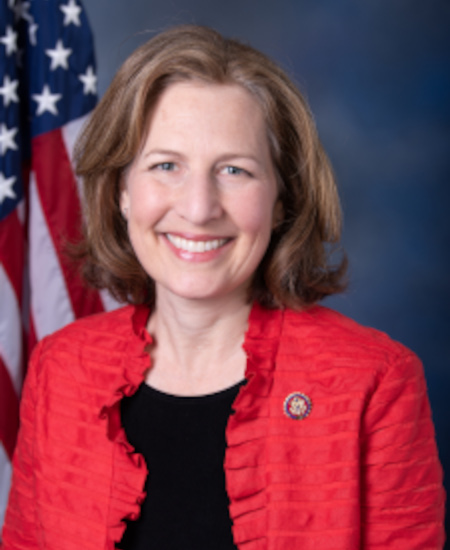
Rep. Kim Schrier
Sponsored bills
Maddy summaryThis bill extends the Public Health and Bio-Preparedness Workforce Loan Repayment Program through fiscal years 2026 to 2030, replacing the previous 2023-2025 funding period. It directly affects public health workers (such as epidemiologists, laboratory staff, and emergency response personnel) who have federal student loans. The key provision reauthorizes existing funding to help these workers repay student debt by providing federal reimbursements. This maintains a critical workforce retention tool for agencies like the CDC and state health departments without creating new benefits or altering eligibility. The change is procedural, solely adjusting the program's funding timeline.
Farmers First Act of 2025 This bill extends through FY2030 and revises the Farm and Ranch Stress Assistance Network (FRSAN). This Department of Agriculture program provides competitive grants to states, Indian tribes, and qualified nonprofit organizations to provide stress assistance programs (i.e., professional agricultural behavioral health counseling, helplines, and resources) to individuals engaged in farming, ranching, and agriculture-related occupations. The bill specifies that the grant funding for farm telephone helplines and websites may also be used for crisis lines. Further, FRSAN grant recipients may establish referral relationships with providers, including Certified Community Behavioral Health Clinics, health centers, rural health clinics, and critical access hospitals.
Maddy summaryHR 4382 authorizes the U.S. Mint to produce commemorative coins for the 2028 Los Angeles Olympics/Paralympics and 2034 Salt Lake City Winter Olympics/Paralympics. It specifies gold, silver, and half-dollar coin designs with defined mintage limits (e.g., up to 100,000 $5 gold coins for each event), all bearing inscriptions like "2028" or "2034" and standard coin features. A surcharge ($5-$50 per coin) is added to sales, with all funds directed to the respective Olympic committees to support event hosting and legacy programs like youth sports. The bill ensures no net cost to the government by requiring surcharge revenues to cover all design, production, and marketing expenses before funds are disbursed.
Maddy summaryThis bill requires the Health and Human Services Secretary to create a process by January 1, 2026, allowing specific healthcare research groups (qualified clinical data registries and clinician-led registries) to access Medicare claims data, and potentially Medicaid/CHIP data if approved. These groups can link claims data with clinical outcomes to assess provider quality, improve patient safety, and conduct research. The data will be provided at cost (covering only the fee to make it available), with fees deposited into the CMS account. It directly affects healthcare researchers and providers by enabling data-driven quality improvement efforts.
Maddy summaryThis bill requires online contact lens sellers to provide a secure electronic method for customers to transmit their contact lens prescriptions, directly affecting online retailers. It mandates that such electronic transmissions comply with HIPAA privacy rules and that any protected health information sent via email must be encrypted. The law updates existing rules to modernize prescription verification for online sales while maintaining privacy protections.
Maddy summaryHR 4265, the Reproductive Health Travel Fund Act of 2025, would provide $350 million annually (2026-2030) in federal grants to cover travel and logistical costs for people seeking abortion care in states with bans or severe restrictions. The bill directly affects individuals who must travel across state lines for abortion services, particularly those facing systemic barriers like Black, Indigenous, and low-income people. Grants can cover round-trip travel, lodging, childcare, meals, translation, and lost wages, but cannot fund the abortion procedure itself. Eligible recipients are community-based abortion funds meeting specific criteria, with priority given to organizations serving those impacted by state abortion bans.
Maddy summaryHRES 543 is a symbolic House resolution (not a law) introduced by multiple representatives. It affirms the constitutional right to peaceful protest under the First Amendment and condemns violent acts by some individuals during demonstrations, such as vandalism and looting. The resolution specifically criticizes the President’s 2025 deployment of National Guard and Marines to Los Angeles without proper legal authority (violating 10 U.S.C. § 12406 and the Posse Comitatus Act) and without coordination with California’s governor. It also denounces inflammatory rhetoric that escalated tensions and supports law enforcement efforts to protect public safety during protests. The resolution has no binding effect but formally expresses congressional position on these issues.
Maddy summaryThe No Secret Police Act of 2025 requires U.S. Immigration and Customs Enforcement (ICE) and other Department of Homeland Security officers working on border security or immigration enforcement to visibly display their official badges or uniforms and provide identification during detentions or arrests. It prohibits officers from wearing face coverings that conceal their face during these interactions. The bill also mandates that the Department report to Congress about tactical gear policies and research technology to improve badge visibility in different conditions like weather or lighting. These changes aim to increase transparency in immigration enforcement encounters.
Maddy summaryThe CONNECT for Health Act of 2025 expands Medicare telehealth coverage by removing geographic restrictions that limited where patients could receive care, expanding the types of health care providers who can offer telehealth services, and eliminating the requirement for an in-person visit before receiving telemental health services. The bill includes specific provisions to support telehealth use for Native American health facilities, rural health clinics, and Federally Qualified Health Centers. It requires the Centers for Medicare & Medicaid Services to collect and publish data on telehealth usage and impacts, and to develop resources to improve accessibility for people with disabilities and limited English proficiency. Program integrity measures are added to monitor telehealth billing practices and prevent fraud while maintaining coverage for telehealth services during public health emergencies.