

Maddy summaryHRES 956 is a symbolic resolution passed by the U.S. House of Representatives condemning an antisemitic attack that occurred during a Hanukkah celebration in Sydney, Australia, on December 14, 2025. It expresses strong condemnation of the shooting (which caused deaths and injuries), extends condolences to victims and the Australian Jewish community, and affirms the right to worship freely. The resolution also reaffirms the U.S. commitment to combating antisemitism and terrorism and urges the Australian government to address rising antisemitism and protect religious communities. As a non-binding resolution, it does not create new laws or directly affect any individuals or groups.
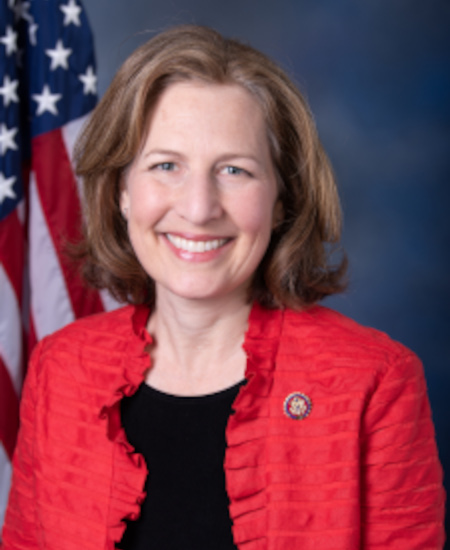
Rep. Kim Schrier
Sponsored bills
Maddy summaryHR 6731, the "Restore Trust in Government Act," requires Members of Congress, the President/Vice President, and their spouses or dependent children to divest certain financial investments during federal service. It defines "covered investments" broadly (including stocks, commodities, and derivatives) but excludes Treasury bonds, municipal bonds, family farm interests, and some Alaska Native Settlement stock. Covered individuals must sell holdings within 90-180 days of taking office or enacting the law, with limited exceptions for qualified blind trusts or spouses’ occupational trading. Violations incur a 10% fee on the investment value and require returning profits, paid to the Treasury. Ethics offices enforce these rules, publish penalty details, and issue divestiture certificates.
Maddy summaryThe Protect America's Workforce Act cancels an executive order issued on March 27, 2025, that excluded certain groups from federal labor-management relations programs, making it legally unenforceable. It also ensures that all collective bargaining agreements between federal agencies and labor unions, which were active as of March 26, 2025, remain fully effective until their agreed terms expire. This directly affects federal agencies, labor unions, and the employees covered by these agreements. The bill prevents federal funds from being used to implement the canceled executive order while preserving existing labor agreements.
Maddy summaryThis bill requires the Federal Trade Commission (FTC) and Health and Human Services (HHS) to study how social media platforms affect teenagers under 17, including data collection practices, algorithm use, targeted advertising, daily usage patterns, and mental health impacts. The study must examine both potential benefits and harms of social media use across age ranges and submit a report with policy recommendations to Congress within three years. It defines "social media platform" broadly to include public-facing apps and websites (but excludes email and internet service providers). The bill does not impose new regulations on platforms but mandates this research to inform future policy decisions.
Maddy summarySammy's Law requires large social media platforms (those with over 100 million monthly users or $1 billion in annual revenue) to create real-time tools allowing parents or third-party safety software providers to help protect children under 17 from online harms. Platforms must provide secure access to children's account data for safety software providers that register with the Federal Trade Commission and meet strict security and privacy requirements. Third-party providers can only use the data to address specific risks like cyberbullying, trafficking, or abuse, and must delete data after 14 days unless needed for a safety concern. The law creates a federal standard that prevents states from making their own rules about this type of platform access.
Maddy summaryThe PREVENT HPV Cancers Act of 2025 creates a national public awareness campaign to boost HPV vaccination rates and combat misinformation, targeting communities disproportionately affected by HPV-related cancers (including Black and Hispanic women, rural populations, and men facing higher oropharyngeal cancer risks). It authorizes $5 million annually from 2026-2030 for evidence-based media, culturally tailored materials, and partnerships with health providers, schools, and community organizations to increase vaccination completion among adolescents (9-12 years old, the optimal age group). The bill also increases annual funding for the Breast and Cervical Cancer Early Detection Program to $300 million starting in 2026, coordinating vaccination efforts with existing screening initiatives. It requires the CDC to consult with health experts and community groups to develop effective messaging about vaccine safety, benefits, and recommended age ranges. The campaign aims to address current gaps, such as the 63% HPV vaccine completion rate among teens and disparities in cancer outcomes.
Maddy summaryThis bill increases federal student loan limits for graduate and professional students. Starting July 1, 2026, it sets a $50,000 annual limit and a $200,000 total aggregate limit (beyond undergraduate borrowing) for unsubsidized Federal Direct Stafford loans. These changes directly affect graduate and professional students pursuing advanced degrees who rely on federal loans for education costs. The provisions aim to provide higher borrowing capacity for these students' educational expenses under the Higher Education Act.
Maddy summaryThis bill directs the American Battle Monuments Commission to correct historical errors by identifying Jewish World War I and II veterans buried overseas under incorrect Christian markers (Latin crosses) and replacing them with appropriate markers. It establishes a 10-year program to contact families of affected veterans, with the Commission funding the effort at $500,000 annually through nonprofit contracts. The program specifically targets veterans buried in foreign U.S. military cemeteries with markers indicating non-Jewish faith, addressing a documented mistake affecting approximately 900 Jewish servicemembers. This directly affects Jewish veterans' families by honoring their heritage and correcting past burial inaccuracies.
Maddy summaryThis bill establishes a direct payment program to compensate specialty crop growers and wine producers for financial losses caused by increased tariffs on U.S. exports after January 20, 2025. Covered losses include higher handling costs for perishable crops, reduced export revenue, canceled contracts, and lost market access due to foreign tariffs. The USDA may also purchase surplus non-wine specialty crops for nutrition programs like school meals. Payments and surplus crop purchases require annual reporting to Congress until 2030, with funding authorized for fiscal years 2026-2030.
Maddy summaryHR 6423, the HELP Copays Act, requires health insurance plans and coverage to count financial assistance from non-profits or drug manufacturers toward patient cost-sharing limits like deductibles and copayments. This directly affects patients enrolled in health insurance who receive such assistance for prescription drugs, ensuring the help they get reduces their out-of-pocket costs faster. The bill amends key health laws to mandate that these payments are included when calculating whether a patient has met their deductible or copayment threshold. The change applies to all prescription drugs, including specialty drugs and those subject to prior authorization, but does not alter how insurers manage drug access through tools like step therapy. It takes effect for plan years starting in 2026.