

Maddy summaryHR 6039, the CLASS Act of 2023, prevents colleges and universities from requiring students to agree to arbitration clauses or other restrictions that limit their ability to sue the institution in court. The bill amends the Higher Education Act to prohibit institutions from enforcing any agreement that restricts students' access to courts - such as limiting venue, jury trials, or choice of law - when pursuing claims related to their enrollment. It directly affects students who sign enrollment contracts with higher education institutions and ensures they can seek legal remedies without forced arbitration. The law removes federal arbitration law (Title 9, Chapter 1) from these student-institution agreements.
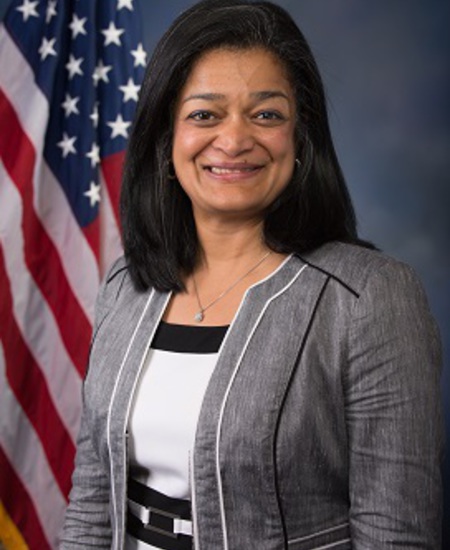
Rep. Pramila Jayapal
Sponsored bills
Maddy summaryThe Safe Schools Improvement Act (HR 6031) requires public elementary and secondary schools to implement comprehensive anti-bullying policies that specifically prohibit harassment based on protected characteristics like race, gender identity, disability, religion, and sexual orientation. It mandates schools to collect and publicly report annual data on bullying incidents while establishing clear grievance procedures for students and parents. The bill also requires states to submit biennial reports on school compliance and supports evidence-based interventions, such as restorative practices, to reduce exclusionary discipline. This legislation directly affects all public K-12 schools and students in the U.S., aiming to create safer learning environments through standardized policy requirements and data transparency.
Maddy summaryThe Medical Debt Relief Act of 2023 would prevent credit bureaus from reporting medical debt on credit reports and stop creditors from using medical debt information when making credit decisions. It defines medical debt as any debt related to medical services, products, or devices, and requires the removal of existing medical debt entries from credit reports. Within one year of enactment, the Consumer Financial Protection Bureau must update regulations to prohibit creditors from considering medical debt in loan or credit applications. This directly affects consumers with medical debt (who may see improved credit scores) and creditors (who must adjust their credit evaluation practices).
Johanna's Law Reauthorization Act This bill reauthorizes through FY2026 and otherwise revises the Centers for Disease Control and Prevention (CDC) national awareness campaign regarding gynecologic cancers. The CDC must target specified populations of women at higher risk for gynecologic cancers in the campaign. Additionally, the CDC may establish a grant program to evaluate different strategies to increase knowledge and awareness of gynecologic cancers among women and health care providers. In awarding these grants, the CDC must give preference to (1) grantees with expertise in gynecologic cancer education or treatment or expertise in working with groups of women at increased risk of such cancers; and (2) projects that will establish links between health care providers, hospitals, insurance companies, and state health departments.
Maddy summaryHR 5827, the Tenants’ Right to Organize Act, grants tenants in federally assisted housing the right to form and join tenant organizations to address housing issues without fear of retaliation. It directly affects tenants receiving tenant-based rental assistance (like Section 8 vouchers) and tenants in low-income housing tax credit (LIHTC) properties. Key provisions require public housing agencies and property owners to recognize tenant organizations, allow protected activities (such as leafleting and door-to-door outreach), and prohibit retaliation - while establishing an enforcement protocol for complaints and quarterly reporting to Congress. The bill also mandates annual notifications to tenants about their organizing rights and includes specific protections for LIHTC properties through owner compliance requirements and fines for violations.
Maddy summaryThis bill replaces "Columbus Day" with "Indigenous Peoples’ Day" as the official federal holiday observed on the second Monday in October. It directly affects federal government operations and all federal documents, rules, or laws that previously referenced "Columbus Day" by automatically updating those references to "Indigenous Peoples’ Day" upon enactment. The key mechanism is a simple amendment to federal law (5 U.S.C. § 6103(a)) to change the holiday name and a provision ensuring all existing federal references to Columbus Day are legally treated as referring to Indigenous Peoples’ Day instead. This is a procedural change to federal holidays and references, not a new policy or program.
Maddy summaryHR 5797, the Protecting Immigrants From Legal Exploitation Act of 2023, targets fraud in immigration services by imposing criminal penalties on individuals who falsely claim legal authority or defraud immigrants. It makes it a federal offense to execute schemes involving false promises about immigration services (up to 10 years in prison) or falsely represent oneself as an attorney (up to 15 years), requiring full reimbursement to victims. The bill mandates that immigration service providers (non-lawyers charging fees) identify themselves and disclose fees when assisting applicants, and allows immigrants to withdraw fraudulent applications without penalty. It also requires government agencies to create outreach programs educating immigrants on legitimate legal services and establish procedures for corrected filings.
Maddy summaryThis bill requires federal agencies to adjust contract prices to reimburse contractors for paying employees during government funding lapses (e.g., shutdowns). It covers costs for furloughed, laid-off, or reduced-hour workers, or for restoring paid leave used during the lapse, with a weekly cap of $1,442 per employee. Directly affecting federal contractors and their employees who experienced work disruptions due to funding gaps, it mandates agencies to make these adjustments promptly after enactment. Contractors must provide proof of costs, and the Office of Federal Procurement Policy must report on implementation to Congress within a year.
Maddy summaryHR 5784 would provide federal grants to public schools (including Bureau of Indian Education schools) to make them more environmentally sustainable and equitable. It prioritizes schools in the most vulnerable communities (based on CDC Social Vulnerability Index) for full funding to become "healthy zero-carbon schools" through energy-efficient retrofits and new construction, while offering reduced funding for less vulnerable schools. The grants require community engagement in planning, mandate hiring from local communities with specific diversity goals, fund social services and mental health support, and include strict energy efficiency standards for all projects. The bill also includes funding for educational equity planning and climate resiliency programs to help schools serve as community centers during disasters.
Maddy summaryThe WIC for Kids Act expands eligibility for the Special Supplemental Nutrition Program for Women, Infants, and Children (WIC) by adding new qualifying pathways. It allows children to qualify if they live in households where someone receives Head Start, Indian reservation food assistance, or Puerto Rico/Northern Mariana Islands nutrition block grants, and streamlines documentation by permitting states to use existing records. The bill extends certification periods for children from one to two years and automatically enrolls infants born to current WIC participants. This directly affects low-income families with children who qualify for related assistance programs but previously faced barriers to WIC access.