

Charlotte Woodward Organ Transplant Discrimination Prevention Act This bill expressly prohibits health care providers and other entities involved in matching donated organs with recipients from denying or restricting an individual's access to organ transplants solely on the basis of the individual's disability, except in limited circumstances. Specifically, these entities may consider an individual's disability when making decisions about transplants only if a physician finds, based on an individualized evaluation, that the individual's physical or mental disability is medically significant to the provision of the transplant. A disability shall not be considered medically significant if the individual has an adequate support system in place to comply with transplant-related medical requirements. These entities must also make reasonable changes to their policies to make transplants and related care more available to individuals with disabilities. Aggrieved individuals may bring claims of discrimination to the Office of Civil Rights of the Department of Health and Human Services or before a federal court. The bill provides for expedited resolutions of these claims.
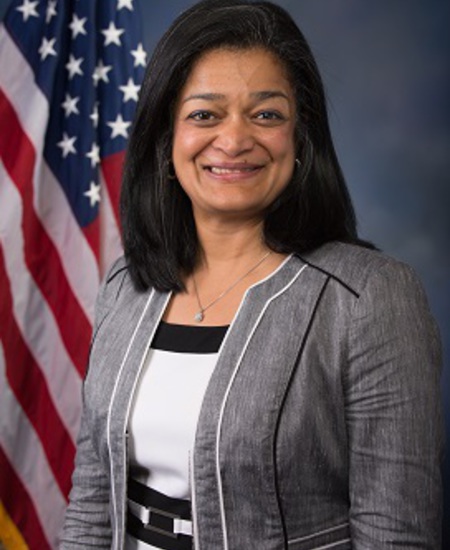
Rep. Pramila Jayapal
Sponsored bills
Living Donor Protection Act of 2021 This bill prohibits certain insurance carriers from discriminating against, and provides other protections for, living organ donors. Specifically, carriers may not deny, cancel, or otherwise impose conditions on policies for life insurance, disability insurance, or long-term care insurance based on an individual's status as a living organ donor. The bill also expressly specifies that recovery from organ-donation surgery constitutes a serious health condition that entitles eligible employees to job-protected medical leave. In addition, the Department of Health and Human Services must update educational materials on live organ donation to include information about the benefits of live organ donation and about access to insurance for living organ donors.
Electric Credit Access Ready at Sale Act of 2021 or the Electric CARS Act of 2021 This bill modifies and extends tax credits for electric cars and alternative motor vehicles. The bill extends the tax credit for new qualified plug-in electric drive motor vehicles through 2031. In addition, the bill modifies the credit to remove the limitation on the number of vehicles per manufacturer that are eligible for the credit, allow a taxpayer to assign the credit to a financing entity, and allow an unused credit to be carried forward for five years. The bill also extends through 2031 the tax credits for (1) alternative fuel vehicle refueling property, and (2) alternative motor vehicles.
Full-Service Community School Expansion Act of 2021 This bill reauthorizes through FY2025 and expands the Full-Service Community Schools program. The program provides support for full-service community schools that serve children and their families, particularly for children who attend high-poverty elementary and secondary schools. Specifically, the bill directs the Department of Education (ED) to award grants to eligible entities to plan, implement, expand, and support full-service community schools. An eligible entity is a consortium of (1) one or more local educational agencies or the Bureau of Indian Education; and (2) one or more community-based organizations, nonprofit organizations, Indian tribes, tribal organizations, or other entities. A community school refers to a public elementary or secondary school that incorporates the four pillars of community schools. These four pillars are defined by the bill as (1) integrated student supports that address out-of-school barriers to learning (e.g., medical care and assistance with housing, transportation, or nutrition); (2) expanded and enriched learning time and opportunities (e.g., before- and after-school programs); (3) family and community engagement (e.g., adult education); and (4) collaborative leadership and practices, which must include a school-based leadership team, a community school coordinator, and a community-wide leadership team. Further, the bill directs ED to award grants to states to plan, implement, and expand community schools. A state educational agency that receives a grant must meet certain requirements, such as providing subgrants to local educational agencies, establishing a state-level steering committee, and establishing goals for the implementation and expansion of community schools throughout the state.
West Coast Ocean Protection Act of 2021 This bill prohibits the Department of the Interior from issuing a lease for the exploration, development, or production of oil or natural gas in any area of the Outer Continental Shelf off the coast of California, Oregon, or Washington.
Stop Arctic Ocean Drilling Act of 2021 This bill prohibits the Department of the Interior from issuing or renewing a lease or any other authorization for the exploration, development, or production of oil, natural gas, or any other mineral in the Arctic Ocean, including the Beaufort Sea and Chukchi Sea Planning Areas.
This resolution expresses the sense of the House of Representatives that the federal government has a duty to develop a holistic agenda to respond to racial injustice, unemployment, the COVID-19 (i.e., coronavirus disease 2019) pandemic, and climate change. The resolution further outlines the goals of this agenda to build a society with greater racial, economic, and gender justice; dignified work; healthy communities; and a stable climate. Additionally, the resolution identifies efforts to support these goals.
IRS Enhancement and Tax Gap Reduction Act of 2021 This bill appropriates additional amounts to the Internal Revenue Service (IRS) in FY2022-FY2031 for tax enforcement, improving IRS technology infrastructure, and taxpayer services.
Feeding Homeless Youth During COVID-19 Act This bill directs the Department of Agriculture to reimburse institutions that are emergency shelters for meals and supplements provided under the Child and Adult Care Food Program during the COVID-19 (i.e., coronavirus disease 2019) public health emergency to individuals who have not attained the age of 25 and who are receiving assistance from such shelters. Under current law, individuals who are older than age 18 are not eligible to participate in the program.
Restoring and Enforcing Accountability of Presidents Act or the REAP Act This bill eliminates the monetary allowance and funding for travel expenses for any former President convicted of a felony while holding office or for acts committed during or after holding office.